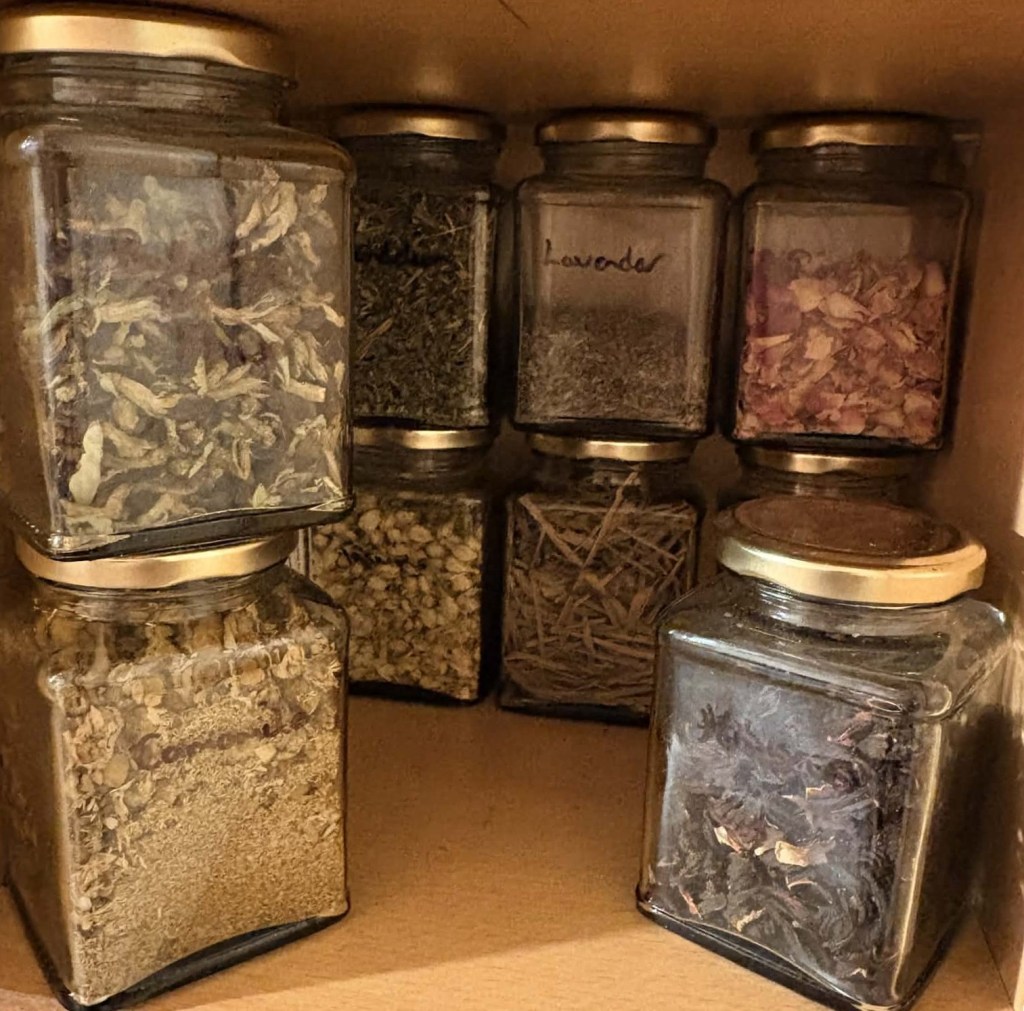
Recently I sorted out my tea cupboard, my jars of herbs and flowers, checking their scent and carefully labelling each one rather than relying on my memory as to what was in which. There was something quietly satisfying about seeing chamomile, lavender and rose neatly named and lined up on the shelf and as I worked, I began to think about how often I rush the small rituals that are meant to steady me. The simple act of putting things in order felt like a reminder that care takes time. It was in that moment, surrounded by dried petals and leaves, that I found myself reflecting on the deeper comfort of a daily cup of tea.
In a world that rarely stops, choosing to make a cup of tea is a gentle way of stepping out of the rush. A tea ritual is not only about drinking something warm. It is about choosing to pause. It is about giving ordinary moments the dignity of attention. When we take time to prepare and enjoy tea with care, we create space for wellbeing to unfold.
Across cultures, tea has long been linked with reflection and connection. In Japan the traditional tea ceremony is an art form rooted in harmony, respect, purity and tranquillity. The quiet choreography of preparing matcha invites both host and guest to be fully present. In China centuries old tea traditions honour the flavour of the leaves and the rhythm of shared conversation. In United Kingdom afternoon tea has become a social ritual that encourages people to gather, talk and rest in the middle of the day. Though the details differ, the intention is similar. Tea becomes a gentle anchor in time.
The blends we choose can also shape the quality of our pause. A cup of Earl Grey with its bright notes of bergamot can feel clarifying in the morning. English Breakfast offers strength and comfort when focus is needed. Green tea brings a grassy freshness that suits quiet reflection. Chamomile softens the edges of a long day and peppermint feels cooling and restorative. Spiced chai, fragrant with cinnamon and cardamom, can turn an ordinary afternoon into something warming and indulgent. Each blend carries its own character, inviting a slightly different mood.
There is no single right way to prepare your tea. A simple tea bag can be an act of ease, especially on a busy morning when time feels tight. Placing it in your favourite cup and watching the water change colour can still offer a moment of quiet focus. For those who enjoy a slower approach, blending your own loose leaves with dried herbs and flowers adds another layer of intention. You might combine black tea with rose petals, green tea with jasmine, or create a calming mix of chamomile, lavender and lemon balm. Measuring, mixing and storing your blend turns the ritual into something creative and personal. Whether you reach for a ready made bag or craft your own infusion, what matters most is the care and attention you bring to the cup.
Wellbeing often begins with awareness. When you boil the kettle and listen to the rising hum, you are invited to notice sound. When you measure the leaves and watch them unfurl, you practise patience. When you hold a warm cup in both hands, you feel texture and heat. These small sensory experiences draw the mind away from racing thoughts and back into the body. They remind us that this moment is enough.
Taking time for tea also offers a boundary. It is a defined pause in a day that might otherwise blur into tasks and obligations. You might decide that your tea ritual lasts ten minutes. During that time you do not scroll, answer messages or plan ahead. You simply sit. The world continues without your input. This can feel uncomfortable at first, yet it is deeply restorative. Rest is not laziness. It is maintenance for the mind and nervous system.
There is also something powerful about repetition. A daily tea ritual builds a rhythm that the body learns to trust. Just as the scent of lavender can signal sleep, the aroma of your chosen tea can signal calm. Over time the ritual itself becomes a cue for slowing down. Even on difficult days the familiar sequence of kettle, cup and first sip can steady you.
Tea rituals can be solitary or shared. Alone, they offer a private sanctuary. With others, they create a container for conversation. When we sit across from someone with cups between us, the pace naturally softens. There is time to listen fully. There is time to respond with care. In this way tea supports not only individual wellbeing but collective wellbeing.
You do not need rare leaves or special equipment to begin. Choose a tea you enjoy. Select a cup that feels good in your hands. Clear a small space on a table. As you prepare your drink, move a little more slowly than usual. Breathe in the steam. Notice the colour of the liquid. Take the first sip without distraction. Allow yourself to be exactly where you are.
In giving a few unhurried minutes to tea, you practise giving time to yourself. You affirm that your inner life matters as much as your output. You learn that nourishment can be simple and that wellbeing can be woven through the most ordinary acts. The ritual does not remove the demands of modern life, yet it changes how you meet them. With a warm cup in hand and a steady breath, you return to your day more centred, more present and more able to move at a human pace.
Morning Glow
Ingredients (makes 1 cup):
- 1 tsp dried ginger
- 1 tsp lemongrass
- ½ tsp cinnamon chips (or a small cinnamon stick)
- ½ tsp dried orange peel
- Optional: honey to taste
Steep: 5–7 minutes
Flavor: Citrusy, warming and gently spiced with a naturally uplifting aroma.
Sweet Dreams
Ingredients (makes 1 cup):
- 1 tsp chamomile
- 1 tsp jasmine flowers
- ½ tsp lavender buds
Steep: 5–7 minutes
Flavor: Soft, floral and soothing.
Heart Bloom
Ingredients (makes 1 cup):
- 1 tsp rose petals
- 1 tsp hibiscus
- 1 tsp chamomile
- ½ tsp cinnamon
- Optional: a drizzle of honey
Steep: 5–7 minutes
Flavor: Floral, gently tart and warmly spiced.

