Authors: Lynne Boddy and Ali Ashby Publisher: Collins Reference, supported by National Trust Illustrator: Ella Sienna Release Date: 8th October 2026
There’s something rather magical about discovering fungi on an autumn walk. You can set off along a familiar woodland path and suddenly notice something hiding beneath the leaves or nestled against an old tree that you had never spotted before.
Anyone who knows me knows how much I love fungus hunting. Not to pick or eat them, because you really do need to be an expert for that and I don’t have a death wish. I just love finding them, seeing them and taking pictures of them – you should see the incredible specimens I have stored on my phone. For me, it makes an autumn hike all the more exciting.
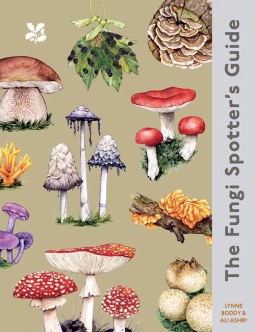
The Fungi Spotter’s Guide by Lynne Boddy and Ali Ashby is the perfect companion for anyone who wants to start discovering the wonderful world of fungi for themselves.
Focusing on 40 easily identifiable species, this beautifully accessible guide is designed to encourage beginners to look a little closer at what is growing around them. I particularly love this approach because fungi can sometimes feel like an intimidating subject. There are so many species and so many subtle differences that it can be difficult to know where to begin. This book gives you a lovely starting point without making you feel as though you need a degree in mycology before you can venture into the woods.
And what a collection of fungi it is.
There are some of my absolute favourites in these pages, from the wonderfully familiar Common Puffball to the instantly recognisable Fly Agaric. The Amethyst Deceiver is a particular delight with its beautiful jewel like colouring, while the Green Elf Cup looks as though it has wandered straight out of an enchanted forest. Then there is the Shaggy Ink Cap, which is always such a fascinating find.
The illustrations by Ella Sienna are beautiful and make the guide especially inviting. Fungi are such wonderfully varied subjects, with their unusual shapes, textures and colours, and the illustrations really capture that sense of discovery.
I also love that this is a guide that encourages you to simply look. There is so much pleasure to be found in slowing down and noticing the small things around us. A fallen log suddenly becomes a miniature habitat. A patch of moss might be hiding something spectacular. Even a familiar woodland can feel completely different when you start searching for fungi.
For me, that is what makes this book so appealing. It doesn’t just tell you about fungi. It encourages you to get outside and discover them.
The Fungi Spotter’s Guide would make a wonderful companion for autumn walks, woodland adventures and anyone who has ever stopped mid hike because they spotted something strange and beautiful growing beneath the trees.
If you’re a budding fungus hunter, a nature lover or simply someone who enjoys photographing the curious little treasures found on woodland floors, this is a lovely place to begin.
Just remember, you don’t have to pick a mushroom to appreciate it. Sometimes finding it, photographing it and leaving it exactly where you discovered it is the most magical part.
Author: D.M. Million Publisher: Scarlett Press / Victory Editing Co-op Release Date: 26th October 2026
What would the world look like if witches were still being persecuted today?
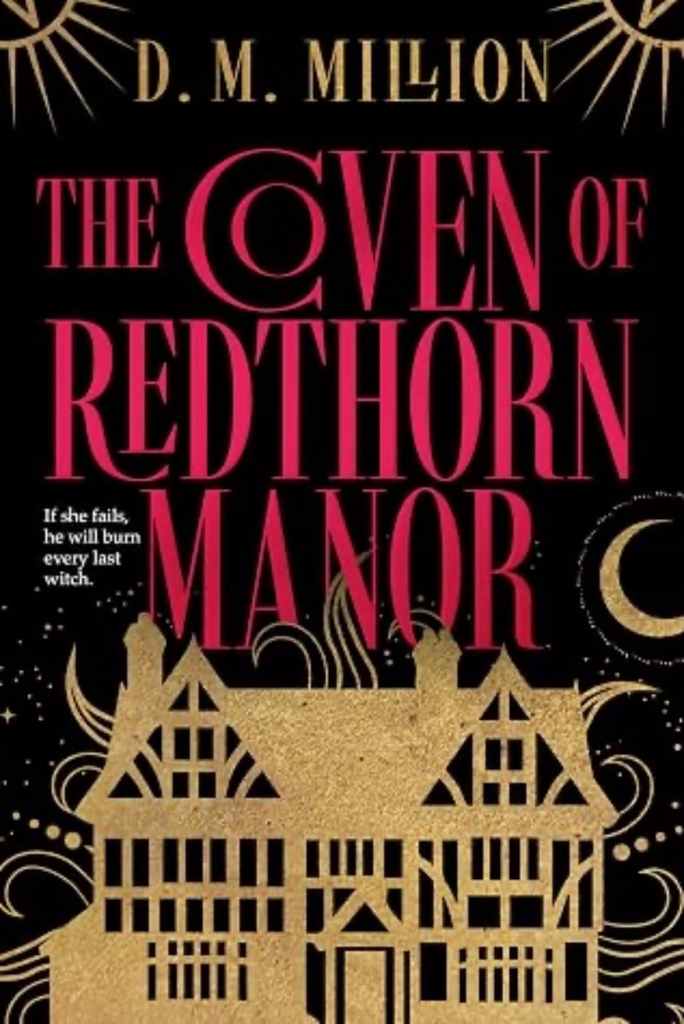
It is such a brilliant premise and one that immediately drew me into The Coven of Redthorn Manor. Take the fear and hysteria of historical witch trials, bring them into the modern world and then add secret covens, ancient prophecies, grimoires, elemental sorcerers and a deliciously dangerous battle for survival. You have a recipe for one seriously bewitching read.
Davina has a dissertation to finish, a coven to protect and apparently a destiny that has absolutely no interest in waiting patiently until she has time for it.
As the reluctant high priestess of the Divine Moon Coven, Davina does not exactly feel like the powerful witch everyone expects her to be. She struggles to wield her magic with authority and would much rather bury herself in her academic research into seventeenth century witch hysteria and modern intolerance towards witches. Unfortunately for Davina, the line between her research and reality is about to become very blurred.
Enter Patrick Parris and his Puritan revivalist movement, complete with livestreamed witch burnings. Yes, you read that correctly. Livestreamed witch burnings.
There is something particularly chilling about this idea because it takes something rooted in history and gives it a horrifyingly modern twist. The persecution of witches is no longer something confined to dusty history books. In this world it has found an audience, a platform and people willing to turn hatred into spectacle.
And Davina is going to have to fight back.
I really enjoyed the way the historical elements are woven throughout the story. Her academic background is not simply there as an interesting character detail. Her research becomes an important part of uncovering the truth and finding a way to protect her coven. I loved that combination of academia and witchcraft. Give me a heroine surrounded by ancient grimoires while frantically connecting historical dots and I am very much going to be invested.
Then there is the prophecy.
Because apparently being a reluctant high priestess with a dissertation and a coven in danger was not enough.
Davina discovers that her ancestry holds the key to an ancient form of magic and that she has a role to play in stopping the Second Burning Times. Her lineage, her magic and her destiny are all tangled together and suddenly the stakes could not be higher.
I also loved the atmosphere of Redthorn Manor. It has that wonderfully gothic, secretive quality that makes you want to wander through its rooms despite knowing there are probably approximately seventeen things lurking in the shadows that you absolutely should not disturb. It feels like a proper witchy sanctuary, filled with history, magic and secrets.
But as the danger grows, even Redthorn Manor can no longer keep the coven safe.
This is where the story expands with the arrival of The Equinox, a secret coven of elemental sorcerers and their high priest, Cato.
And oh, Cato.
Sexy and infuriating is a combination that rarely fails to cause trouble and Cato certainly seems to know how to get under Davina’s skin. Their dynamic adds a lovely spark to the darker elements of the story and I was very happy to have a little romantic tension brewing alongside all the impending magical catastrophe.
What I particularly enjoyed about The Coven of Redthorn Manor is that beneath all the spells, prophecies and supernatural battles there is a story about fear, intolerance and the consequences of allowing persecution to take root. The book takes something that happened centuries ago and asks what it might look like if those attitudes were still alive and thriving in the modern world.
And honestly, that makes the story all the more compelling.
There is something wonderfully rebellious about a story where witches are not simply hiding in the shadows but are being forced to stand up and fight for their right to exist. Davina’s journey from reluctant high priestess to someone who must embrace the magic within her gives the story a satisfying sense of discovery and growth.
If you are looking for a witchy read with gothic atmosphere, ancient magic, secret covens, dangerous enemies, prophecy, romance and plenty of reasons to keep turning the pages, The Coven of Redthorn Manor deserves a place on your shelf of wonders.
Just remember to keep your grimoires close.
You never know when the Second Burning Times might begin.
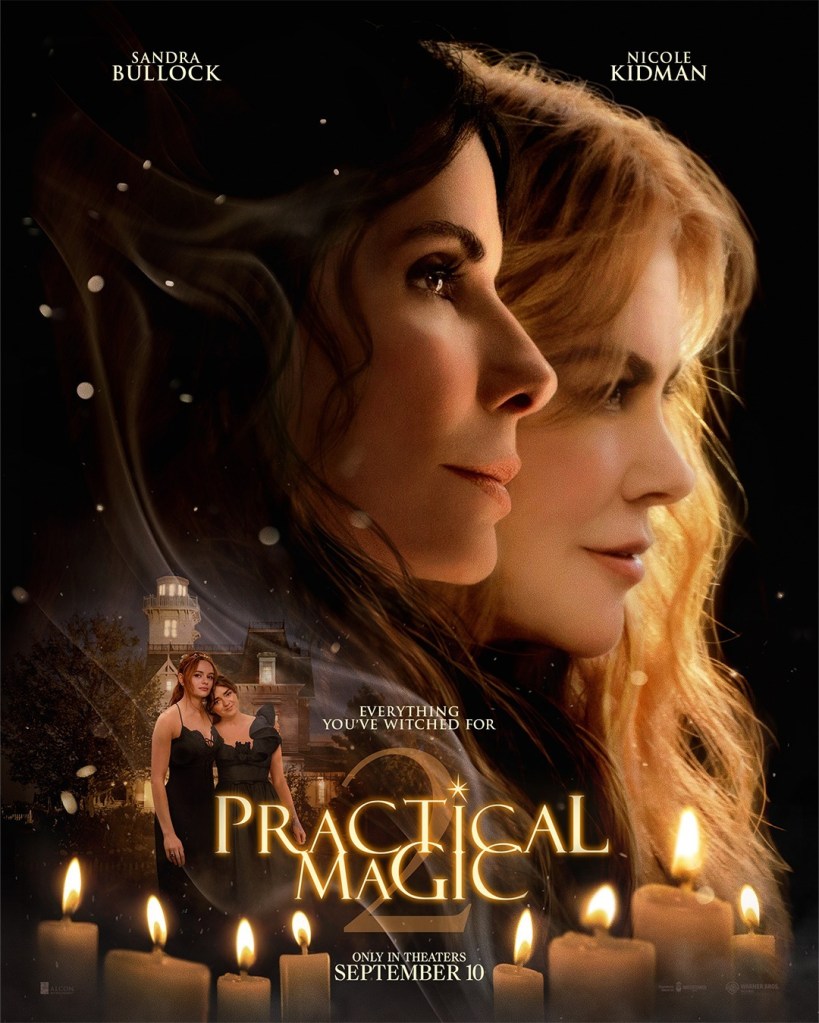
Midnight margaritas are back. The Owens sisters are back. And, thankfully, so is the magic.
Being a teenager in the ’90s, I remember watching Practical Magic for the first time and loving it immediately. I wanted to live in that house. I wanted to grow herbs in the greenhouse. I wanted to grow up and make midnight margaritas a thing. I wanted to own my own botanicals store.
So, after more than 25 years of loving this movie and watching it hundreds of times, I remember hearing in 2024 that they were finally going to make a sequel. I was ridiculously excited, only to discover that we were going to have to wait until September 2026 to see it. At the time, that seemed like such a long wait.
One thing I’ve learned as I’ve got older, though, is that time seems to move faster and faster. And here we are, in 2026, seemingly in the blink of an eye, and Practical Magic 2 is finally in cinemas.
Of course, when there’s more than 25 years between a movie and its sequel, an enormous amount changes.
I didn’t have a mobile phone in 1998. There was no such thing as texting. Social media didn’t exist. No Instagram, TikTok, Facebook or Twitter. MySpace didn’t even exist yet. When physical copies of the first film were released to buy, I bought it on VHS. To connect to the internet, we had dial up modems rather than super fast fibre connections. There was no Google. If we needed to know something, we looked it up in a book. There was no GPS. If we needed to get somewhere, we used a map. And there was no such thing as online shopping. We actually had to go to the mall!
So, making a sequel to a movie after more than two decades and somehow keeping the same magic, tone and recipe that made the original so special was always going to be a tough job.
And plenty of sequels have failed to capture that original feeling. Hocus Pocus 2, Indiana Jones and the Kingdom of the Crystal Skull and Crocodile Dundee in Los Angeles all left me feeling somewhat underwhelmed.
So I walked into the cinema excited, but also slightly nervous that I might end up disappointed.
Thankfully, there was absolutely no need to worry.
I loved it.
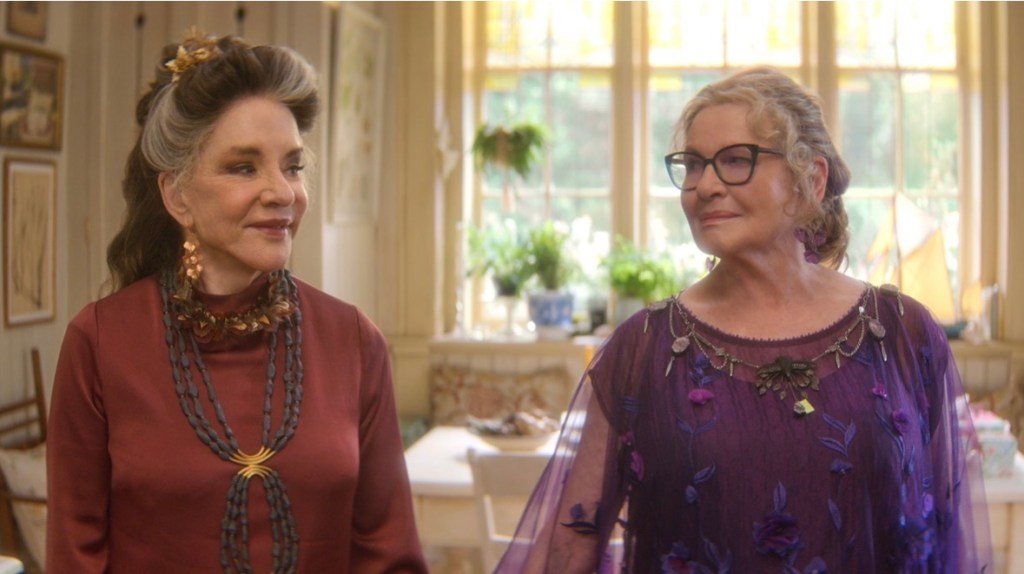
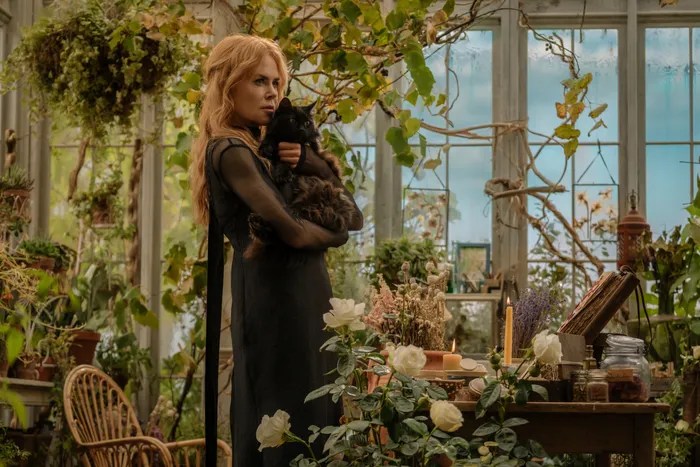
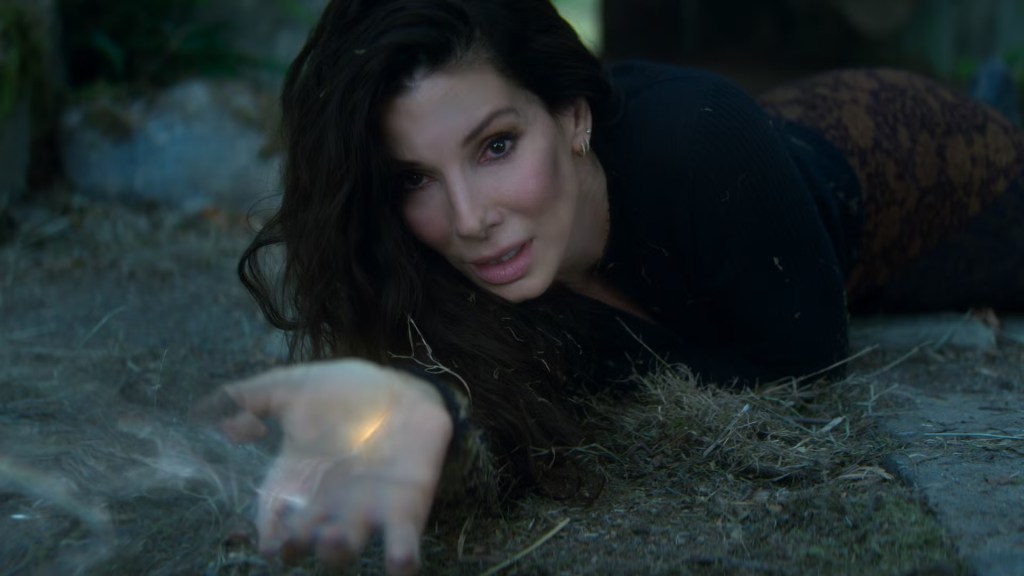
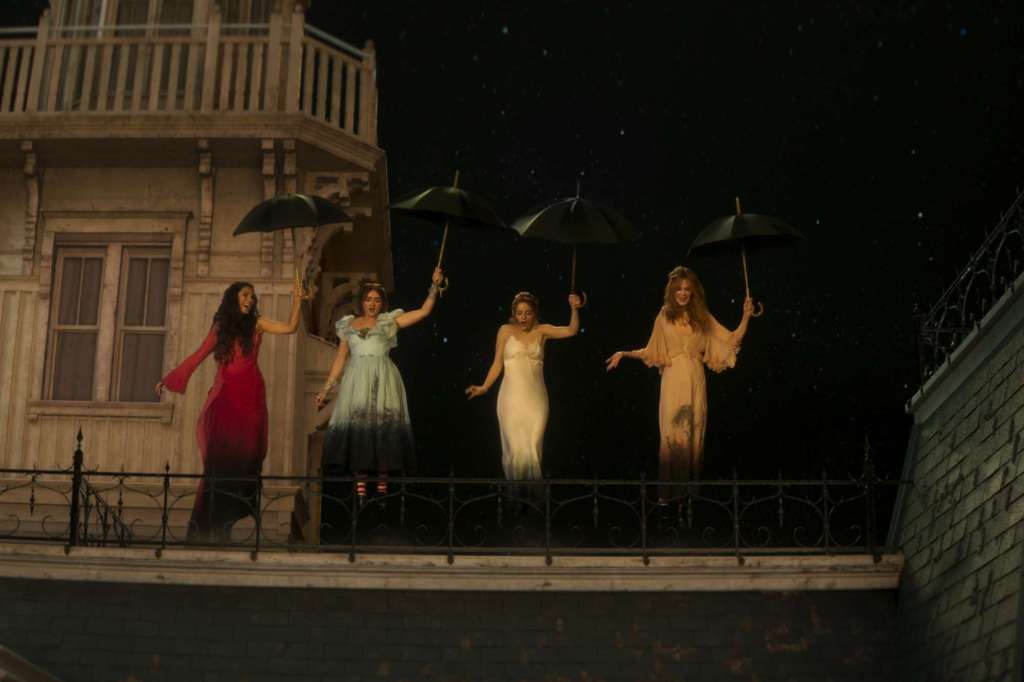
Sandra Bullock and Nicole Kidman play sisters so brilliantly, and both look absolutely amazing in the film. The aunts, played by the iconic Stockard Channing and Dianne Wiest, were everything I needed them to be, and the new cast members did a great job too.
There’s considerably more VFX than there was in the original, but given how much filmmaking technology has changed since 1998, that was inevitable. I’ve seen complaints from some people about this, but personally, I was completely fine with it. For me, it added to the magic rather than taking anything away.
The story was great too. It’s only loosely based on the book, which I imagine may disappoint some fans of the book series, particularly because the story has clearly been adapted to work with the ages of the original cast. But for me, it worked.
I laughed. I cried. And I am not normally a film crier.
But after 25+ years of watching these characters, they genuinely feel like old friends, almost like family. You’ve spent so long with them that you’re invested in what happens to them, and that emotional connection is something that can’t really be recreated with a completely new cast of characters.
Was it perfect? No.
There were moments that were a little cheesy, and there were definitely points where I found myself looking at one of the characters thinking, Surely you realise you’re walking straight into a trap?
But overall, it was everything I wanted it to be.
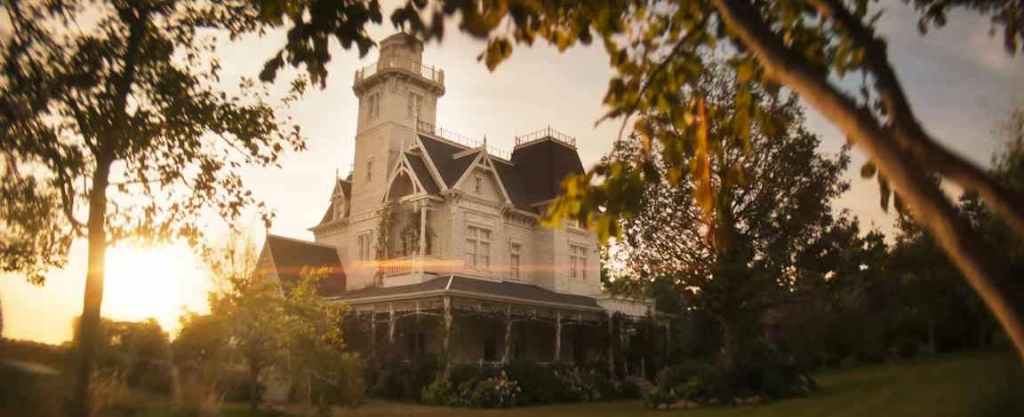
The house was back. And this time, they actually built it rather than creating it entirely on a studio set, which meant we got to see so much more of it. The garden was there. The whimsical ’90s fashion was there. The tone, the music, the magic, the sisterhood, which is, after all, what witchcraft is really about, and of course, the cocktails.
And then there was some not so subtle product placement that has left me desperately wanting a SharkNinja Slushie Maker.
Unfortunately, when I looked up the limited edition Practical Magic one and saw the $399 price tag, I decided I’ll probably be sticking with my blender when making frozen cocktails.
Because apparently even magic has a budget.
I really hope we’re not waiting another 20 years for the next instalment.
The other two books in the series are set before the original movie, so if they were adapted, we may not get to see Sandra Bullock and Nicole Kidman return, unless, of course, they play their ancestors. But would a Practical Magic movie really work without Sally and Gillian Owens?
Personally, I don’t think so.
So rather than going backwards, I’m hoping they write something completely new that allows us to see Sandra Bullock and Nicole Kidman return as the Owens sisters.
Because after waiting 25+ years for them to come back, I’m definitely not ready to say goodbye to them again.
Of course, after the movie we popped in to a bar for a few margaritas – it was 3.30 in the afternoon though so they were midafternoon margaritas! I was back home in my new Primark Practical Magic pyjamas and tucked up in be long before midnight…
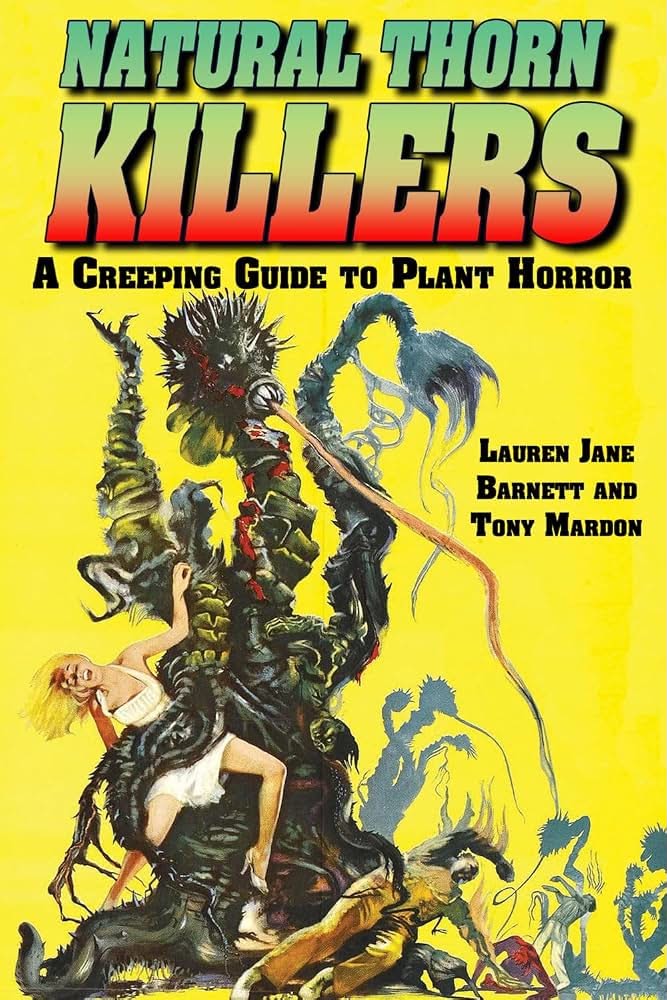
What happens when the plants we surround ourselves with become something far more sinister?
Authors Lauren Jane Barnett and Tony Mardon, the creative minds behind Natural Thorn Killers, have explored the darker side of the botanical world, uncovering the strange, unsettling and downright terrifying ways that plants have found their way into horror. From deadly flora to botanical folklore, their work invites us to look at the natural world in a very different way.
And if you’ve ever wondered what secrets might be hiding among the plants of one of London’s most famous botanical gardens, there’s no better place to explore them than Kew Gardens.
This month, Lauren and Tony are bringing their fascination with plant horror to life with a very special Plant Horror Tour at Kew Gardens, offering guests the chance to discover the sinister stories, myths and murderous plants lurking beneath the beauty of the gardens.
I caught up with Lauren and Tony to talk about Natural Thorn Killers, their love of plant horror, the fascinating relationship between nature and the macabre and what inspired them to delve into the darker side of the botanical world.
The Kew Gardens Plant Horror Tour is coming up this month and places are limited, with tickets already selling fast. If you’re a lover of horror, folklore, plants or simply fancy seeing Kew from a darker perspective, now is the time to book your place!
Dates and Times
Friday 9 and 24 October 2026 4pm to 5.30pm | 6.30pm to 8pm
Thursday 29 and Friday 30 October 2026 2.30pm to 4pm | 5pm to 6.30pm
Prices
Members: £40
Non-members: £46
Tickets include booking fees and general admission to the Gardens from 10am
1 Let’s start with the obvious question. How did the idea for Natural Thorn Killers come about? What was it that first made you think there was a whole book to be written about plants in horror? Was there one particular film that made you think, “Yes… there is an entire book hiding in this subject”?
LAUREN – I had the idea while I was writing my first book Death Lines: Walking London’s Horror History. I kept coming across horror movies with plants in them – Triffids and creeping vines in Dr Terror’s House of Horrors, and even Hawthorne bush in Satanic Rights of Dracula. My dad was an avid gardener so I grew up with plants everywhere and I think that helped too. Eventually I started having a look and when I realised there were so many movies, and so many iconic ones, I was shocked no one had written a book about it. There would be a mention or two in Nature horror books, but these fierce flora deserved a spotlight of their own.
TONY – Yes It was Lauren’s idea. She had it before we met but when she asked if I’d like to write it with her I immediately said yes. I’ve always loved plants in horror. There is something fascinating about the idea that nature can be so malignant. There is a lot of literature about animals in horror so this seemed like a natural progression. And plants are pretty unstoppable- the way they spread- The Jordy Verrill segment of Creepshow is a great example of that. Why Lauren asked me to co-write I don’t know – I didn’t even have a fungal infection!!!
2 Your book covers an enormous range of films, encompassesing everything from killer trees and alien flora to fungi and cornfields. How did you decide which films made the cut?
LAUREN – I think the biggest thing was deciding not to do TV or any movies that didn’t have a theatrical release (with the exception of films released during Covid). If we had tried to do either of those we would still be watching things, and we would have six volume son our hands. It did mean we had to wave goodbye to great episodes of Dr Who and The Last of Us, but it also meant we had a selection of works that were all thinking about plant horror with the same constraints: time limits, theatrical quality, and cinema viewership. When you aren’t getting multiple episodes and only have two hours, you need those plant monsters to really punch and make a quick impression.
TONY – We included films like In The Tall Grass that debuted on streaming networks too- in another time, they would have had cinematic releases so that seemed warranted.
3 What’s the most underrated plant-horror film?
LAUREN – Oh that’s tough! Can I pick two? Splinter was an unexpected hit for me. It’s a really unsettling fungal horror that combines a trapped-room situation with body horror and a growing infection. I’m not sure how we found it, but I hadn’t heard of it until well into our research, and I’m shocking it isn’t more popular. The other one I have to mention is Little Otik. It’s Jan Svankmajer, but it’s not one of his better known films, and it’s deeply unsettling. A young couple are struggling to have a baby and the woman becomes obsessed with a tree-root as her child, and it actually does come to life, but has a growing appetite that starts to include blood. The film is surreal and funny, blending in the childish fairy tale with some genuinely tense and unpleasant moments. It’s very unique and surprisingly poignant.
TONY – They are great choices. I really like the Korean film, Acacia. It’s a heartbreaking film about a family who adopt a young boy and his obsession with an Acacia tree, the tree being a Metaphor for the family’s disintegration. I’ve got a soft spot for Maneater of Hydra, The Mutations and Matango (1963) too! Matango is based on a wonderful short story by William Hope Hodgson about an unstoppable fungus called The Voice in the Night…and I am petrified of fungus.
4 What surprised you most during your research for the book? Tell us a fun fact…
LAUREN – I love finding out about unique plants and the Machineel Tree was the favourite discovery for me. It’s called “The Tree of Death” because it has a milky sap that is so caustic it will burn your skin. People and animals have even been burnt by rain that’s fallen off the branches and collected the sap. It’s wildly toxic, and the idea of this tree is similar to the fictional ‘China tree’ in the “Rappaccini’s Daughter” segment of Twice Told Tales. In that film Vincent Price has to wear gloves because even touching the tree will kill you. That film was also a delightful Gothic surprise, so between discovering the film and the tree related to it, it was fun.
That being said, I was probably most shocked to learn there was a soft-core porn version of Little Shop of Horrors
TONY – Ah yes! The soft porn! I remember it well. The sheer extent of plant-horror surprised me. There are the obvious examples like The Day of the Triffids, Evil Dead, Little Shop of Horrors and Attack of the Killer Tomatoes but that just scratches the surface. My fear of fungus was brought to the surface many times when writing the ‘Panic Shroom’ section; I really hate the thought of fungus growing on or in ‘us’. I was surprised by how much some of the visuals in films like Gaia and The Privilege upset me.
5 What’s your favourite plant related horror film?
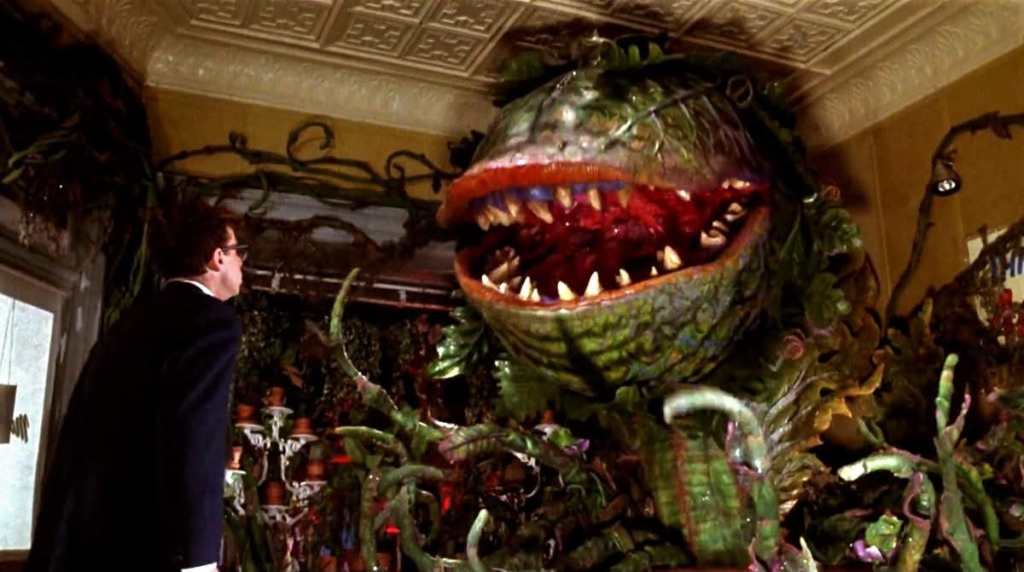
LAUREN – Choosing favourite films is so hard because I love so many for such different reasons! If we are going for the one I’ve probably watched the most, it would have to be Little Shop of Horrors, the 1986 musical. I loved it as a kid, and was in a local production of it as well, so I know the songs. It’s a good story, and has hilarious characters, but who doesn’t love Audrey II? Of all the alien-invasion monsters out there, it is probably the most beloved.
TONY – .…that’s tough. I might have to say Creepshow. It’s been a favourite of mine ever since I first saw it as a child. The Jordy Verrill segment manages to tread the line brilliantly between comedy and the terror created by an unrelenting, otherworldly, all-consuming grass… Invasion of the Body Snatchers, the original and the 1978 remake, are two favourites also. Oh, controversially, the ‘Mel’ segment from Tales that Witness Madness is a favourite too.
6 You’re taking Natural Thorn Killers off the pages and into Kew Gardens. What can people expect from the tour that they won’t get from reading the book?
LAUREN – One of the amazing things about Kew Gardens is the vast number of plant species they have, so you get to see everything from Venus Flytraps and Suzuki Grasses to The Dutchman’s Pipe and some alpine creepers. There are also plants like the Titan Arum, or corpse flower, which smells of rotting flesh to attract flies. The plant hasn’t inspired horror movies yet, be we couldn’t resist adding it to the tour. And you get to actually be at Kew, it’s a beautiful location, and even appears briefly in Day of the Triffids, so visiting Kew is well worth it on any day, but joining the tour means you also get to see something very few people have: The Fungarium. I’ll let Tony talk about that.
TONY – Lauren knows how much I love the fungarium!! The Plant-Horror walk tickets include entry to Kew as well as our tour. Lauren and I will be taking people through Kew, stopping at some beautiful, some deadly and some bizarre plants and fungus that have inspired many of the films from our book. Experiencing these first hand really is fascinating and Lauren and I will, of course, be talking about each one and how they have each influenced horror cinema.
7 You’re going into Kew’s Fungarium to look at parasitic mushrooms. Why are fungi such brilliant horror material?
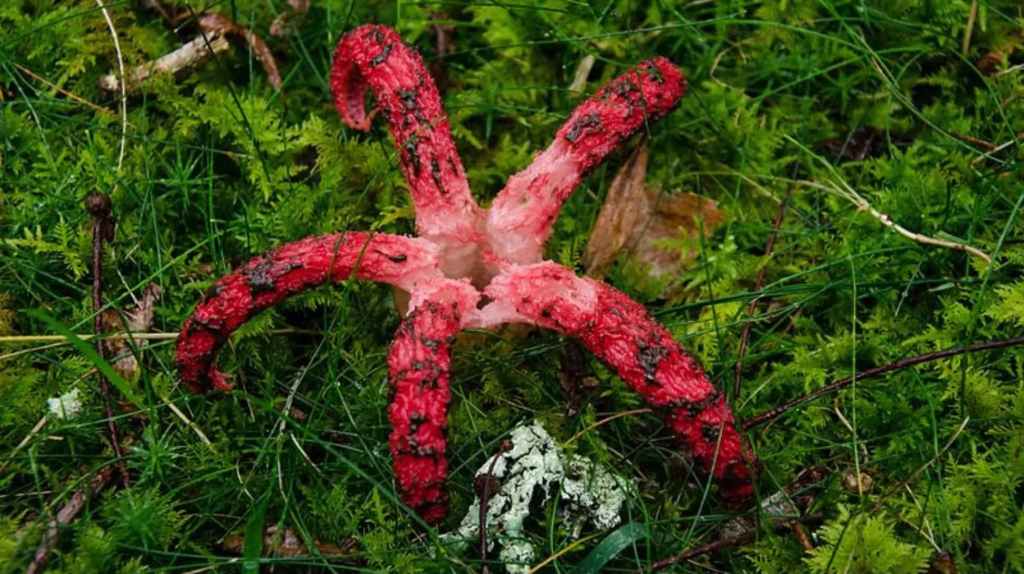
TONY – As I mentioned earlier, I have a real fear of fungus. There is something horrendous to me about the idea of being ‘grown on’. Even the thought of Athlete’s Foot is terrifying! So when that is amplified for genre films, the terror takes on a far more sinister and deadly reality. And fungus is so ugly! And unstoppable. And damp. And yuck. The Fungarium, which people on the tour will get to experience, is amazing. We will see examples of fungus that have inspired films, in particular…. The Ophiocordyceps unilateralis, commonly known as zombie-ant fungus that literally attaches itself to and grows from the brains of ants and other small creatures. Truly terrifying! I’m hoping this exposure therapy may help. It hasn’t as of yet.
8 Is there a particular fungus in Kew’s collection that has a particularly fascinating story?
LAUREN – The most flashy is zombie-ant fungus, but I love the mycellial network as a concept. Fungi all interact with one another across a huge ‘map’ – little tendrils of fungus that look like hair and are called mycellia. They stretch over almost the entire earth, just below our feet, and mean that fungi can move resources across miles and miles to keep themselves, and their ecosystem healthy. It’s almost like a giant Earthen nervous system. We still don’t completely understand it, and I find that fascinating.
TONY – I’m all about the flashy.
9 What is the most frightening real plant or fungus people will encounter? What is the most poisonous plant currently growing at Kew?
LAUREN – I suppose it depends on what scares you. I always find cacti frightening. I spent a lot of time in Arizona, and you learn to be wary of these spiky guys. My brother even sat on one once. Or fell on it, more accurately. It’s not fun. Kew has a great collection of cacti in the Princess of Wales Conservatory, but I find the “Creeping Devil” the most sinister on our tour. It grows along the ground, turning the desert area into a stretch of barbed wire. The fact that it basically crawls along the desert is pretty unnerving.
The most poisonous plant at Kew has to be the deadly Machineel tree I talked about earlier. It’s so deadly it’s kept in safe research areas, but we will show off the Dutchman’s pipe, a vine that in 1993 led to at least 100 people getting kidney disease from eating it.
TONY – There is nothing scarier than fungus. Not sure if I mentioned that! I have a soft spot for the fabulous Titan arum too that Lauren mentioned earlier. It’s not dangerous but it is imposing. Interestingly, the Venus Fly Traps are really cute. As long as they don’t evolve into the ones seen in Creepshow 2, they will continue to be cute to me, if not to flies.
10 There are some common plants and trees that everyone knows are poisonous but is there a common garden plant that people might be surprised to discover is actually poisonous?
LAUREN – I always love telling people that Rhubarb is poisonous. The stalks are delicious, as we all know, but the leaves can cause kidney damage if you eat them, so steer clear of anything leafy when it comes to Rhubarb.
Nutmeg is another one. I adore nutmeg, but if you eat a lot of it (and I mean a lot – 5 grams or more) the toxicity builds up and you are in real danger. It can even lead to organ failure. So every time you have some nutmeg in your cooking, you have a touch of the toxic.
TONY – And let’s not forget the foxglove! Also, don’t put Deathcap mushrooms in your bolognese.
11 What are some of the most extraordinary ways plants defend themselves from predators? Are there plants that can effectively “fight back” when they’re attacked?
LAUREN – Back home in North Carolina, Poison Ivy and Poison Oak are very common, and those are plants that fight back even if you are being friendly. You so much as graze a leaf, or give it an admiring touch, and you are covered in red itchy welts, sometimes for days. To keep predators away, Poison Ivy and Oak are covered in a resin that induces an allergic reaction, and not a fun one. Some people are severely allergic and can find their throat closing. We learned to hike in long trousers even in the high heat.
TONY – When we were hiking on a mountain in California, Lauren and her Uncle pointed out some Poison Oak and told me to steer clear. Then they told me about the Rattle Snakes. And the bears.
12 Is there one plant you’re particularly excited to introduce people to on the tour?
LAUREN – The fungi will be incredibly exciting because the team at Kew’s Fungarium have put together some amazing samples for us, but outside of that unique opportunity, I’m excited about the Kitchen Garden. I can’t wait to talk about all the horror films that were inspired by vegetables we eat every day. It makes you look at corn differently…
TONY – For me it is a bit of everything. We have planned the tour to include a huge range of flora and fungus, each of which are in some way connected to or have inspired moments and films within the horror genre. I’m looking forward to talking about these connections whilst being in amongst the amazing gardens around Halloween…hoping we survive the killer tomatoes…
Natural Thorn Killers is available at Amazon £16.99
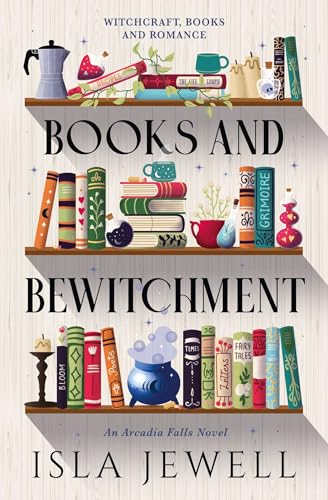
Title: Books and Bewitchment Author: Isla Jewell Publisher: Titan Books Publication Date: 3 February 2026 Genre: Cosy Fantasy / Romantasy / Witchy Fiction / Small Town Fantasy / Chick Lit
Because some bookshops have a little bit of extra magick.
Witchcraft and bookshops are two of my favoutite things so a stroyline surrounding both of these things meant I couldn’t leave this book on the shelf.
Rhea Wolfe is living a fairly ordinary life in Alabama with her pet parrot when her estranged grandmother dies, leaving her an inheritance in the magical mountain town of Arcadia Falls. Along with discovering she’s descended from witches, she inherits a run-down old video store from her Grandmother that she decides to turn into the bookshop she’s always dreamed of owning.
Of course, things are never quite that simple. The shop needs a lot of work, and luckily Hunter Blakely, the handsome local handyman, is there to help bring Rhea’s dream to life. The only problem? He’s the grandson of her grandmother’s sworn enemy, because apparently even witches can’t escape a bit of family drama. Not to mention the fact that Rhea’s pet parrot now holds the spirit of Grannie dearest.
I really enjoyed Rhea as a character. Her ability to find a book quote or pun for almost every situation added so much humour and felt very true to her personality. I loved watching her slowly find her place in Arcadia Falls, build new friendships and realise that family isn’t always just about who you’re born to, but the people who choose to stand beside you.
Being from the UK and never having visited the Deep South, I do now have one very important question… what exactly are boiled peanuts? They were mentioned so many times that I now feel like I need to try them just to understand what I’ve been missing!
My only slight issue was Rhea’s relationship with her sisters. I couldn’t really understand why she felt responsible for two grown women who who should have been taking accountabiliy for their own lives. In fact, I didn’t really see why they needed to be in the story at all, unless there’s going be a sequel or a whole Arcadia Falls series in which the sisters come in to it more and have theit own story arks and this was just a way of introducing their characters…
In essence, this was a cosy comfort read filled with charm, magic and the promise of new beginnings. I won’t lie, it left me wanting to visit Arcadia Falls… and secretly hoping a long lost relative might leave me a magical inheritance too.
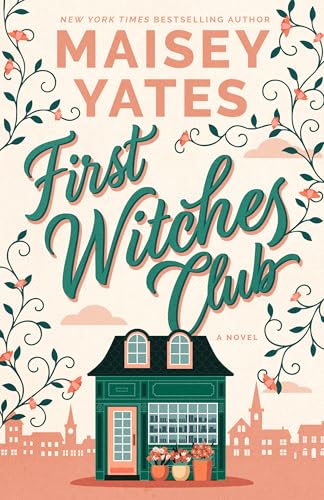
Title: The First Witches Club Author: Maisey Yates Publisher: Montlake Publication Date: 1 March 2026 Genre: Cosy Fantasy / Women’s Fiction / Romance / Witchcraft / Chick Lit
Because every woman deserves to find her coven.
I’ll be honest, it’s very rare that you’ll find me watching a feel good comedy, I’m much more of a horror girl but every now and again, I’ll be in the mood for something light and I absolutely loved The First Wives Club when I watched it, maybe due to the fast it has such an iconic cast, so when I stumbled across this book, the title alone had me interested, and thankfully this clever play on words didn’t disappoint.
The story follows three former high school frenemies – Nora, Daisy and Soraya, who find their way back to each other in their 30’s after their marriages fall apart. Somehow they all end up working at the mysterious, Lady’s Mantle Apothecary that seems to have popped uo in town out of nowhere, and from there the magic really begins.
This is a story about women lifting each other up and finding the support system they didn’t know they needed. Their little coven becomes a place of healing, friendship and second chances and I loved watching those relationships grow.
There are plenty of spells, a few disastrous consequences, lots of working through personal baggage, and, of course, the comforting feeling that everything will work out for the best in the end.
I really enjoyed the tarot aspect, woven throughout the story. It especially resonated with me because I’m on my own tarot learning journey at the moment and I’ve started spotting tarot personalities in people I meet. If that sounds a bit odd, keep reading, it’ll make perfect sense by the final chapters!
Was it a little predictable? Yes. But then, what cosy comfort read isn’t? Sometimes that’s exactly what you want. I closed the book wishing I could pop into that apothecary for a cup of tea… and maybe leave with a spell or two.
A charming, magical read full of friendship, healing and just enough witchy fun to leave you smiling.
Don’t get me wrong, wandering around in the countryside is lovely, but if there’s a bit of history, mythology or a forgotten goddess waiting to be found, I’m all the more invested.
So, after a recent task to research the goddess Coventina, and finding out she has a well in Northumberland, a few of the ‘Coven’ members who are also in a seperate Witchy Walks WhatsApp group, decided there was only one thing for it – we had to go in search of it ourselves.
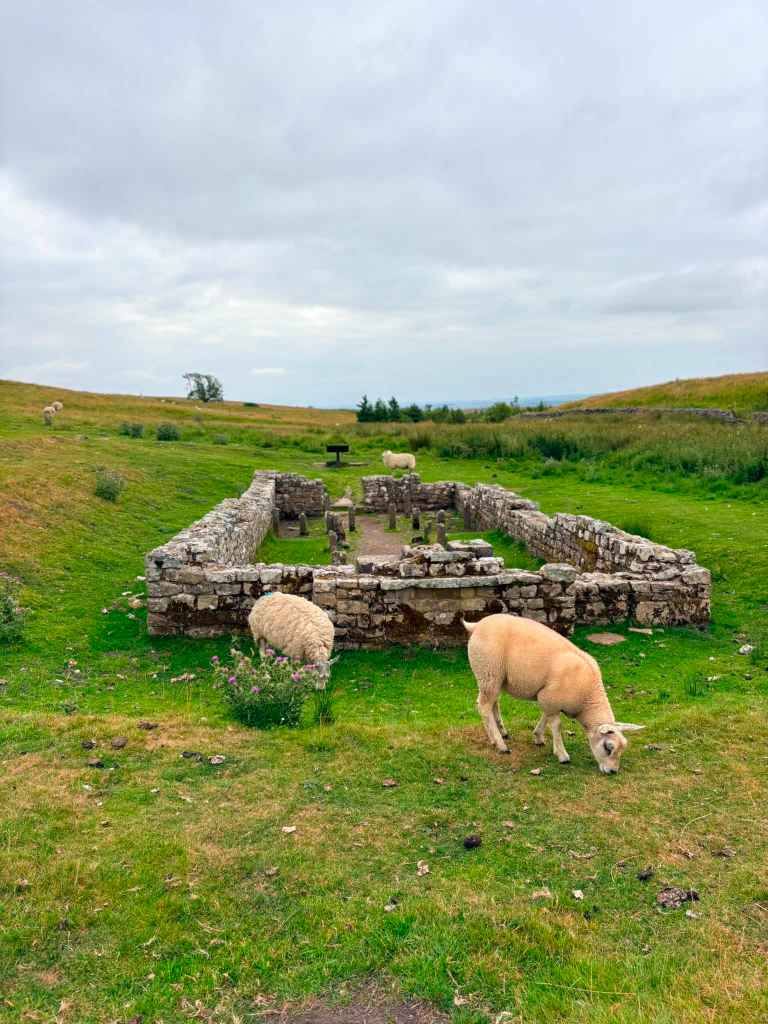
We parked in the Brocolitia car park, which was £6 for the day and is right next to the Temple of Mithras. Before we’d gone, I’d found a route on OS Maps that someone had created. It was a nice loop that promised not only Coventina’s Well but also two stone circles. It sounded perfect.
Well… almost.
We wandered past the Temple of Mithras, following the little arrow on the map, expecting we’d come across the stone marking the well fairly quickly.
We didn’t. Not even slightly.
We slowed down, looked around, wondered if we’d somehow missed it, but the map kept telling us to carry on, so we did.
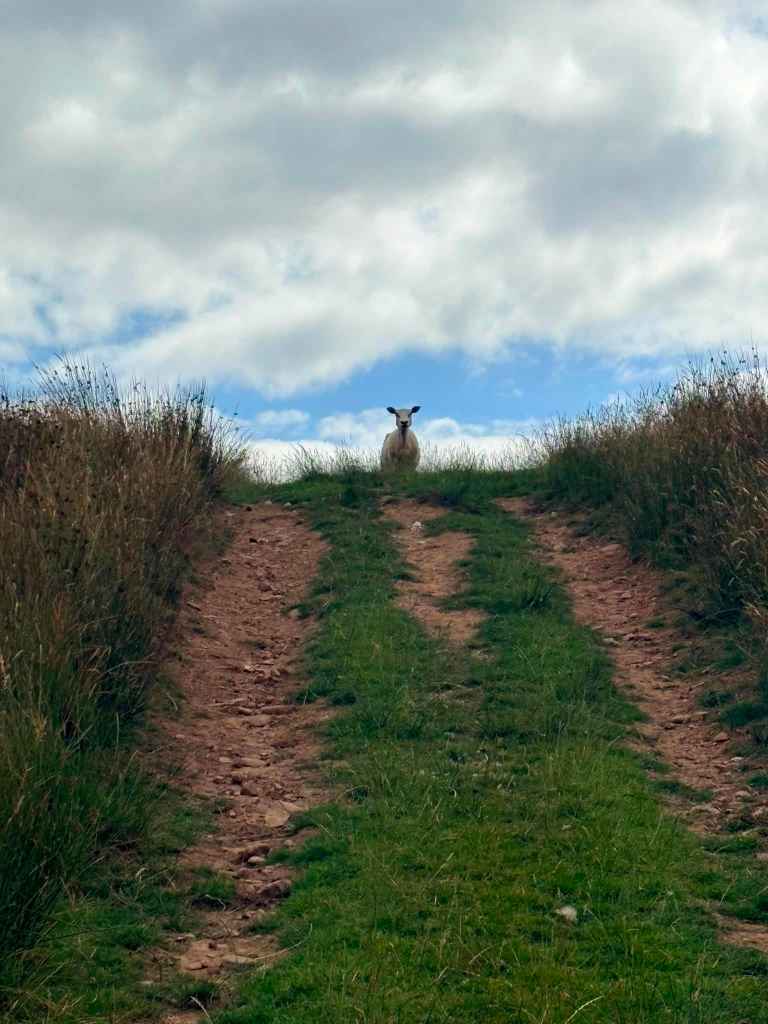
We carried on following the route, which soon took us away from the main path and into fields full of sheep. There were definitely more sheep than people out there! Then we spotted the tiniest little froglet ever. Honestly, it was so tiny, and of course we all had to stop and admire it. It’s funny how something so small can become one of the highlights of the day, but it really was adorable.
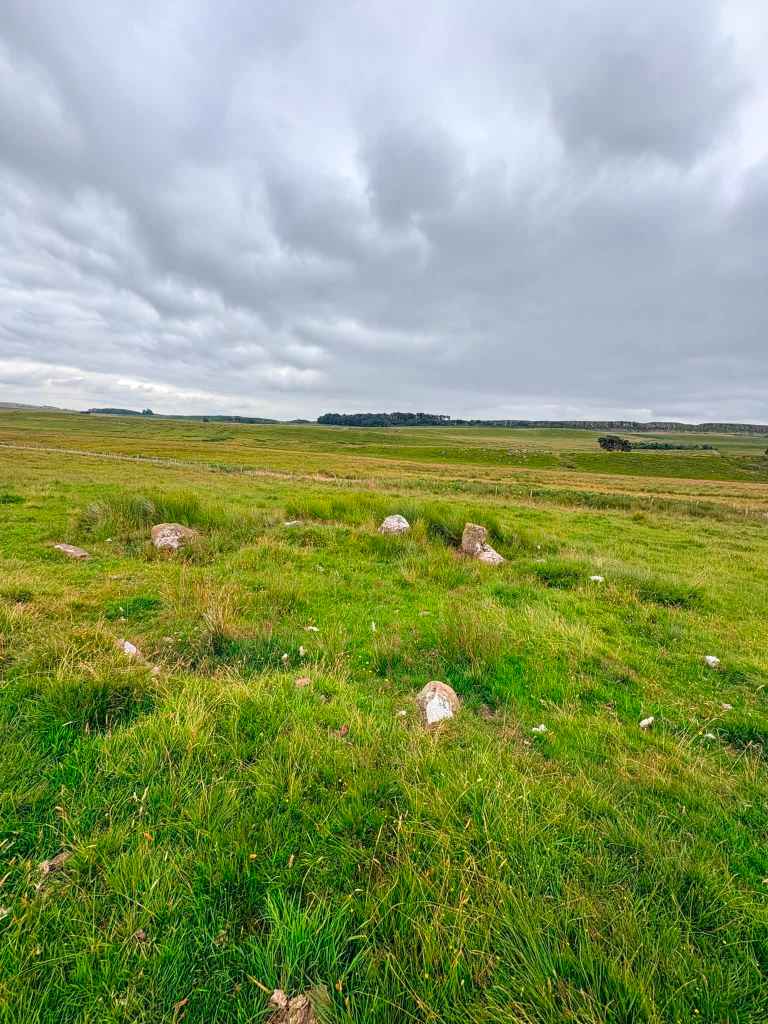
Eventually we reached the first stone circle.
Now… maybe I’m just spoiled as having visited Stonehenge and Avebury last month, perhaps my expectations were a little unrealistic, but this stone circle was… tiny. Very tiny. Blink-and-you’d-miss-it tiny.
Don’t get me wrong, it’s still fascinating to think how old it is, but if you’re expecting something dramatic, you might be a little disappointed.
We carried on to the second stone circle and stopped for lunch before looping back towards where we’d started.
And finally…
We found Coventina’s well.
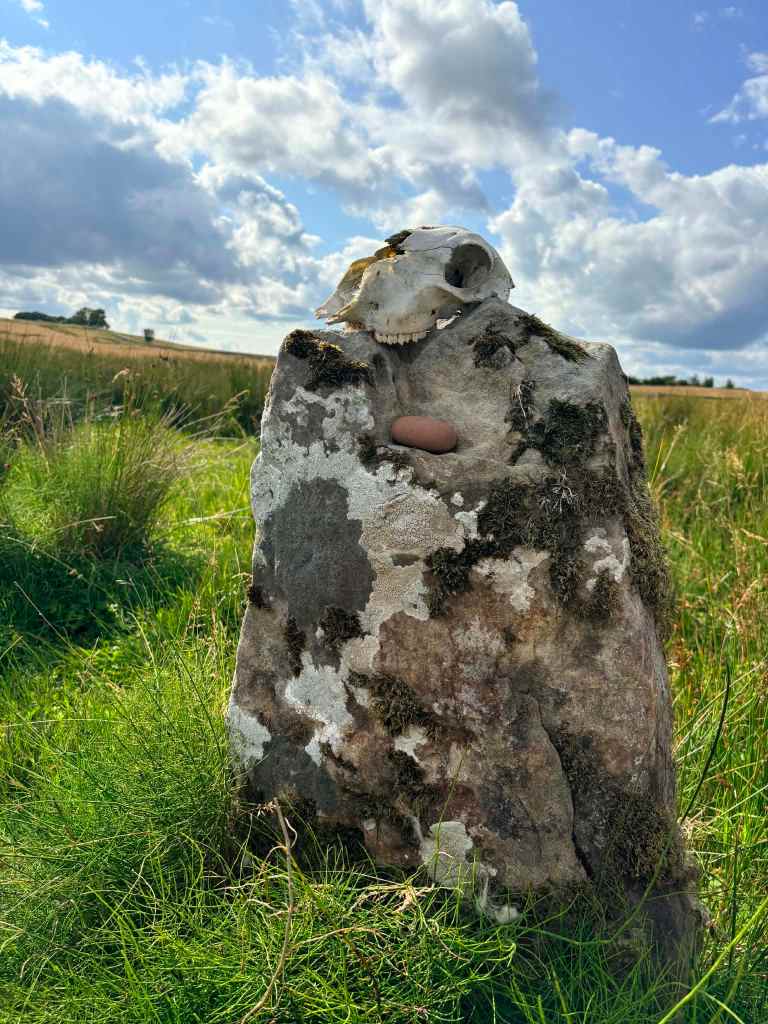
Or rather, we found the stone that marks where her well once was.
Actually, that’s also not entirely true. We found the sheep’s skull that somebody had balanced on top of the stone. Without that, I’m not convinced we’d have spotted it at all.
Who Was Coventina?
Coventina wasn’t one of the big Roman gods that everyone has heard of. She was a local Celtic goddess of springs and sacred waters, worshipped here in the North East long before the Romans arrived. When they built Hadrian’s Wall and the nearby fort at Brocolitia, they didn’t replace her with one of their own deities, they adopted her instead.
Her sacred well became an important place of worship, and over the years people left thousands of offerings in the water. Archaeologists have uncovered coins, jewellery, pottery, sculptures and beautifully carved altars dedicated to her. Some people would have come hoping for healing, others for protection, and some simply to ask for a little luck from the goddess of the spring.
I love that she was so tied to this particular place. She wasn’t worshipped across the whole Roman Empire, she was native to here in the North East of England.
Knowing all of that made it a little sadder, standing there looking at… well… a stone.
No plaque. No information board. Nothing with her name on it.
If we hadn’t spent time researching the location of the well before our walk, watching various YouTube videos trying to work out exactly where the well was, being forewarned in them that it’s hard to find, we’d have probably given up.
I couldn’t help wondering if things would be different if she’d been a god instead of a goddess. Male rather than female. Perhaps there’d be a sign explaining who she was. Maybe there’d be something celebrating the fact that this is one of the most important Romano-British religious sites ever discovered. I’m pretty sure there would be a plaque marking the spot at the very least…
Instead, unless you already know her story, she’s almost invisible.
The hiker in me that loves to be out where there are no other people around, loves that Coventina’s Well, is tucked away amongst the fields, an ancient secret lost in time.
But another part of me wishes her story was a little less of a well kept secret.
For those of us who love folklore, mythology and the old gods, places like this feel special. There’s something magical about standing where people have come for nearly 2,000 years to honour a goddess, even if all that’s left to mark the spot is a weathered stone… and a sheep’s skull.
The route was supposed to be around 11 miles but somehow, by the time we’d finished, we’d clocked up over 14 due to having gone a little off-piste a few times because we were too busy chatting to pay attention to the map (I’ll take the blame for that one being as I had the map!) and partly because we’d zigzagged trying to find Coventina’s Well. The funniest part? It actually turned out to be right next to the car park where we’d started!
I did have one moment where I quietly wondered what one of the group who hadn’t been out on one of our Witchy Walks before must have been thinking. Was she starting to wonder if we actually knew where we were going, or if she’d ever see the car park again? Hopefully the extra mileage didn’t put her off, and she’ll trust us enough to join another walk soon…
Visiting Stonehenge at the Summer Solstice has been on my bucket list for as long as I can remember.
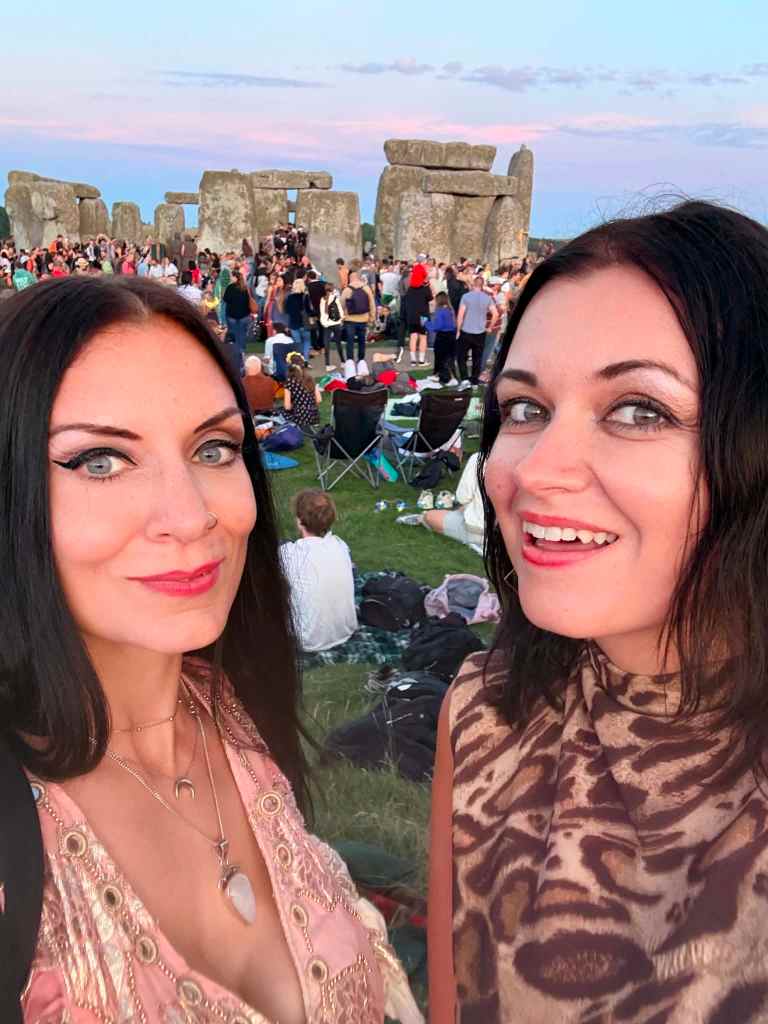
When one of my best friends and I booked a girls’ trip to Glastonbury, I realised the dates were just after the solstice. It honestly felt like the universe was giving us a little nudge to add Stonehenge onto the beginning of our adventure. How could we not?
So on the morning of the solstice, I travelled all the way from the North East of England down to Hampshire where she lives. The journey was surprisingly painless until I hit the M25… That’s one thing I definitely don’t miss about living in London – trying to get anywhere on that motorway! Thankfully once I’d escaped that particular circle of hell the rest of the journey was easy.
After dropping my bags at my friend’s house we headed over to Salisbury to catch one of the shuttle buses to Stonehenge.
There were long queues for the buses but they moved surprisingly quickly. The shuttle costs £10 each way so in hindsight it would actually have been cheaper to pre book parking at Stonehenge through English Heritage for £25. We’d avoided driving because we assumed the roads would be absolute chaos around the solstice but they were actually fine. Lesson learned for next time!
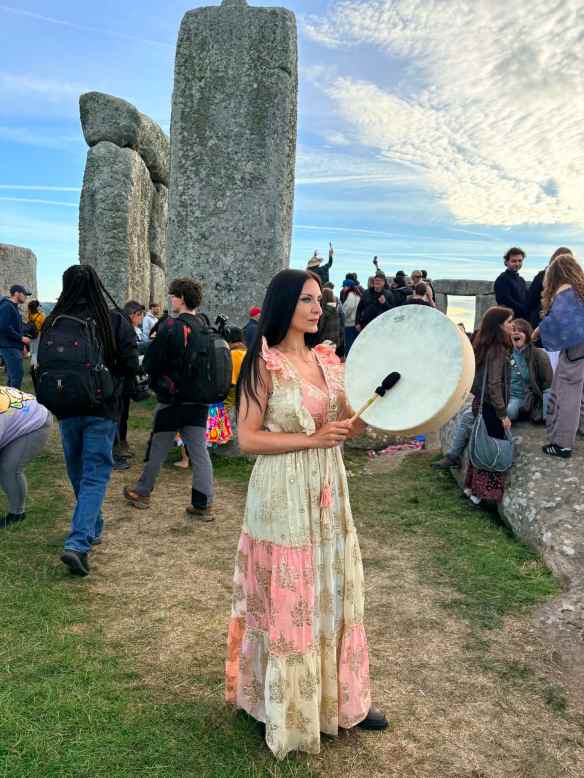
Armed with backpacks full of snacks, blankets, extra layers and of course my drum we finally arrived at the site.
The longest queue of the evening was for the security bag check where they were making sure nobody was bringing in alcohol, illegal substances, glass or weapons.
As for me? There was no chance of me trying to sneak alcohol in. I didn’t drink a thing all day, alcoholic or otherwise, not because I was trying to be sensible but because I absolutely hate portaloos. My strategy was simple. Don’t drink, don’t need the toilet. Unfortunately once I break the wee seal ,I pee for England!
I did end up using the loos twice and honestly they weren’t nearly as horrific as I’d imagined. They’re still one of the main reasons I avoid festivals though. Well, that and the crowds.
Speaking of crowds…
Yes there were thousands of people there and although I usually like to place myself out in the wilderness, surrounded by nature and minimal people, I was more than willing to brave the crowds this once for the chance to get up close to the stones.
Summer and Winter Solstice are the only times of year you’re allowed to walk right up to Stonehenge. The rest of the year the stones are roped off unless you pay for one of the exclusive Stone Circle Experiences through English Heritage and that applies even if you’re an English Heritage member.
We arrived just as the sun was beginning to set and found ourselves a little spot to lay our blankets. It was close enough to enjoy the atmosphere but far enough away that we thought nobody would trip over us.
We were wrong, there was a point during the night where a woman stumbled straight across our blankets and stood directly on my drum.
Thankfully the drum survived.
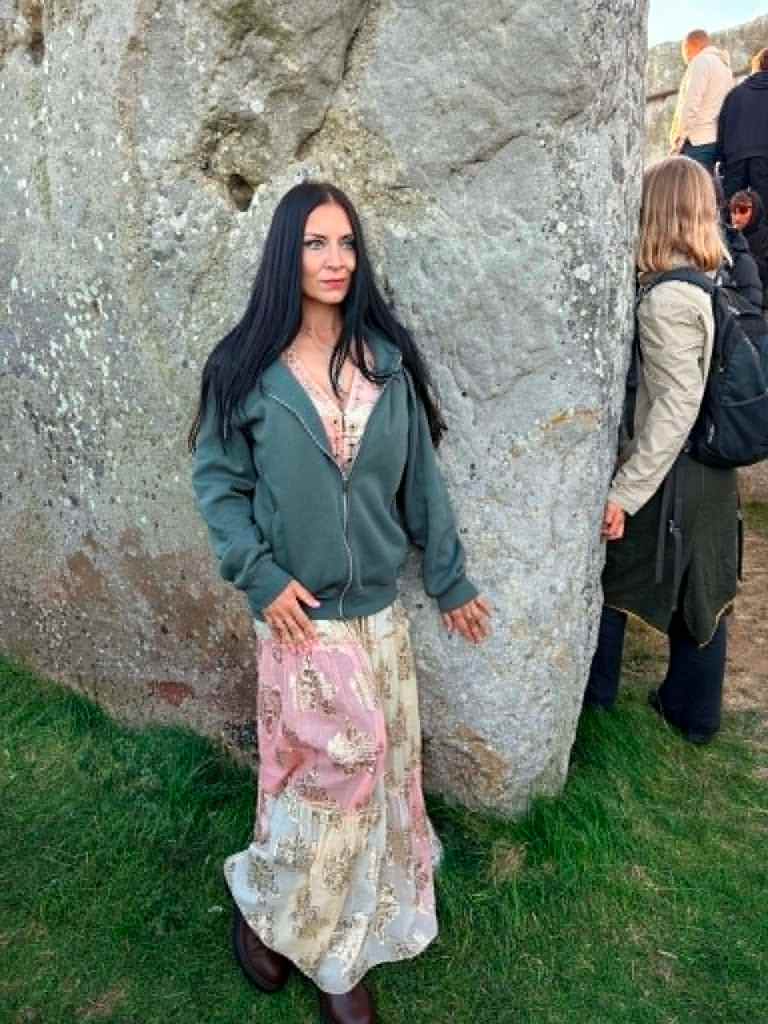
As darkness fell we wandered into the stone circle itself. Finally being able to reach out and touch the stones was incredibly special. There was drumming, chanting, people meditating and people celebrating. It felt unlike anywhere I’d ever been before.
By around midnight exhaustion or old age caught up with us, it’s been a long time since I last partied all night… So wrapped in our blankets beneath a sky full of stars we somehow managed to get a few hours’ sleep.
I’m actually a huge fan of camping, usually with a tent, but there was something pretty magical about sleeping out in the open with Stonehenge only a few metres away. Every time I opened my eyes during the night the stones somehow seemed closer than before.
My imagination? Maybe.
Magic? 100%.
Nature certainly made its presence known too.
Anyone who knows me knows I’m not exactly the biggest fan of creepy crawlies. Thankfully it was too dark to spot any spiders. What we did have however were hundreds of cockchafers buzzing around. Weirdly though, I actually think they’re quite cute. Those fluffy little antennae make them look like tiny fairy bugs… Well until one flies directly into your hair.
Ah yes. Being at one with nature.
At around 4am we both woke up naturally as the sky began to brighten and the crowd’s energy grew more electric.
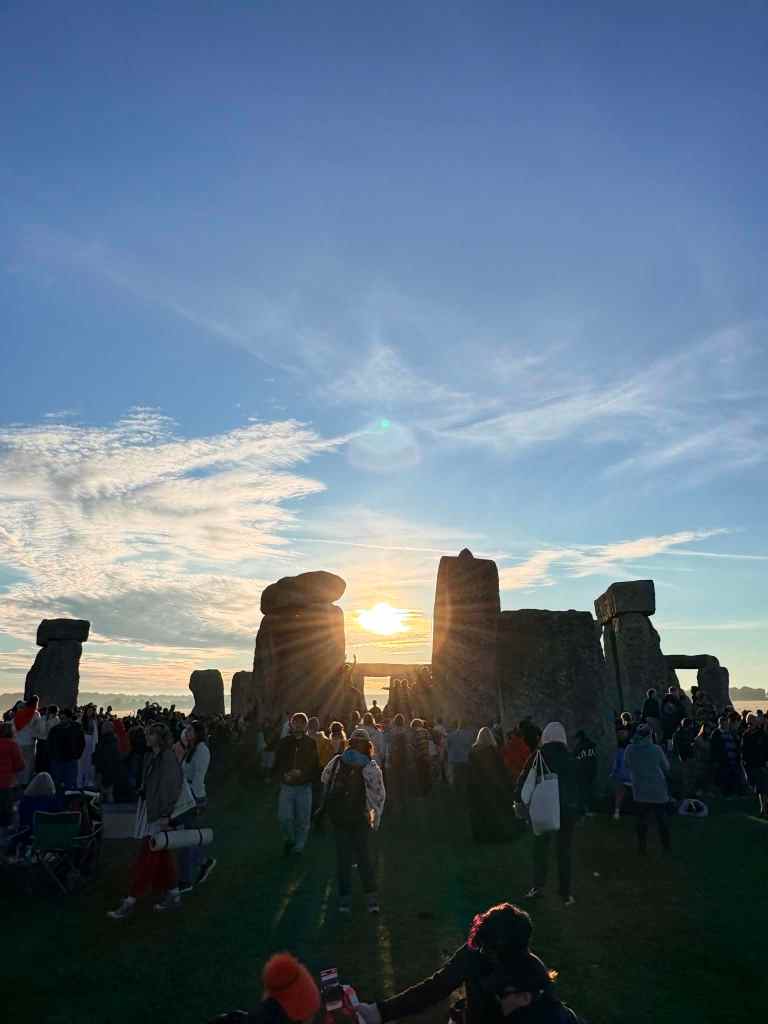
People slowly started gathering around the Heel Stone waiting for sunrise.
Then it happened.
Watching the sun rise perfectly between the ancient stones is one of those moments that’s impossible to fully capture in words or photographs. There’s a reason people have gathered here for thousands of years. Whether you’re there for the history, the spirituality, the atmosphere or simply curiosity it’s an incredibly moving experience.
It was everything I’d hoped it would be.
Nobody knows for certain why Stonehenge was built and I think that’s part of what makes it so fascinating. Was it a place of worship? A giant calendar marking the changing seasons? A site for ceremonies or healing? All of the above or something we haven’t even thought of yet? There are plenty of theories but no definitive answers.
Standing there among the stones though, none of that really seemed to matter. There was something incredibly humbling about knowing I was walking the same ground as the people who built this incredible monument thousands of years ago.
Running my hands across the stones they had carefully placed all those centuries ago made me feel connected, if only for a moment, to the ancient wisdom and mystery of those who came before us.
Stonehenge at Summer Solstice had been on my bucket list for years and I’m so grateful I finally got to experience it, especially alongside one of my best friends.
Would I Go Again?
Absolutely.
Despite the crowds. Despite the portaloos. Despite nearly losing my drum to a drunken stranger.
That being said, I probably wouldn’t stay overnight a second time.
If I were to do it again I’d pre book parking through English Heritage, arrive around 3 or 4am, watch the sunrise, soak up the atmosphere for a few more hours and leave when the site closes at around 10am.
But for a first visit?
Sleeping beneath the stars beside one of the world’s most famous prehistoric monuments was something I’ll never forget.
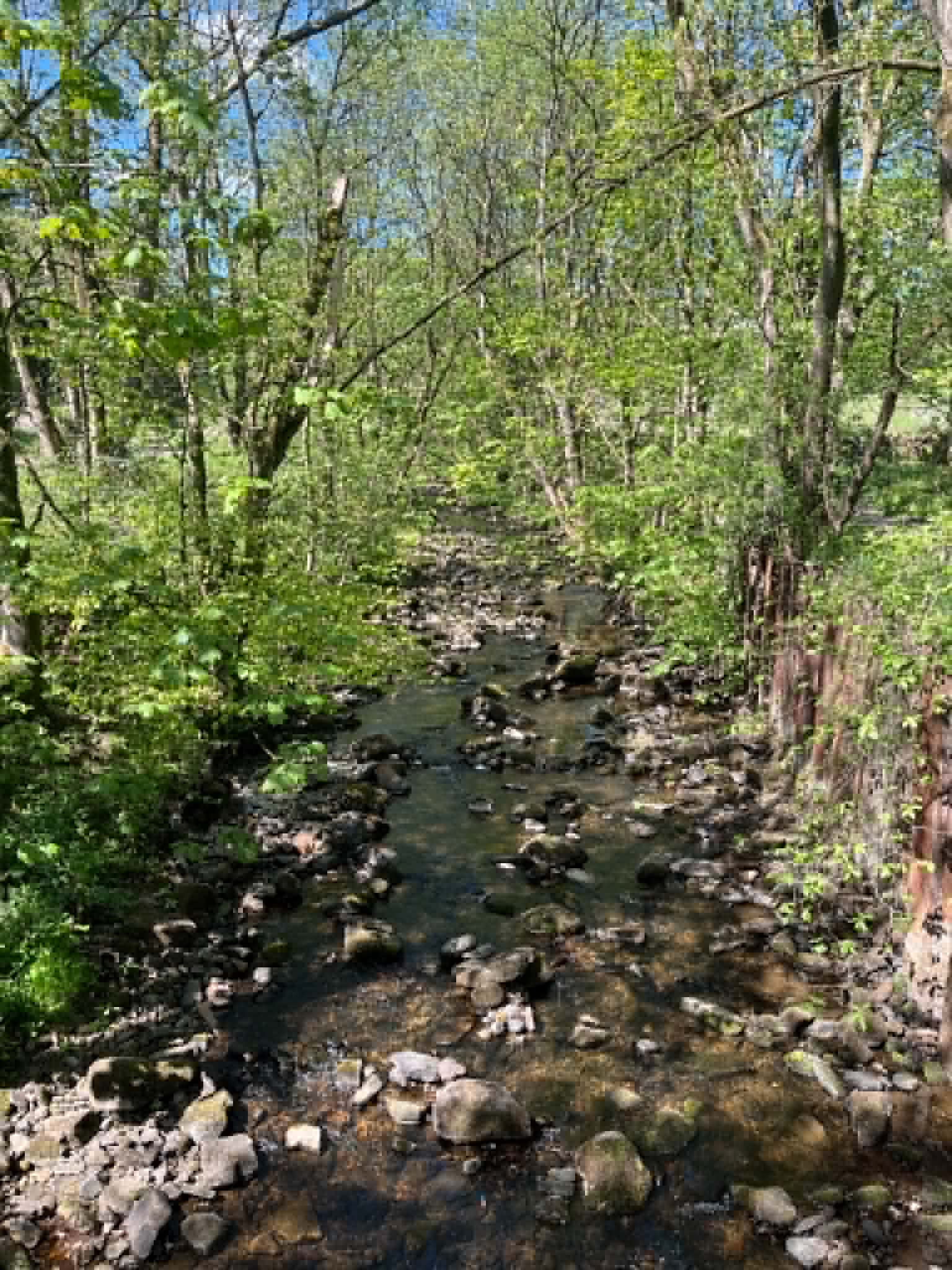
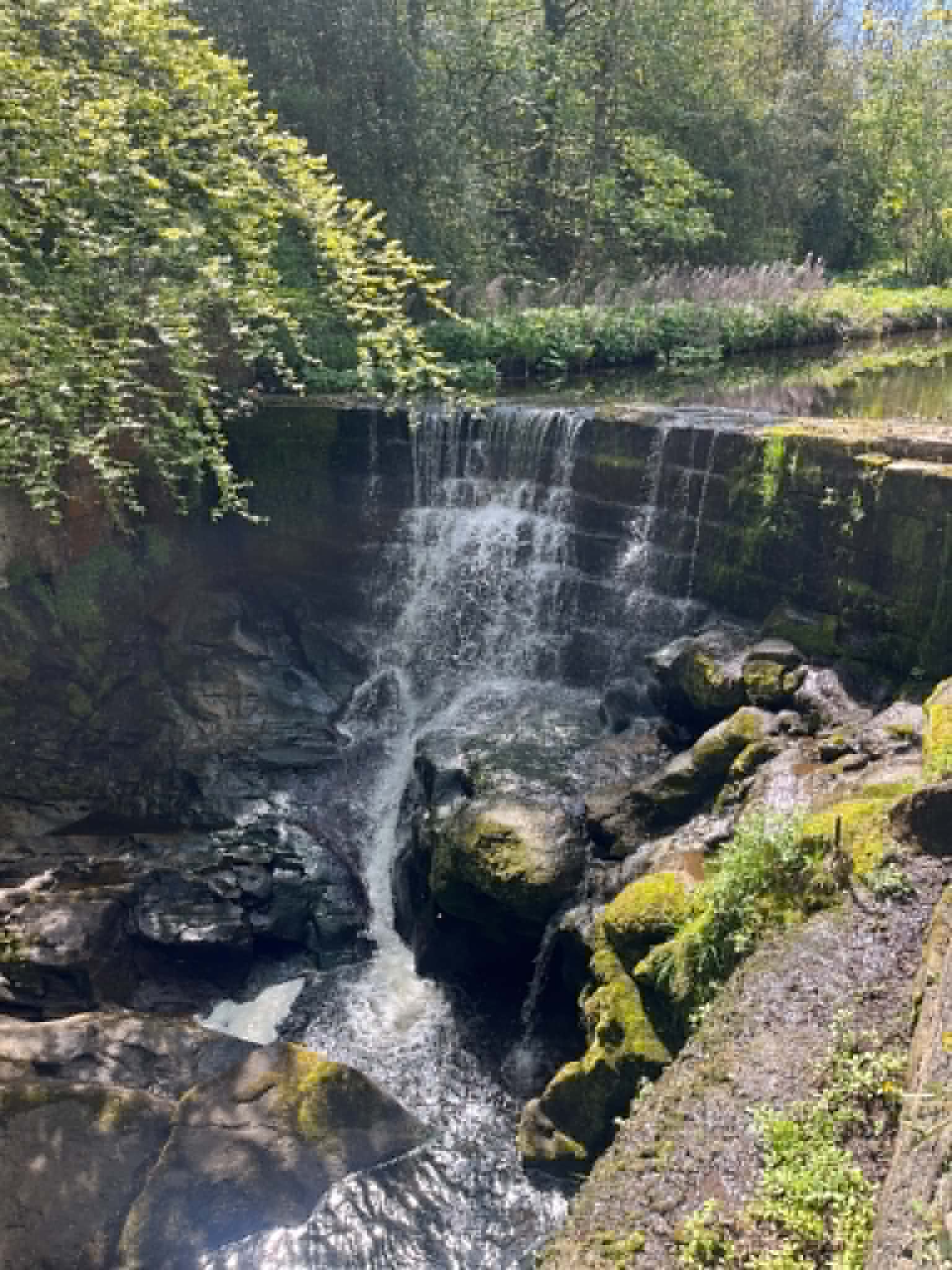
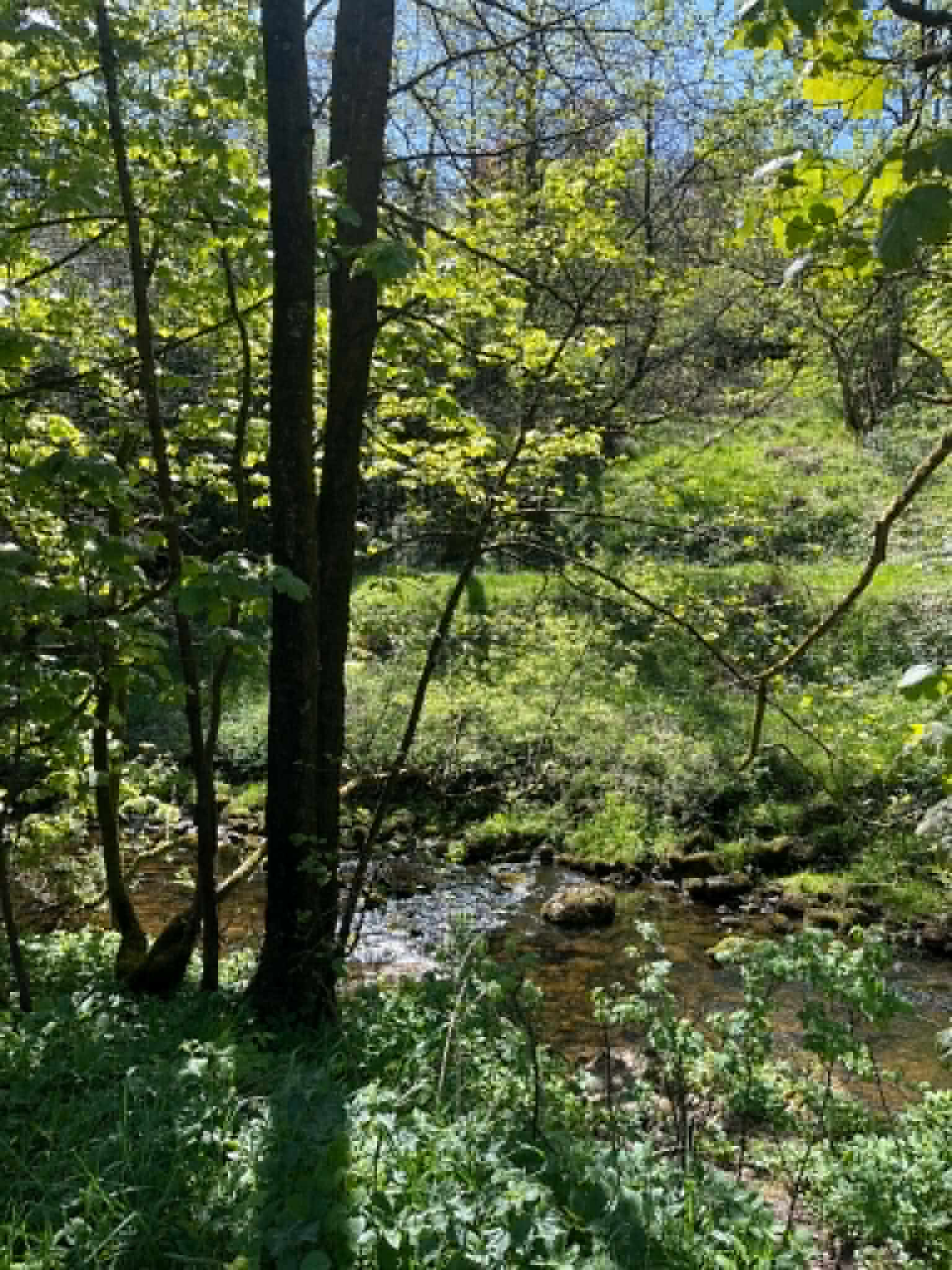
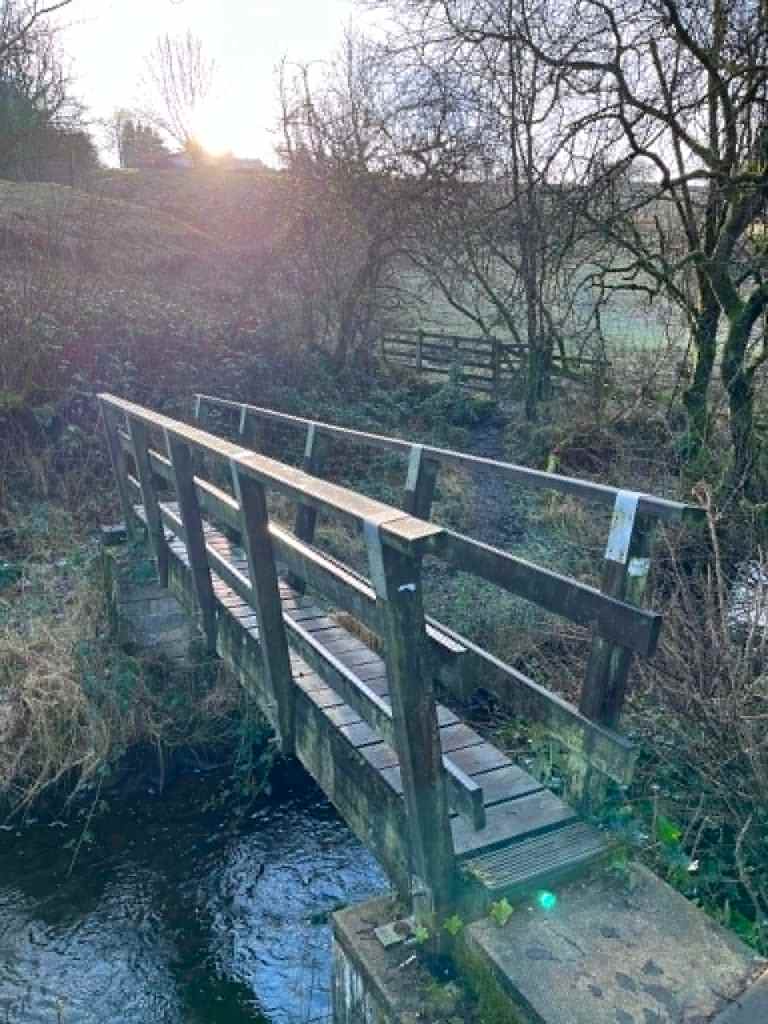
Imagine this, hiking on a warm summer’s day, sunlight dappling through the trees, the gentle sound of a stream trickling alongside your path, birdsong overhead, leaves rustling softly in the breeze. Sounds like something from a guided meditation doesn’t it?
Well backtrack to 1612 and the atmosphere in this very same spot would have been very different.
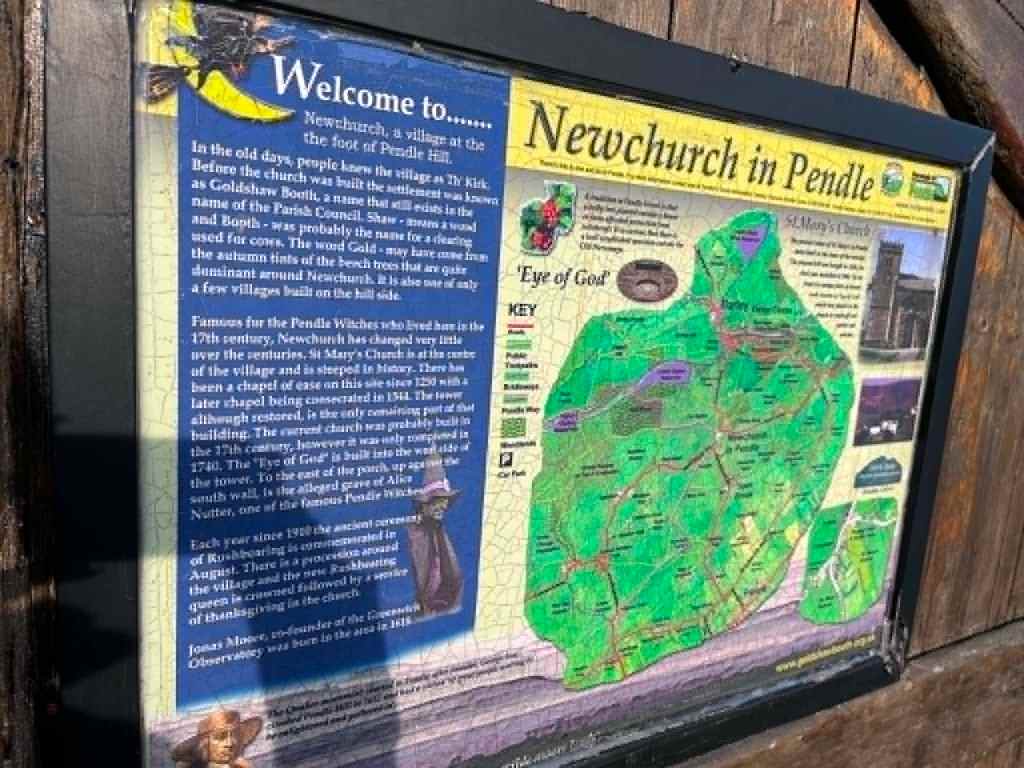
This is Pendle, a landscape forever marked by the Pendle Witch Trials, a tragic chapter in history that saw twelve people accused of witchcraft, marched over 50 miles to Lancaster and ultimately tried for their lives. Their supposed crimes? Often nothing more than poverty, herbal knowledge or being in the wrong place at the wrong time.
Today, their path has become a trail of remembrance and reflection known as the Pendle Witches Walk. Stretching from Barrowford to Lancaster, the route guides you through rolling moorland, sleepy villages and ancient woodland, inviting you to walk not just through nature but through time itself.
The Pendle Witch Trials remain one of the most infamous witch trials in English history. Taking place in a time of deep superstition, religious tension and fear of the unknown. The trials led to the execution of ten people who were accused of practicing witchcraft, consorting with the Devil and causing harm through curses and spells.
The accused came from two impoverished families both led by wily, old matriarchs – the Demdikes and the Chattoxes, both of whom had long standing reputations as local “cunning folk” that people believed to possess magical or healing abilities. These were often herbalists or folk healers, mostly women, who lived on the fringes of society and were equally as sought out as they were feared by their neighbours.
The accusations spiralled when in March 1612, Alison Device, a young woman from the Demdike family allegedly cursed a peddler who then suffered a stroke. This triggered a wave of suspicion and blame that ultimately led to the investigation.
Alison was hauled in front of the local magistrate and in confusion, ends up not only confessing but also incriminating her Grandmother, Demdike and her local rival Chattox. In April 1612, The two are interrogated at Ashlar House and maybe to enhance their reputations, try to outdo each other with their stories including one of meeting the devil in a quarry ending up with them being committed for trial for witchcraft and incarcerated at Lancaster Castle.
Then on Good Friday, other members of the Demdike and Device families meet at Malkin Tower – which you can see in the distance during the walk, and feast on stolen mutton, a local constable is called and the group at the alleged ‘witches sabbath’ meeting are accused of plotting to free the imprisoned women and blow up the castle, they are also then rounded up and imprisoned.
In August 1612, the trial begins and the prosecution’s star witness is Jennet Device who in court, identifies those who attended the Good Friday meeting, including her mother Elizabeth and Alice Nutter who was a woman who stood apart from the others due to her relative wealth and social standing. Alice came from a respected Catholic family, a detail that many believe played a key role in her arrest. At a time when anti-Catholic sentiment was rife under Protestant rule, and with King James I fuelling nationwide fear through his obsession with witch hunting, her faith may have made her an easy target. The evidence presented against her and against many of the accused was dubious at best, often based on rumour, the testimonies of children or confessions extracted under duress but the evidence, the confessions already given and the pressure of the prosecutors, keen to ingratiate themselves to James I, meant the trial was over in just three days.
All of the ‘guilty’ were hanged apart from Demdike who died as a prisoner before the trial.
Their fate was sealed not by proof, but by paranoia and prejudice. Only one of the accused, Alice Grey was found not guilty, and another, Jennet Preston, had already been tried and executed in York.
Today, their story is a powerful reminder of how fear, social divides and unchecked authority can lead to devastating injustice.
Walking through the fields and hill that these women once walked, you can still feel their presence in the air, their stories echoing through time.
The section of the walk I did was an 8.5 mile circular route which is one of ITV’s Britain’s Favourite 100 Walks list and you can find the route on the OS maps app which I thoroughly recommend if you’re planning to hike anywhere, you just find your route, follow the arrow, it’s impossible to get lost.
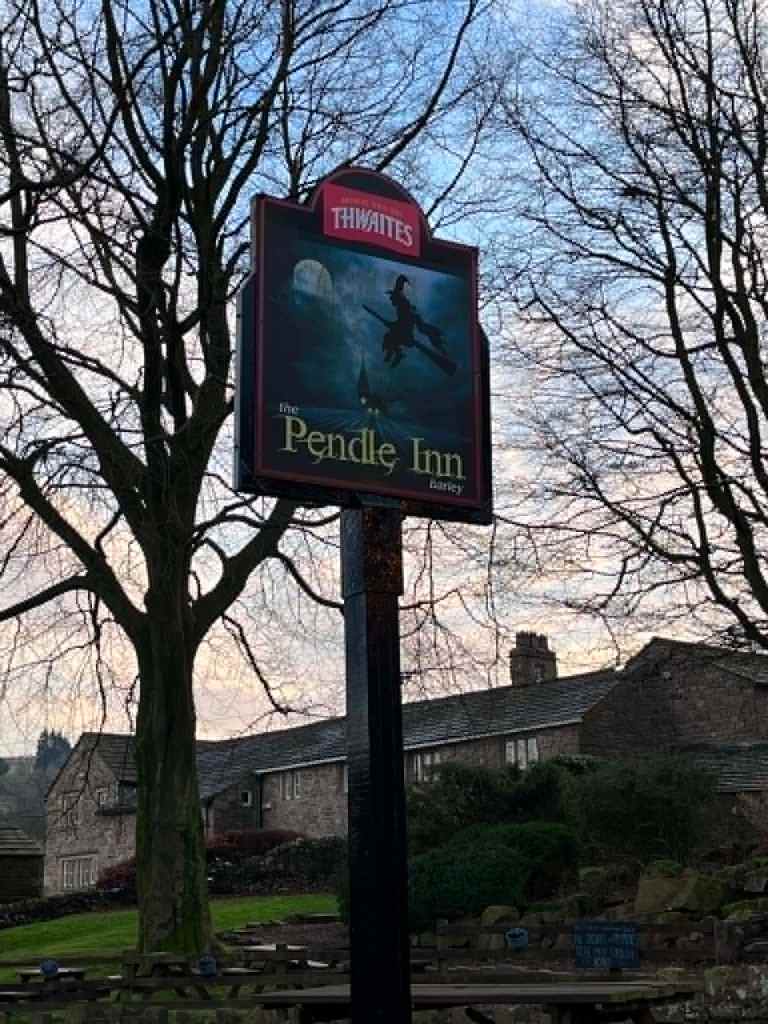
Parking is available at the visitor centre in Barley which sits right at the heart of the figure of eight style hiking route making it an ideal starting point for your walk. Directly opposite is The Pendle Inn which also offers parking for patrons and serves as the perfect base if you’re visiting from out of town. Nestled beneath the dramatic rise of Pendle Hill, the inn offers a warm, welcoming atmosphere, hearty food (I recommend the tomato soup, it was delicious), local ales and comfortable chalet accommodation which is ideal for resting and recharging after a day on the trail.
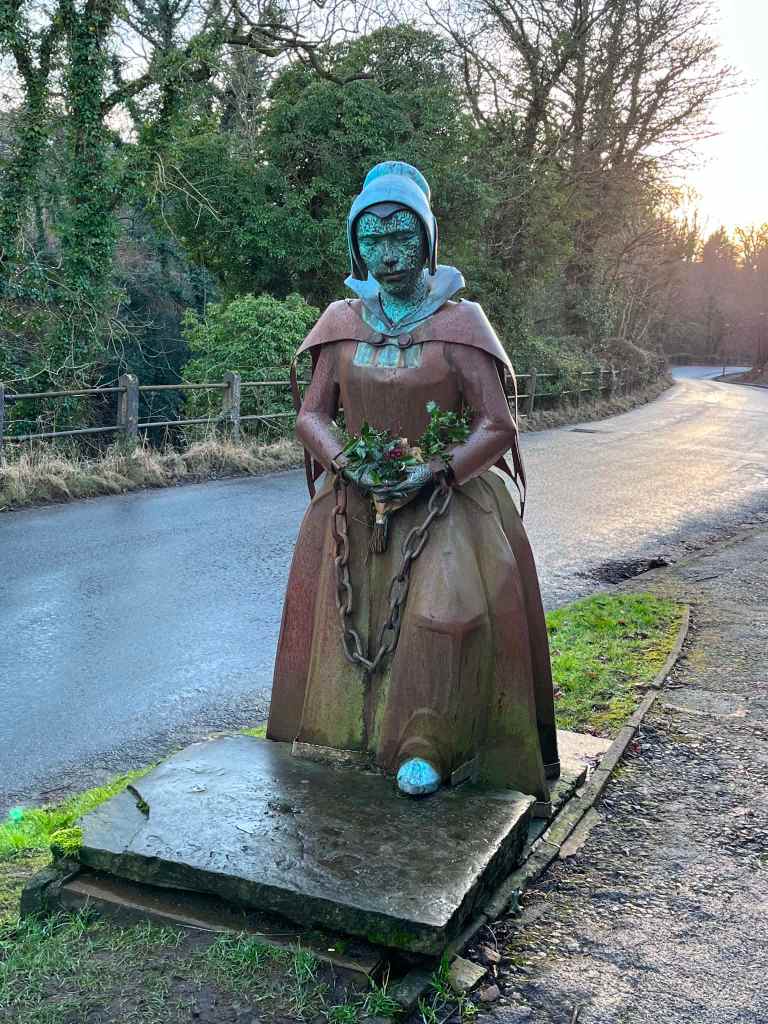
As you walk through the village of Roughlee, you’ll pass a bronze statue of Alice Nutter, one of the twelve accused in the infamous Pendle Witch Trials. She stands tall and dignified and invites you to remember the real people behind the legends.
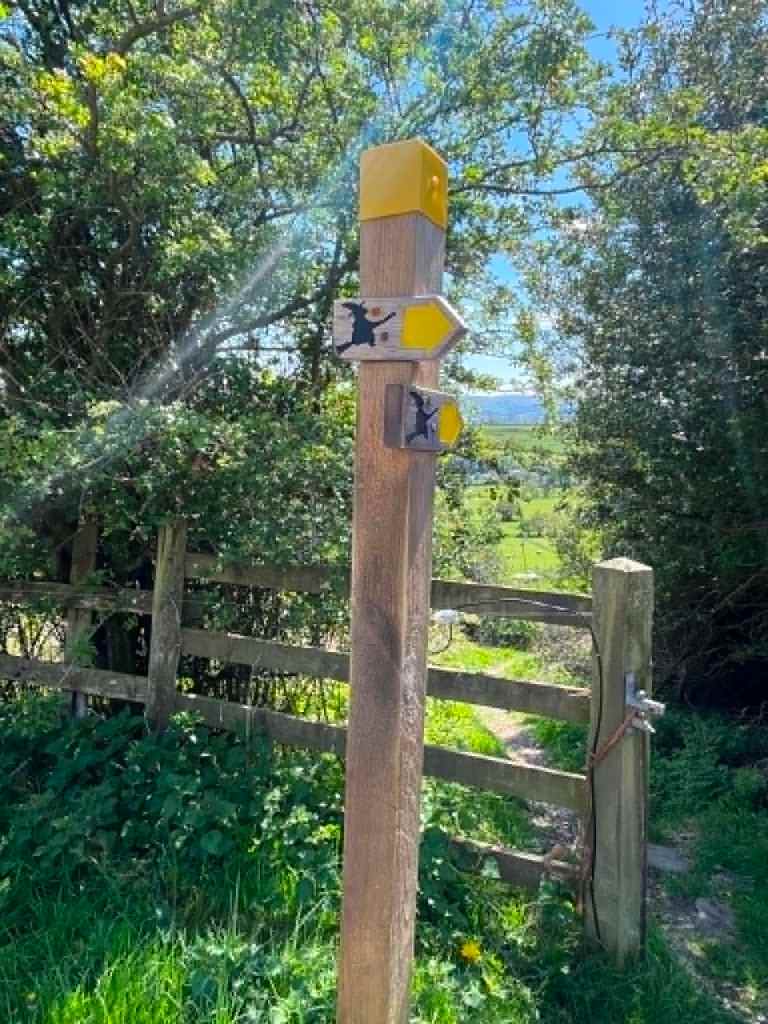
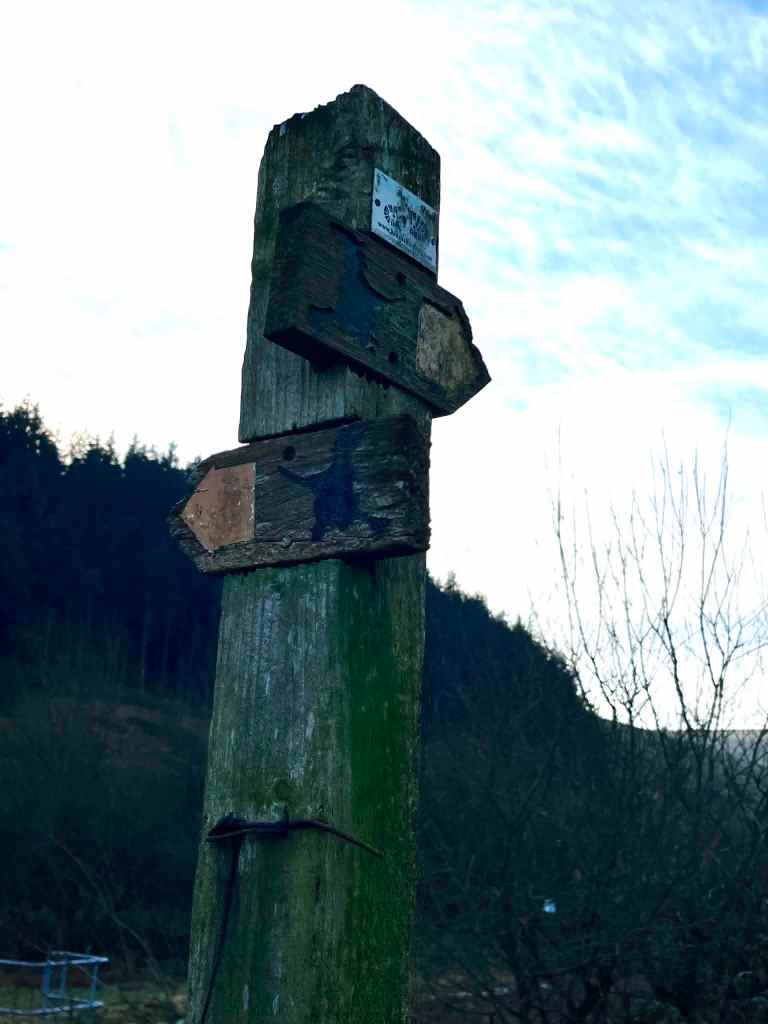
As you continue, you’ll notice many pointers with depictions of witched on them placed thoughtfully along the route.
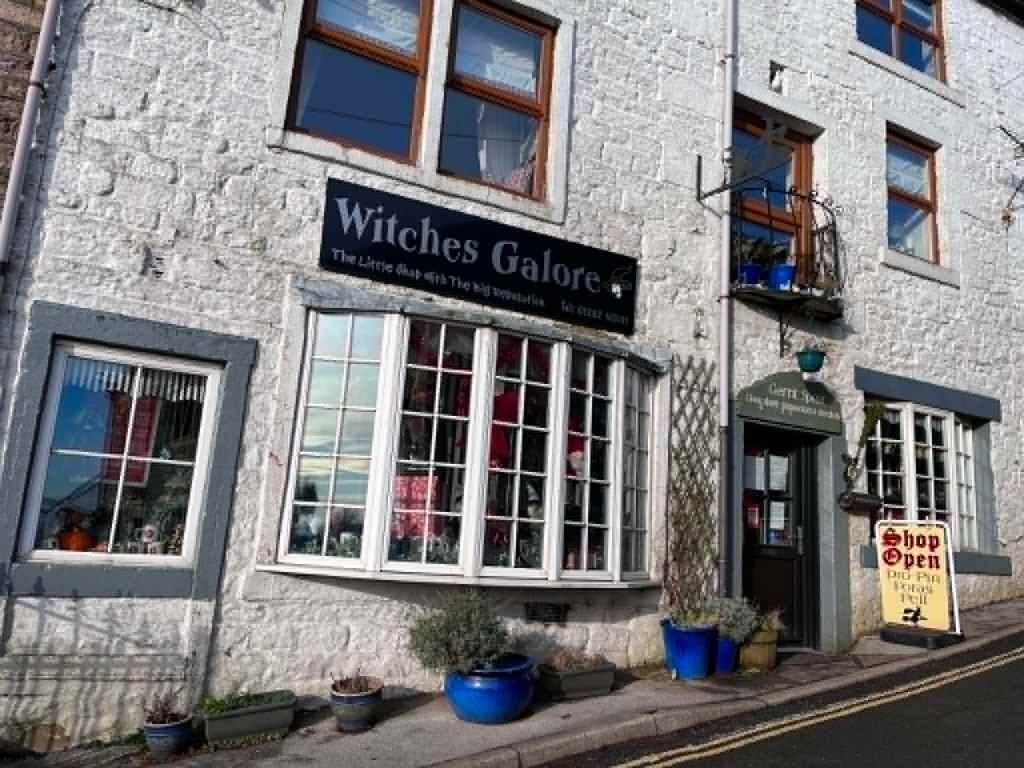
As you pass through Newchurch Village, make sure you stop at Witches Galore, a shop filled with spooky merchandise to pick up some souvenirs, I personally couldn’t resist a little cast iron cauldron, a tea towel depicting Pendle’s witchy history and a copy of my favourite childhood story, Gobbolino the Witches Cat by Ursula Moray Williams.
The path winds through winding country lanes, open fields, and timeless stone villages, so whether you’re drawn by curiosity, history, or healing, this stretch of the walk offers more than just scenery, it offers a connection to voices long past and a gentle reminder that their story still lives on.
Although the Pendle Hill peak isn’t part of the hike, it’s not too far off piste so if you’re feeling energetic you can make your way to the top.
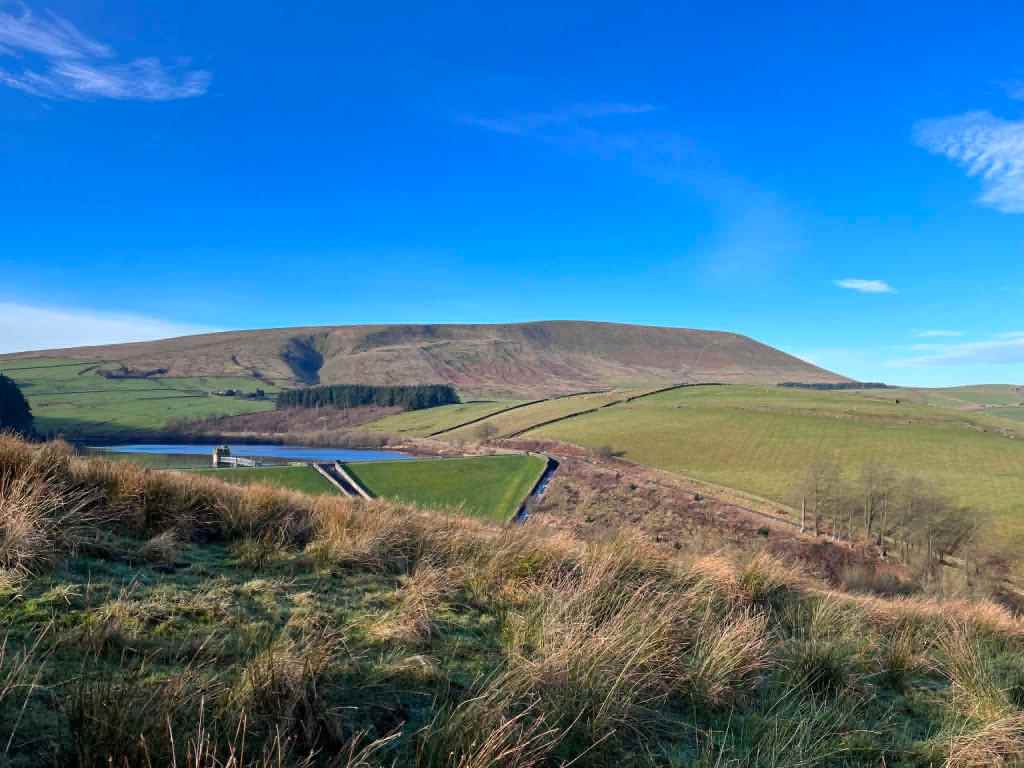
Climbing Pendle Hill is a spiritual experience all of it’s own. The ascent is steep but rewarding. At the summit you can experience breathtaking views that are more than a reward for your physical effort. There’s something about standing up there that moves something in the soul.
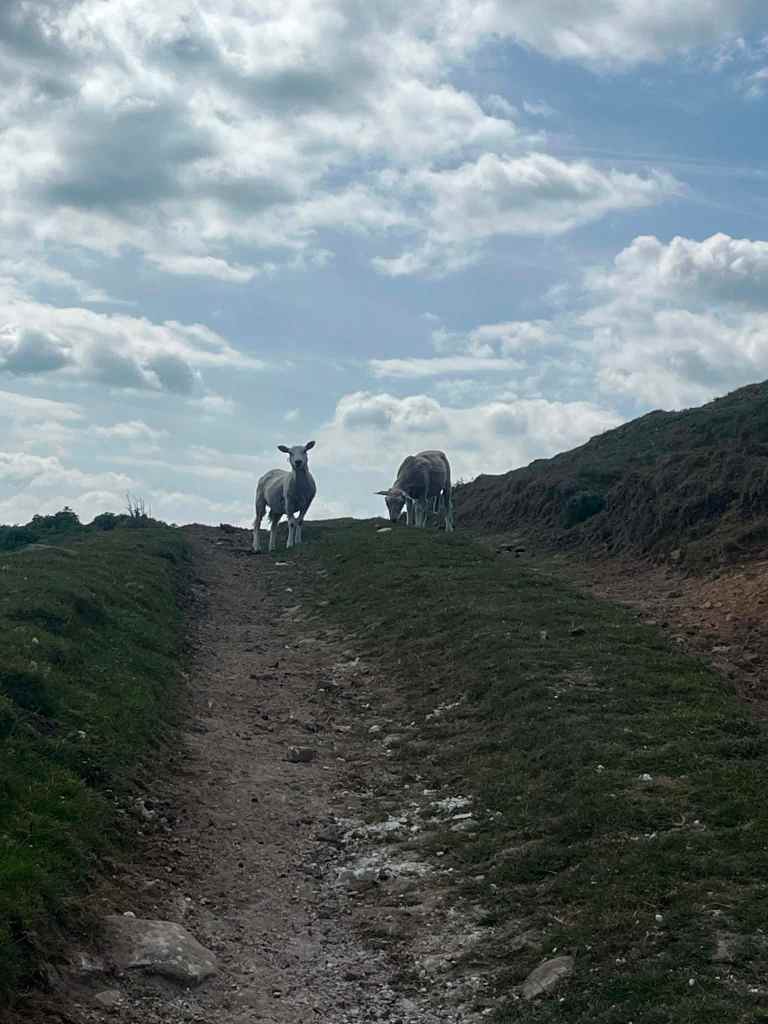
If you’re looking for a much spookier atmosphere, I’ve also hiked the same trail on a cold and frosty January and it was an entirely different experience. Gone were the soft greens and golden light of summer, instead, the landscape felt much more raw and untamed. Pendle Hill loomed darker and foreboding, bare branches reached out like skeletal fingers and the fields were patched with frost that crunched underfoot. Even the sheep with their wooly winter coats looked cold. What felt gentle and inviting in the warmth of summer took on a bleaker, more haunting quality.
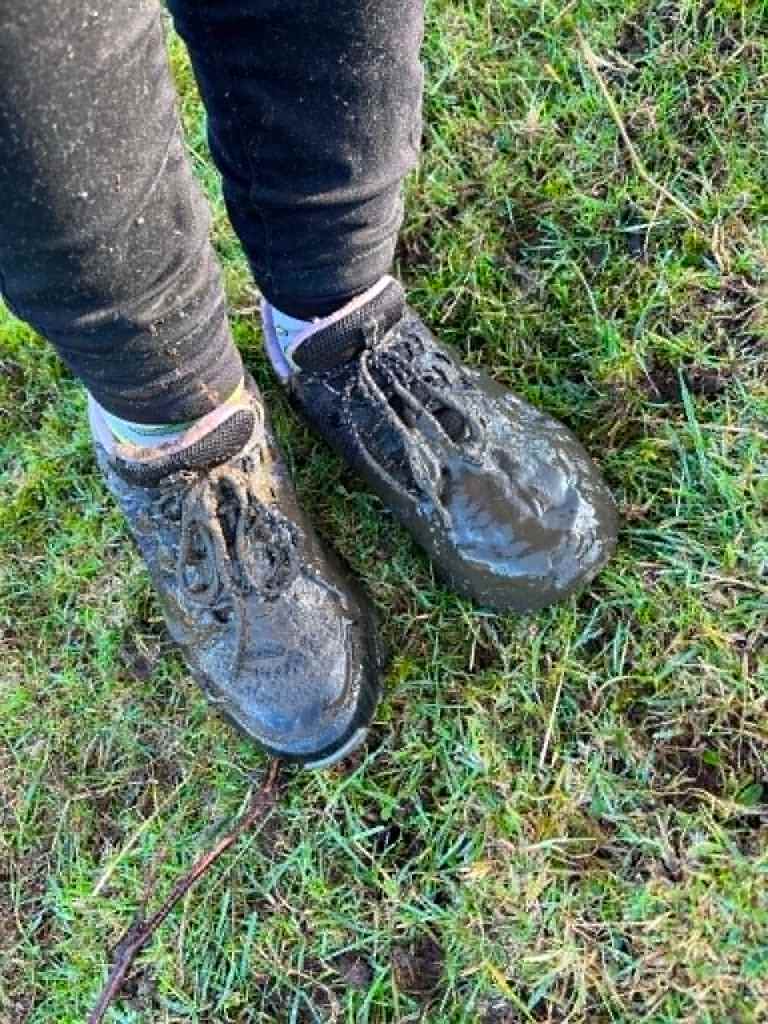
The paths themselves were harder going, spectacularly muddy in parts to the point where my hiking boots were well and truly submerged and the villages, quiet at the best of times, seemed almost deserted. Even Witches Galore, normally a lively and bustling place, felt quieter as I walked around minus my muddy hiking boots which I left at the door.
Whatever season you choose to walk the Pendle Witches Trail, there’s a sense that the land holds these women’s memory. You feel as though the earth remembers them, that the energy of those silenced centuries ago still lingers like an imprint, carried on the wind and underfoot with every step you take.
Even in the brightest summer light, you can feel the shadow of those who walked here before you, a quiet echo in the rustle of leaves or the sigh of the wind across the moor. You imagine their footsteps along the stiles and across the fields, and it’s impossible not to think of how differently their lives might have turned out in another time.
Whether you go to Pendle seeking connection with history, with nature or with yourself, the Pendle Witches Walk offers more than just a hike. It’s a pilgrimage, a tribute to the strength of the women or ‘witches’ who walked this landscape all those years ago and a walk where each footstep honours those who were silenced.
The Pendle Heritage Centre is also worth a visit, as well as exhibits on the trials, it also has a lovely walled garden, a fairy trail and a café and if you have time, Lancaster Castle isn’t far and should also be on your to do list whilst you’re in the area if you want to see where the women were held.
If you want to follow the route we took, download OS Maps and click on the link below.
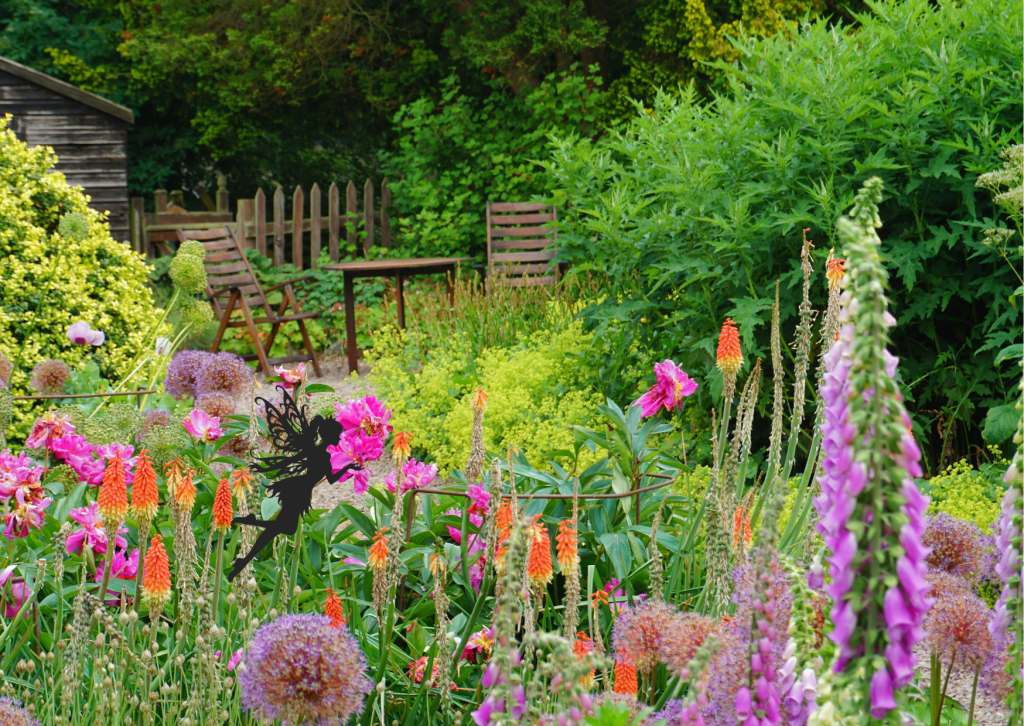
Beltane, traditionally celebrated on May 1st, sits at the midpoint between spring and summer in the old Celtic seasonal cycle. It marks a time when the land is thought to be fully awakening, growth is vigorous, blossom is abundant and the boundary between the everyday world and the “otherworld” is said, in folklore, to become thinner.
In many folk traditions across Ireland, Scotland, and parts of Britain, this is the season when faeries, nature spirits, and elemental beings are most active. Whether understood literally, symbolically or as part of a poetic way of relating to nature, Beltane carries a strong sense of life-force, fertility and enchantment returning to the land.
Beltane and the “thin places”
In older Celtic belief, certain times of year (Beltane and Samhain especially) were considered liminal – threshold moments when ordinary boundaries loosen. At Beltane, this “thinness” is associated with blossoming hedgerows, rising sap and the first full warmth of the sun.
Folklore describes faeries not as cartoon-like figures, but as ambiguous nature intelligences, sometimes helpful, sometimes mischievous, often deeply tied to place: a hill, a spring, a tree, a stone or a garden left undisturbed long enough to feel wild again.
Nature spirits, elementals, and gardens
In later occult and esoteric traditions, these beings are often grouped as “nature spirits” or “elementals” connected with earth, air, fire and water. In that framework:
Earth spirits are linked with soil, roots, stones and slow-growing plants
Water spirits with ponds, rain, dew and moist shade
Air spirits with wind, scent, seeds and birds
Fire spirits with sunlight, warmth, flowering and transformation
A garden becomes, symbolically, a meeting place of all four.
Whether you take this literally or as a meditative way of engaging with ecology, the underlying idea is the same: a garden becomes more “alive” when it is diverse, layered and gently tended rather than overly controlled.
Plants and flowers associated with faerie lore
Traditional folklore and later herbal magic often associate certain plants with faeries or liminal energy. Common examples include:
Hawthorn – strongly tied to faerie folklore in Britain and Ireland; often considered a boundary tree between worlds
Rowan – protective in folk tradition, often planted near homes
Foxglove – associated with faerie gloves or “fairy thimbles” in some stories
Lavender – calming, aromatic, often linked to purification and gentle attraction
Chamomile – used in old herb lore for peaceful, sunny garden energy
Primrose – early spring bloom associated with thresholds and hidden paths
Bluebells – said in folklore to ring or call faeries (especially in woodland traditions)
Thyme – historically linked with fair folk and dreamlike states
A key theme in folklore is not just the plant itself, but the feeling of the plant – fragrance, wildness and slightly untamed growth.
How people traditionally “invite” faerie presence into gardens
In folk belief systems, attraction is less about control and more about invitation. Practices often described include:
Letting parts of the garden grow a little wild (especially corners, hedges, or under trees)
Planting a mix of flowering herbs and native wildflowers
Keeping a small water source like a bowl, birdbath or pond
Avoiding harsh chemical treatments that “sterilise” the land in symbolic terms
Creating small sheltered spaces: stone circles, log piles or leafy archways
At Beltane especially, gardens are often decorated with flowers, ribbons or fresh greenery – echoing older customs of bringing spring indoors and honouring the vitality of the season.
Hag stones and “seeing through”
A hag stone is a naturally occurring stone with a hole formed by water erosion. In British and Celtic folklore, these stones are often carried or hung for protection and, in some traditions, for “second sight” – the ability to glimpse hidden things.
In faerie folklore specifically, looking through a hag stone is said to allow a person to see beyond ordinary appearance – whether that means faeries, spirits of place or simply a heightened awareness of detail in nature. A more grounded interpretation is that it functions as a ritual object that focuses attention: you quite literally frame the world differently when you look through it.
Hag stones are often placed:
Hanging in garden trees or gates
Near doorways or windows
By water features or quiet corners of a garden
A Beltane way of thinking about it
At its core, Beltane folklore is about relationship: between people and land, cultivated and wild, seen and unseen. Whether one believes in faeries as literal beings or as symbolic expressions of nature’s intelligence, the practices associated with them all point toward the same shift in attention—toward noticing life in hedges, soil, insects, wind, and bloom.
A garden shaped in that spirit isn’t “for” attracting anything in a transactional sense. It becomes more like a shared space: layered, slightly untamed and open to interpretation, especially in the bright, proliferating energy of late spring.