
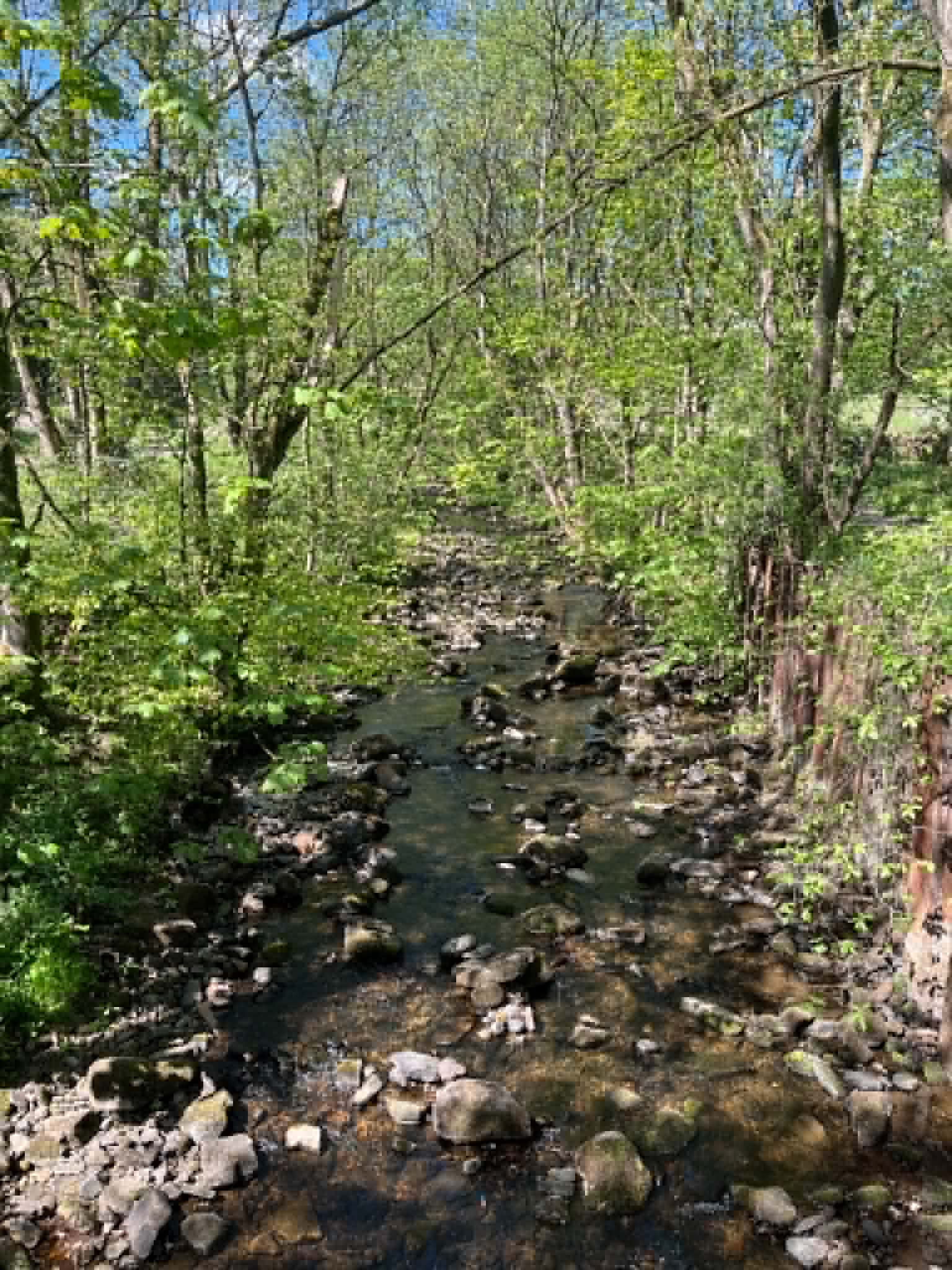
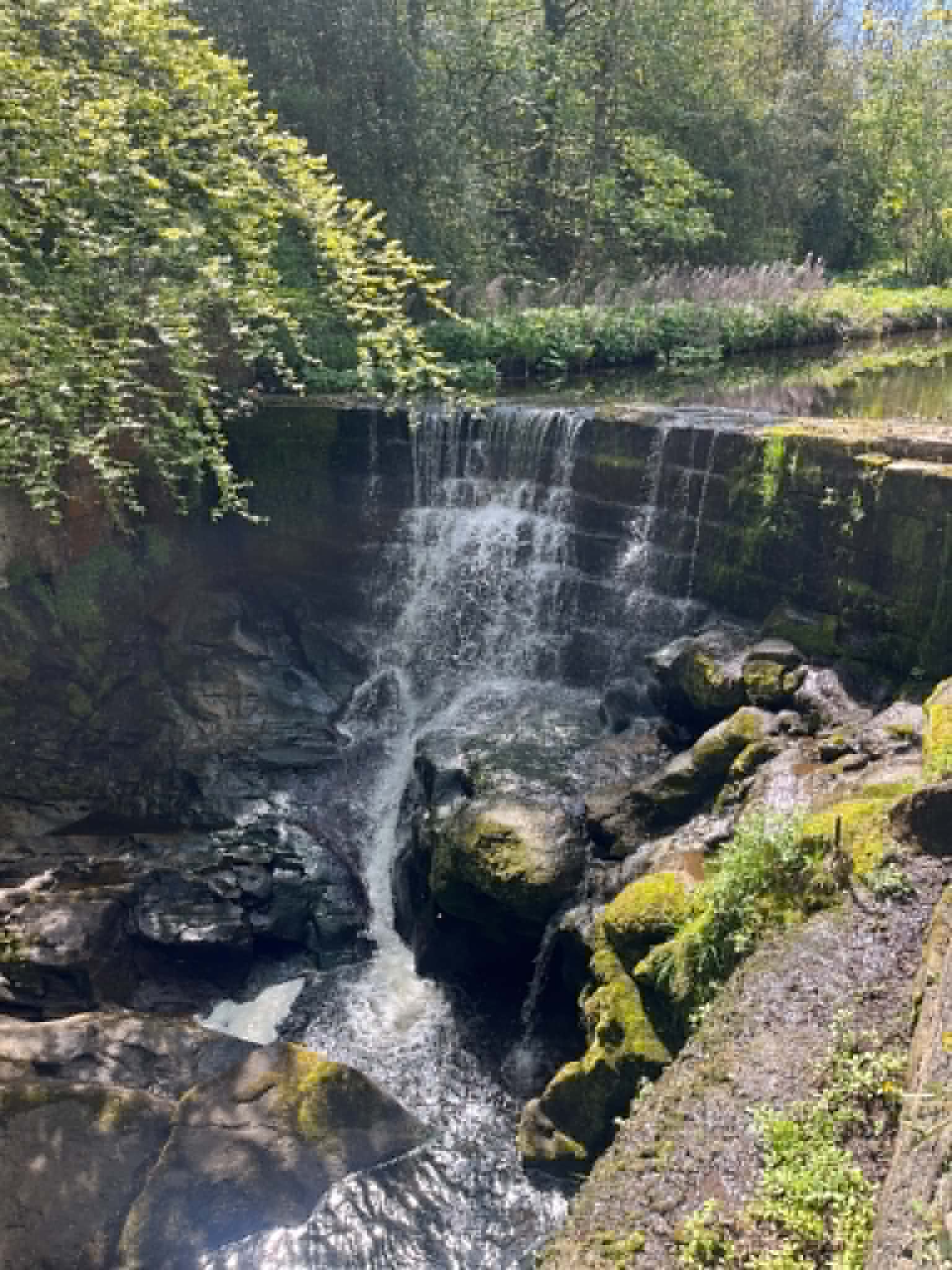
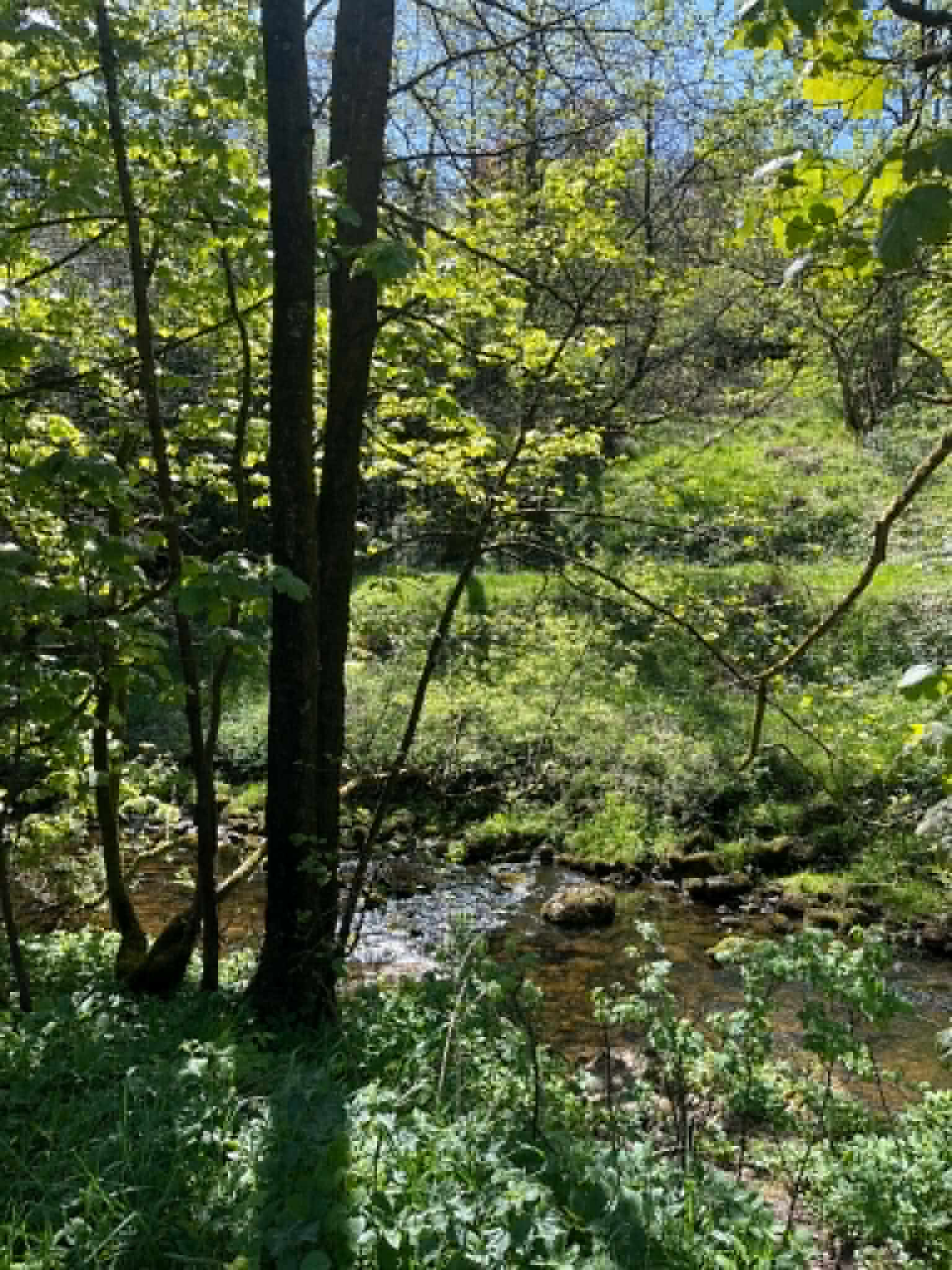
Imagine this, hiking on a warm summer’s day, sunlight dappling through the trees, the gentle sound of a stream trickling alongside your path, birdsong overhead, leaves rustling softly in the breeze. Sounds like something from a guided meditation doesn’t it?
Well backtrack to 1612 and the atmosphere in this very same spot would have been very different.
This is Pendle, a landscape forever marked by the Pendle Witch Trials, a tragic chapter in history that saw twelve people accused of witchcraft, marched over 50 miles to Lancaster and ultimately tried for their lives. Their supposed crimes? Often nothing more than poverty, herbal knowledge or being in the wrong place at the wrong time.
Today, their path has become a trail of remembrance and reflection known as the Pendle Witches Walk. Stretching from Barrowford to Lancaster, the route guides you through rolling moorland, sleepy villages and ancient woodland, inviting you to walk not just through nature but through time itself.
The Pendle Witch Trials remain one of the most infamous witch trials in English history. Taking place in a time of deep superstition, religious tension and fear of the unknown. The trials led to the execution of ten people who were accused of practicing witchcraft, consorting with the Devil and causing harm through curses and spells.
The accused came from two impoverished families both led by wily, old matriarchs – the Demdikes and the Chattoxes, both of whom had long standing reputations as local “cunning folk” that people believed to possess magical or healing abilities. These were often herbalists or folk healers, mostly women, who lived on the fringes of society and were equally as sought out as they were feared by their neighbours.
The accusations spiralled when in March 1612, Alison Device, a young woman from the Demdike family allegedly cursed a peddler who then suffered a stroke. This triggered a wave of suspicion and blame that ultimately led to the investigation.
Alison was hauled in front of the local magistrate and in confusion, ends up not only confessing but also incriminating her Grandmother, Demdike and her local rival Chattox. In April 1612, The two are interrogated at Ashlar House and maybe to enhance their reputations, try to outdo each other with their stories including one of meeting the devil in a quarry ending up with them being committed for trial for witchcraft and incarcerated at Lancaster Castle.
Then on Good Friday, other members of the Demdike and Device families meet at Malkin Tower – which you can see in the distance during the walk, and feast on stolen mutton, a local constable is called and the group at the alleged ‘witches sabbath’ meeting are accused of plotting to free the imprisoned women and blow up the castle, they are also then rounded up and imprisoned.
In August 1612, the trial begins and the prosecution’s star witness is Jennet Device who in court, identifies those who attended the Good Friday meeting, including her mother Elizabeth and Alice Nutter who was a woman who stood apart from the others due to her relative wealth and social standing. Alice came from a respected Catholic family, a detail that many believe played a key role in her arrest. At a time when anti-Catholic sentiment was rife under Protestant rule, and with King James I fuelling nationwide fear through his obsession with witch hunting, her faith may have made her an easy target. The evidence presented against her and against many of the accused was dubious at best, often based on rumour, the testimonies of children or confessions extracted under duress but the evidence, the confessions already given and the pressure of the prosecutors, keen to ingratiate themselves to James I, meant the trial was over in just three days.
All of the ‘guilty’ were hanged apart from Demdike who died as a prisoner before the trial.
Their fate was sealed not by proof, but by paranoia and prejudice. Only one of the accused, Alice Grey was found not guilty, and another, Jennet Preston, had already been tried and executed in York.
Today, their story is a powerful reminder of how fear, social divides and unchecked authority can lead to devastating injustice.
Walking through the fields and hill that these women once walked, you can still feel their presence in the air, their stories echoing through time.
The section of the walk I did was an 8.5 mile circular route which is one of ITV’s Britain’s Favourite 100 Walks list and you can find the route on the OS maps app which I thoroughly recommend if you’re planning to hike anywhere, you just find your route, follow the arrow, it’s impossible to get lost.
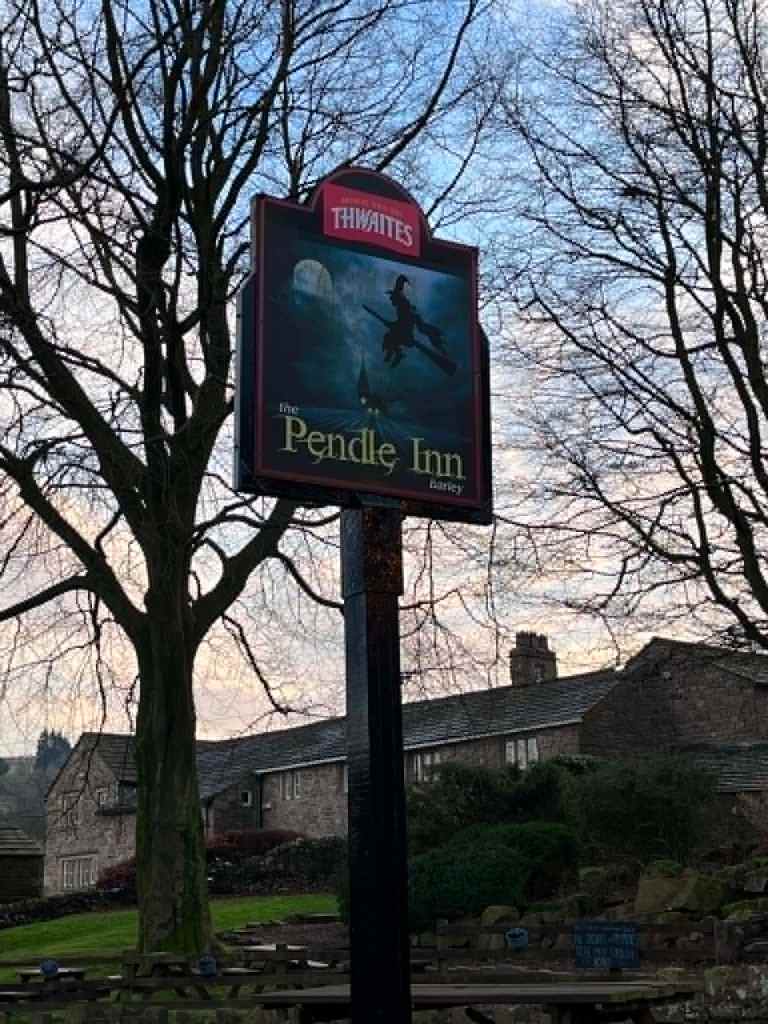
Parking is available at the visitor centre in Barley which sits right at the heart of the figure of eight style hiking route making it an ideal starting point for your walk. Directly opposite is The Pendle Inn which also offers parking for patrons and serves as the perfect base if you’re visiting from out of town. Nestled beneath the dramatic rise of Pendle Hill, the inn offers a warm, welcoming atmosphere, hearty food (I recommend the tomato soup, it was delicious), local ales and comfortable chalet accommodation which is ideal for resting and recharging after a day on the trail.


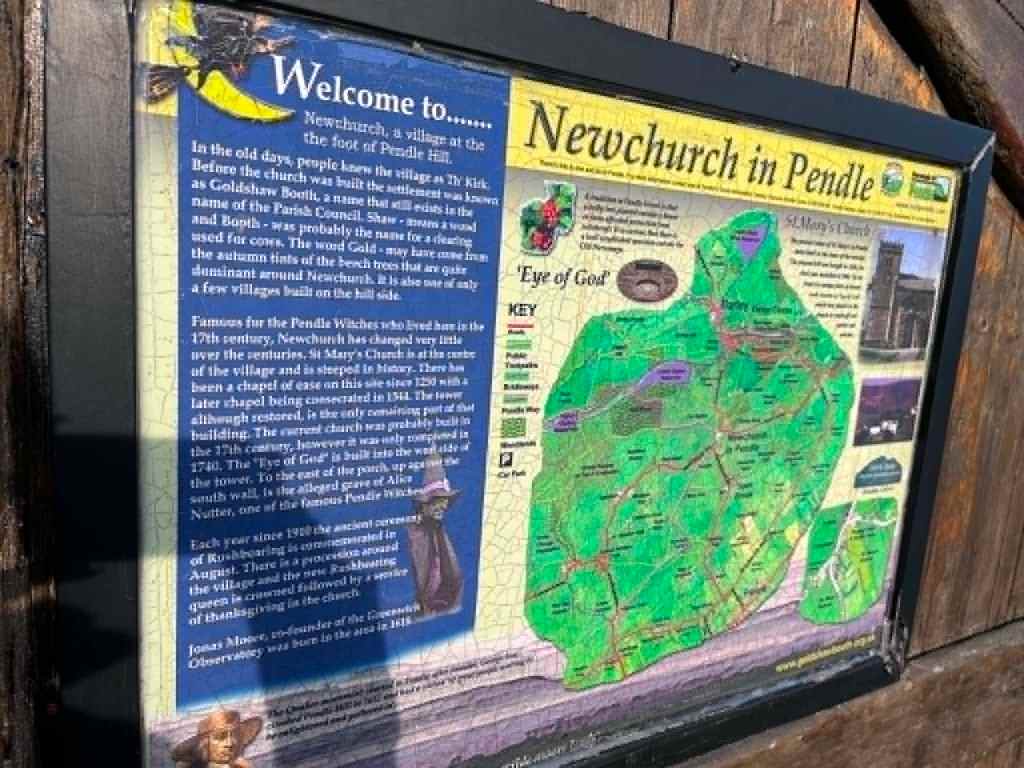
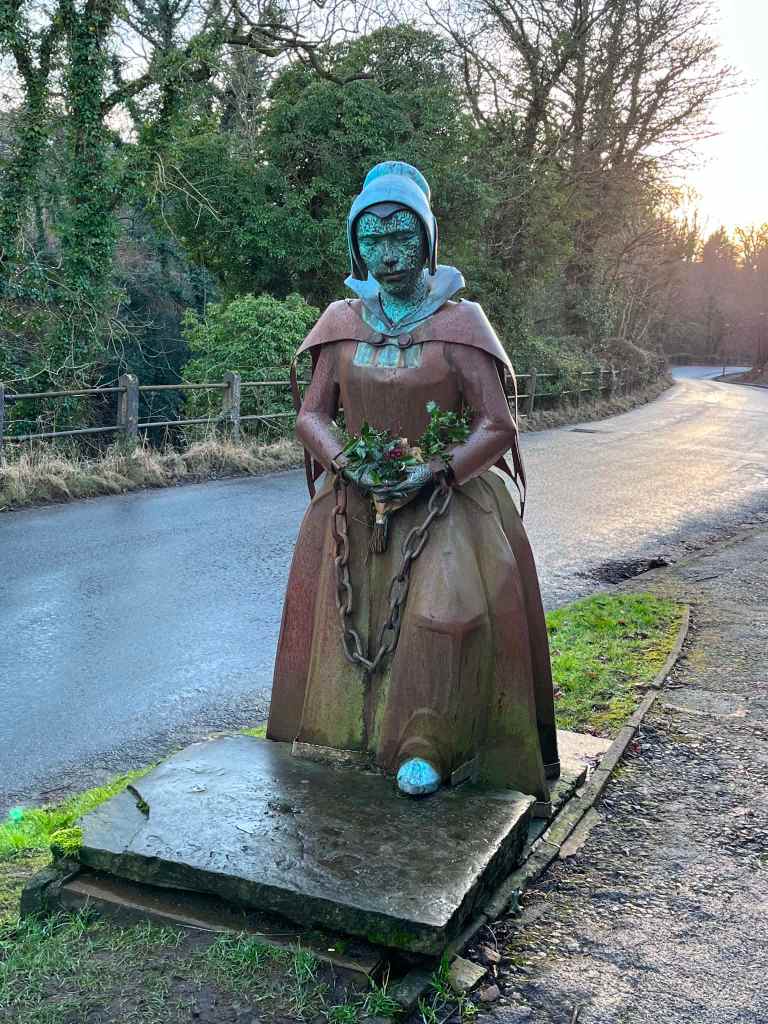
As you walk through the village of Roughlee, you’ll pass a bronze statue of Alice Nutter, one of the twelve accused in the infamous Pendle Witch Trials. She stands tall and dignified and invites you to remember the real people behind the legends.
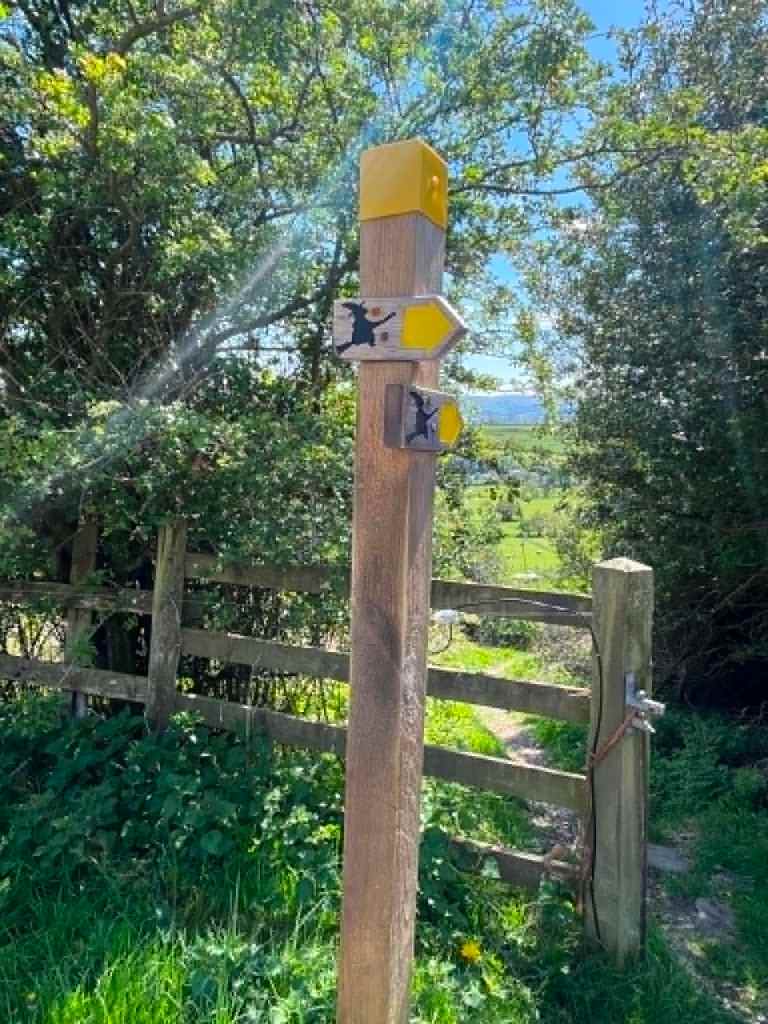
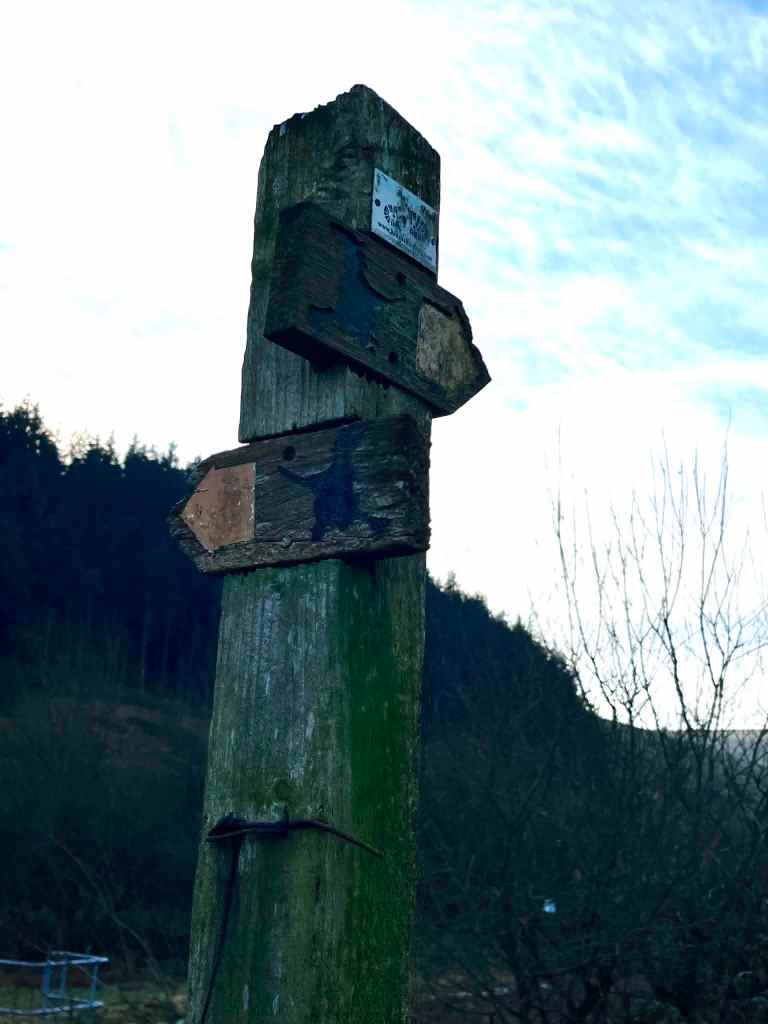
As you continue, you’ll notice many pointers with depictions of witched on them placed thoughtfully along the route.
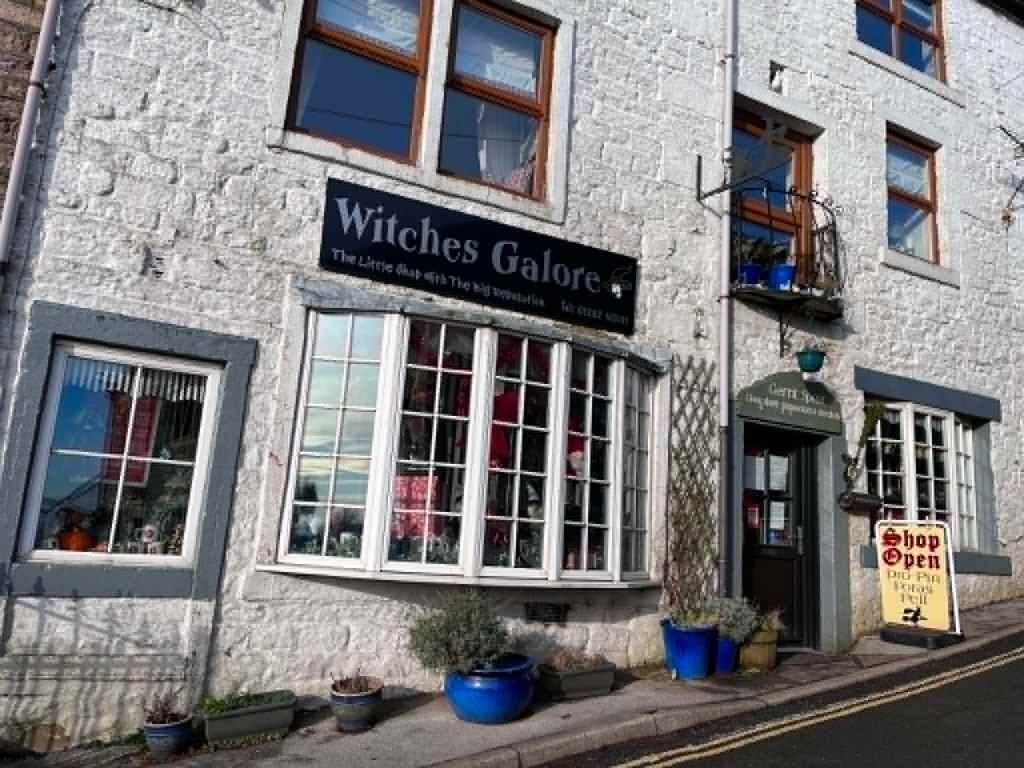
As you pass through Newchurch Village, make sure you stop at Witches Galore, a shop filled with spooky merchandise to pick up some souvenirs, I personally couldn’t resist a little cast iron cauldron, a tea towel depicting Pendle’s witchy history and a copy of my favourite childhood story, Gobbolino the Witches Cat by Ursula Moray Williams.
The path winds through winding country lanes, open fields, and timeless stone villages, so whether you’re drawn by curiosity, history, or healing, this stretch of the walk offers more than just scenery, it offers a connection to voices long past and a gentle reminder that their story still lives on.
Although the Pendle Hill peak isn’t part of the hike, it’s not too far off piste so if you’re feeling energetic you can make your way to the top.
Climbing Pendle Hill is a spiritual experience all of it’s own. The ascent is steep but rewarding. At the summit you can experience breathtaking views that are more than a reward for your physical effort. There’s something about standing up there that moves something in the soul.
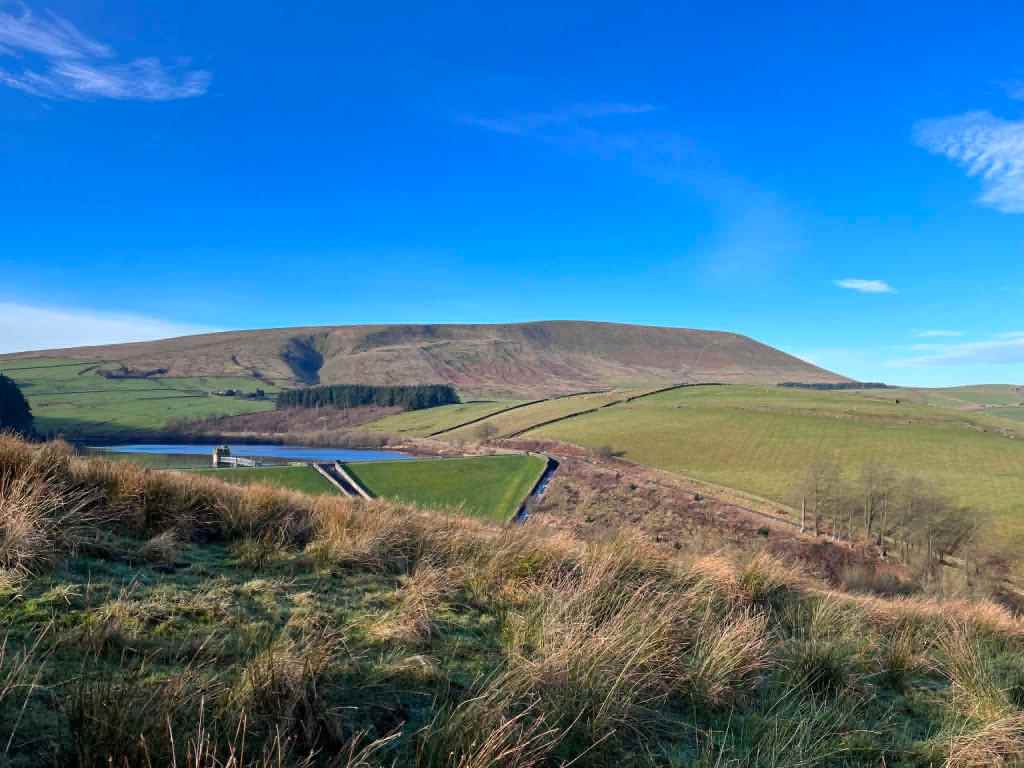
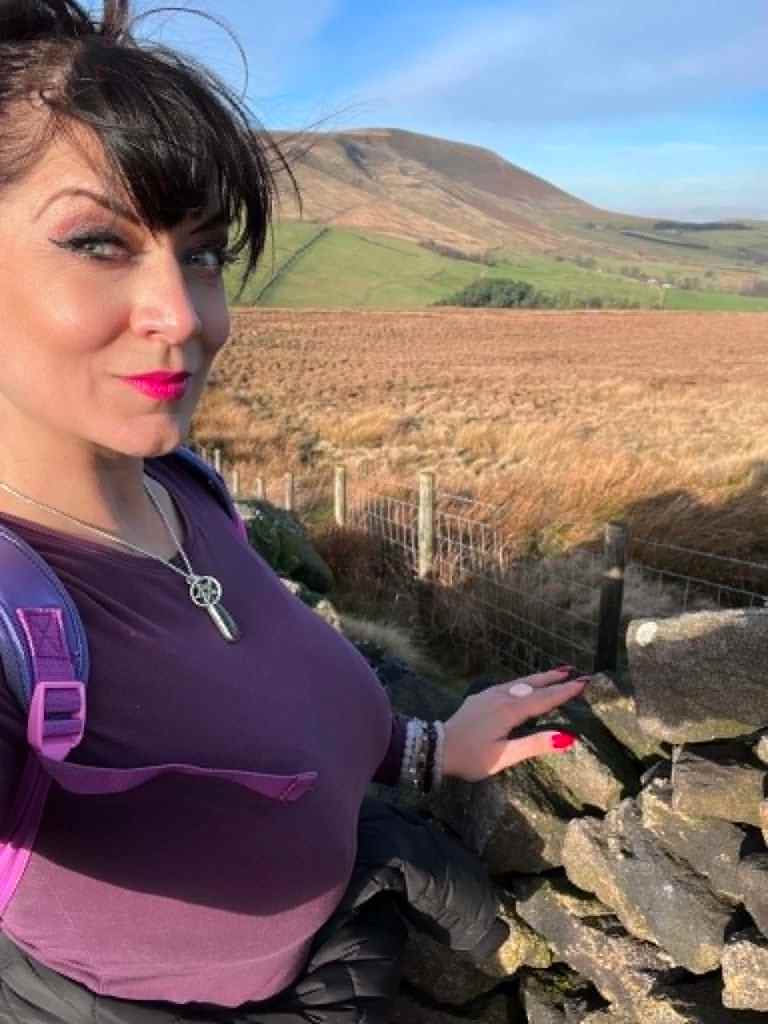
If you’re looking for a much spookier atmosphere, I’ve also hiked the same trail on a cold and frosty January and it was an entirely different experience. Gone were the soft greens and golden light of summer, instead, the landscape felt much more raw and untamed. Pendle Hill loomed darker and foreboding, bare branches reached out like skeletal fingers and the fields were patched with frost that crunched underfoot. Even the sheep with their wooly winter coats looked cold. What felt gentle and inviting in the warmth of summer took on a bleaker, more haunting quality.
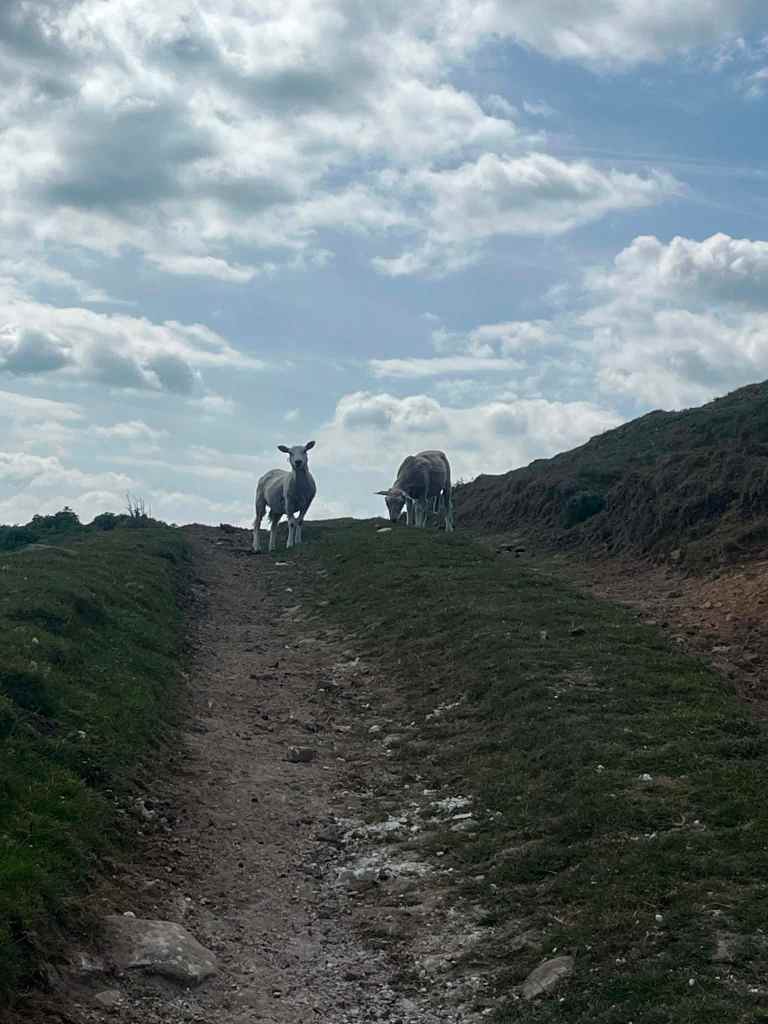
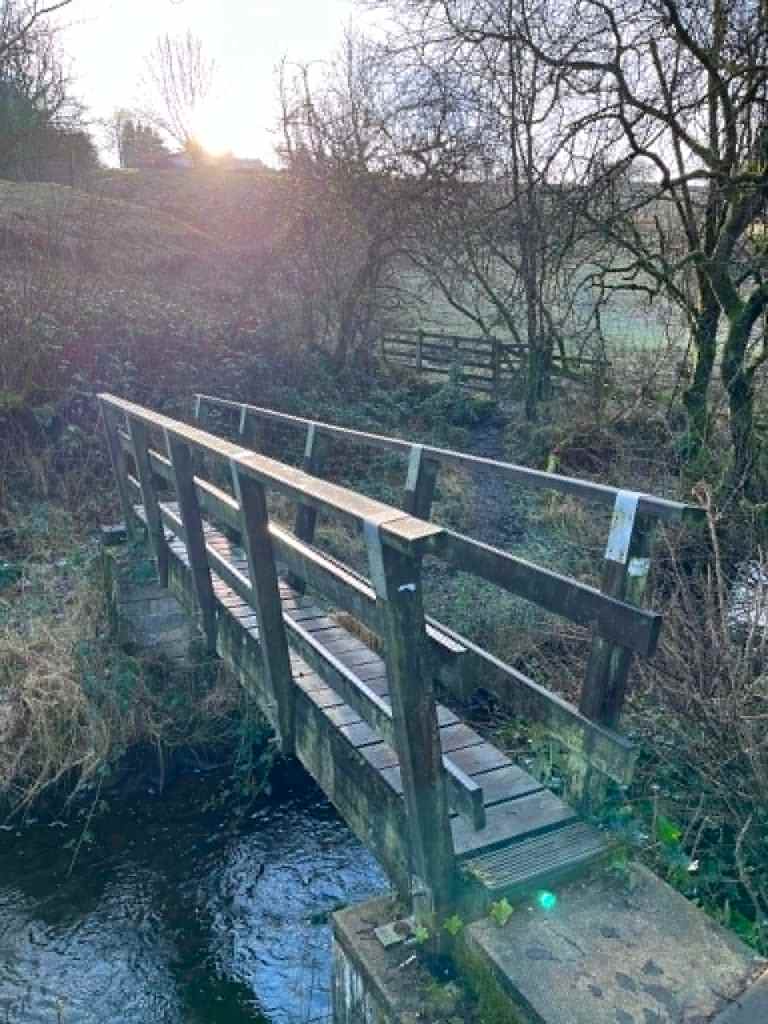
The paths themselves were harder going, spectacularly muddy in parts to the point where my hiking boots were well and truly submerged and the villages, quiet at the best of times, seemed almost deserted. Even Witches Galore, normally a lively and bustling place, felt quieter as I walked around minus my muddy hiking boots which I left at the door.

Whatever season you choose to walk the Pendle Witches Trail, there’s a sense that the land holds these women’s memory. You feel as though the earth remembers them, that the energy of those silenced centuries ago still lingers like an imprint, carried on the wind and underfoot with every step you take.
Even in the brightest summer light, you can feel the shadow of those who walked here before you, a quiet echo in the rustle of leaves or the sigh of the wind across the moor. You imagine their footsteps along the stiles and across the fields, and it’s impossible not to think of how differently their lives might have turned out in another time.
Whether you go to Pendle seeking connection with history, with nature or with yourself, the Pendle Witches Walk offers more than just a hike. It’s a pilgrimage, a tribute to the strength of the women or ‘witches’ who walked this landscape all those years ago and a walk where each footstep honours those who were silenced.
The Pendle Heritage Centre is also worth a visit, as well as exhibits on the trials, it also has a lovely walled garden, a fairy trail and a café and if you have time, Lancaster Castle isn’t far and should also be on your to do list whilst you’re in the area if you want to see where the women were held.
If you want to follow the route we took, download OS Maps and click on the link below.
https://explore.osmaps.com/route/26614826/kani-adventures-pendle-witches-walk

