
Moon Water: Harnessing Lunar Energy in Everyday Life

There’s something quietly magical about watching the moon rise, seeing its soft glow spill across the world. For centuries people have turned to moon water as a way to capture that energy, to hold it in a tangible form and to bring intention into their daily lives.

What is Moon Water?

Moon water is essentially water that’s been left out in moonlight to absorb the moon’s energy but it’s more than that, it’s a reflection of intention, a moment of mindfulness, a way to mark the rhythm of the lunar cycle.

Personally I prefer glass jars because they feel clear and pure. Mason jars are fine, they don’t have to be anything fancy. Sometimes I add herbs or crystals that feel aligned with what I want to invite into my life. Lavender for calm, rose quartz for love, rosemary for clarity. If adding crystals, make sure they are non-toxic.

The Magic of the New Moon

The new moon has always felt like a breath held in silence, a beginning. When I charge water under the new moon, I focus on planting seeds. This is the time to set intentions for growth, creativity and transformation. I usually write down what I hope to nurture in the coming weeks and keep the jar nearby as a reminder. Drinking this water feels like drinking a promise to myself, a small ritual of commitment to the path I wish to follow.

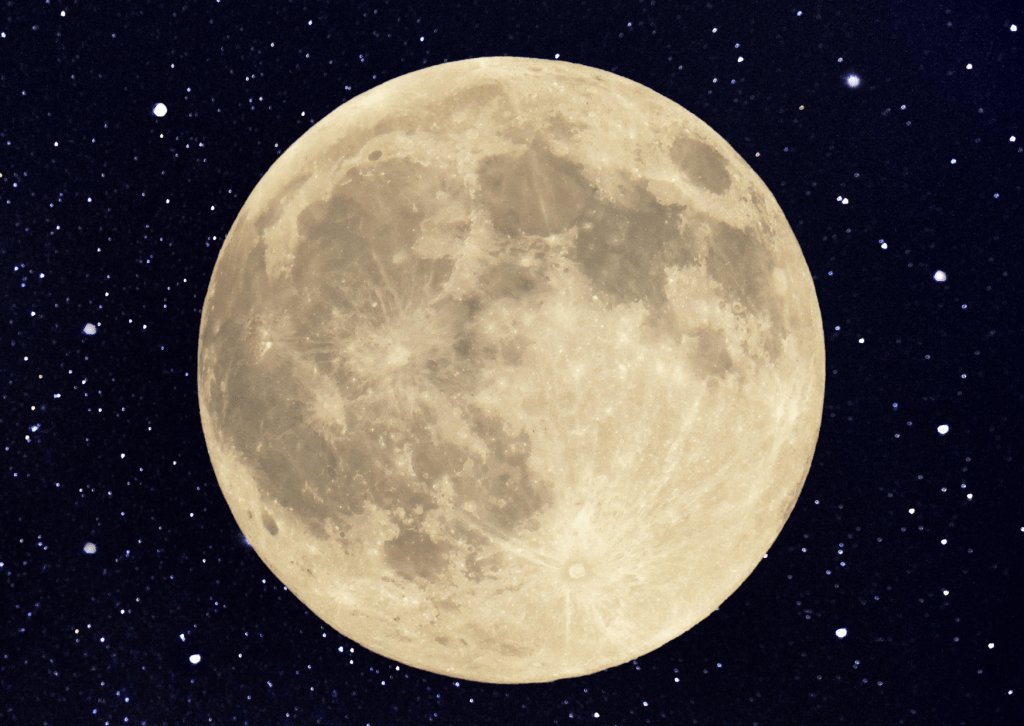
The Energy of the Full Moon

Full moons are the opposite: a peak, a culmination, a bright illumination of what has grown and what needs attention. I use full moon water to release and reflect. I’ll sip it while journaling about patterns I want to let go of or spritz it around my room to cleanse the energy. There’s a clarity in full moon water that feels different from the new moon, it’s expansive, luminous and honest. Sometimes I step outside and pour a little into the earth as an offering, a way to honour the cycle of giving and receiving that feels deeply grounding.

Eclipse Water: Transformation in Motion

Eclipses bring a different rhythm altogether. There’s intensity in their energy, a feeling of acceleration and upheaval. Charging water during a solar or lunar eclipse feels like capturing a rare storm, a moment when hidden truths can surface. I often use eclipse water to meditate on transformation or to face shadows I might usually avoid. It’s potent but there is clarity in its intensity.

Storm Water: Wild and Unpredictable

Stepping away form the moon – Storm water is a newer practice I’ve embraced. infusing water during a storm feels different from moon water, it’s raw, untamed and alive with movement and energy. When I use storm water, I use it to infuse my intentions with courage and power. You could also collect rain water during a storm – but you probably don’t want to drink that…

How I Use Moon and Storm Water

Each type of charged water has its role in my practice:

  • Drinking it feels like absorbing intention, aligning body and mind.
  • Spritzing my space creates an atmosphere of focus, calm, or renewal.
  • Baths with moon water feel like a ritual of cleansing, a reminder to wash away what I no longer need.
  • Plant care becomes intentional, a small act of collaboration with nature.
  • Charging crystals or ritual tools amplifies the energy I am already working with.

For me, moon water and storm water are not about superstition but mindfulness. They are acts of reflection and devotion, ways to slow down, notice cycles and honour my connection to the natural world.

Creating moon and storm water has taught me patience, presence, and reverence. It is a small act that carries depth, a way to honour cycles in a world that rarely slows down. Whether it is the promise of the new moon, the clarity of the full moon, the intensity of an eclipse, or the wildness of a storm, each form of water teaches something different.

At the end of the day, the magic is not only in the water. it is in the pause, the intention and the awareness that accompanies its creation. Moon water is a reminder that energy flows, cycles repeat and we are part of a rhythm far larger than ourselves.
Moon Phases & Manifestation: Working With the Lunar Cycle

The moon has guided humans for thousands of years — shaping tides, crops, rituals and inner rhythms. Long before manifestation became a buzzword, people understood that the moon reflects cycles of growth, rest, release, and renewal.

Manifestation, when viewed through a lunar lens, isn’t about forcing outcomes. It’s about listening, aligning, and moving in rhythm with natural cycles — including your own.

The moon reminds us that nothing is meant to be constant. Not energy. Not motivation. Not clarity. And that’s where its real magic lies.


Manifestation as a Cycle, Not a Command

Modern manifestation culture often focuses on the end result — what you want to call in. Lunar manifestation invites something gentler: presence at every stage of becoming.

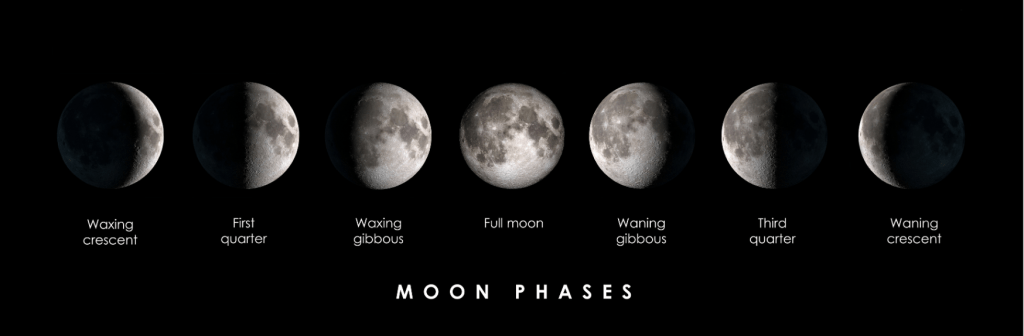
Each moon phase holds a different quality of energy. When you work with these phases, manifestation becomes less about control and more about cooperation.


🌑 New Moon — Intention & Possibility

The new moon is a time of darkness and quiet. Nothing is visible yet, and that’s the point.

This phase supports:

  • planting seeds
  • setting gentle intentions
  • listening inward

Rather than asking “What do I want?”, try asking:

  • What feels ready to grow?
  • What am I being invited into?

New Moon practice:
Light a candle, take a few deep breaths, and write 1–3 intentions that feel nourishing rather than demanding. Let them be spacious. Let them breathe.


🌒 Waxing Moon — Nurture & Momentum

As the moon begins to grow, so does energy. This is a phase of gentle action and support.

This phase supports:

  • taking small aligned steps
  • building momentum
  • trusting the process

Think of this as tending the soil, not forcing the plant.

Waxing Moon practice:
Ask yourself, What one small action supports my intention this week?
Then do only that.


🌕 Full Moon — Illumination & Release

The full moon is often associated with heightened emotion and clarity. It illuminates what’s working — and what isn’t.

This phase supports:

  • release
  • emotional awareness
  • truth and reflection

Manifestation here isn’t about adding more — it’s about letting go.

Full Moon practice:
Journal on what feels heavy, outdated, or misaligned. You can release through writing, and if it feels right, tear it out and burn safely. There is no right way.


🌘 Waning Moon — Rest & Integration

As the moon begins to fade, energy turns inward again. This phase is often overlooked but it’s essential.

This phase supports:

  • rest and recovery
  • integration
  • reflection without judgement

Growth doesn’t happen only in motion — it happens in rest.

Waning Moon practice:
Slow your pace. Clear your space. Let yourself be quieter. Trust that nothing is being lost.


Manifestation Without Pressure

You don’t need to work with every moon.
You don’t need perfect rituals.
You don’t need to manifest constantly.

The moon teaches us that being receptive is just as powerful as being intentional.

Some months you may feel deeply connected to the lunar cycle. Other months, you may simply notice the moon in the sky and feel something soften. Both are enough.


A Gentle Reminder

Manifestation isn’t about bending the universe to your will.
It’s about remembering that you are already part of its rhythm.

When you work with the moon, you’re not asking for magic —
you’re allowing it

Rainy Day Rituals: Mindfulness & Self-Care for February

It’s been non-stop rain here in the UK lately, hasn’t it? All grey skies, damp air and endless drizzle? Maybe I’m feeling it more-so since I moved to the North-East but the feeling of being a trapped indoors can start to weigh on the spirit. But what if, instead of resisting this season, we leaned into it? What if the rain, the quiet, and the cocooning of winter could become a gentle invitation to pause, to breathe, and to reconnect with ourselves?

Winter is naturally a season of reflection and stillness. It’s a time for slowing down, tending to your inner life, and noticing the small, often-overlooked joys around you. Here’s how to embrace the rainy season and turn your home into a cosy sanctuary for mindfulness and presence.


Create Your February Sanctuary

Your home can be more than a shelter from the storm — it can be a sacred space that nourishes your mind, body, and soul. Here are some gentle ways to transform your space:

  • Soft Lighting: Switch harsh overhead lights for candles, fairy lights, or warm lamps. The flicker of light in the rainy season feels grounding and calming.
  • Textured Comfort: Layer throws, cushions and soft rugs to create cosy corners where you can curl up with a book and a cup of tea.
  • Scent & Aroma: Use essential oils like lavender, cedarwood or sweet orange to create an aromatic cocoon. Diffusers or simple cotton pads infused with oils can transform your space instantly.
  • Natural Elements: Bring the outside in — a branch from a walk, a small pot of winter greenery or even a bowl of smooth stones can remind you of the rhythm of nature.

Practicing Winter Mindfulness

Mindfulness isn’t about forcing calm; it’s about noticing what’s already here. Even the rain can become a meditation if we allow ourselves to see it with fresh eyes.

  • Notice Small Joys: A steaming mug of tea, the scent of damp earth, the quiet rhythm of raindrops on your window. These small moments anchor us in the present.
  • Grounding Meditation: Sit or lie comfortably. Close your eyes and take deep breaths, imagining roots growing from your feet into the earth. Feel the stability beneath you, the solid presence that the rainy season is offering.
  • Gentle Movement: Stretch or sway to your breath. Feel the body waking gently, each movement a little prayer of presence. Even five minutes can shift your energy.
  • Sensory Awareness: Listen to the rain, notice the texture of your blanket, or the warmth of a cup in your hands. Engage fully with the senses — this is your body’s way of returning to now.

Embrace the Rainy Season

The rain doesn’t need to be an obstacle. You can open a window, feel the cool mist on your skin, and let it remind you of life’s rhythms — the ebb and flow, the pause before growth. Winter teaches patience, reflection, and rest. By creating your sanctuary and embracing mindfulness, you transform what could feel like confinement into a season of inner richness.

  • Take a slow walk with a waterproof coat, noticing the sounds, smells, and textures of winter.
  • Brew herbal tea and sit with it in stillness, letting your mind rest between sips.
  • Light a candle each evening and dedicate a moment to yourself — no screens, no distractions, just presence.

Winter is often misunderstood as a time to endure. But in truth, it is a sacred pause — a chance to realign with yourself, notice the subtle beauty in small things and nurture your body, mind and soul. Let the rain wash over the stress and hurry of everyday life and allow the quiet days to become a gentle invitation to mindfulness.

Your February sanctuary is waiting. Step inside, breathe deeply and let stillness become your companion.

“The way I see it, if you want the rainbow, you gotta put up with the rain.” — Dolly Parton