
Beltane, traditionally celebrated on May 1st, sits at the midpoint between spring and summer in the old Celtic seasonal cycle. It marks a time when the land is thought to be fully awakening, growth is vigorous, blossom is abundant and the boundary between the everyday world and the “otherworld” is said, in folklore, to become thinner.
In many folk traditions across Ireland, Scotland, and parts of Britain, this is the season when faeries, nature spirits, and elemental beings are most active. Whether understood literally, symbolically or as part of a poetic way of relating to nature, Beltane carries a strong sense of life-force, fertility and enchantment returning to the land.
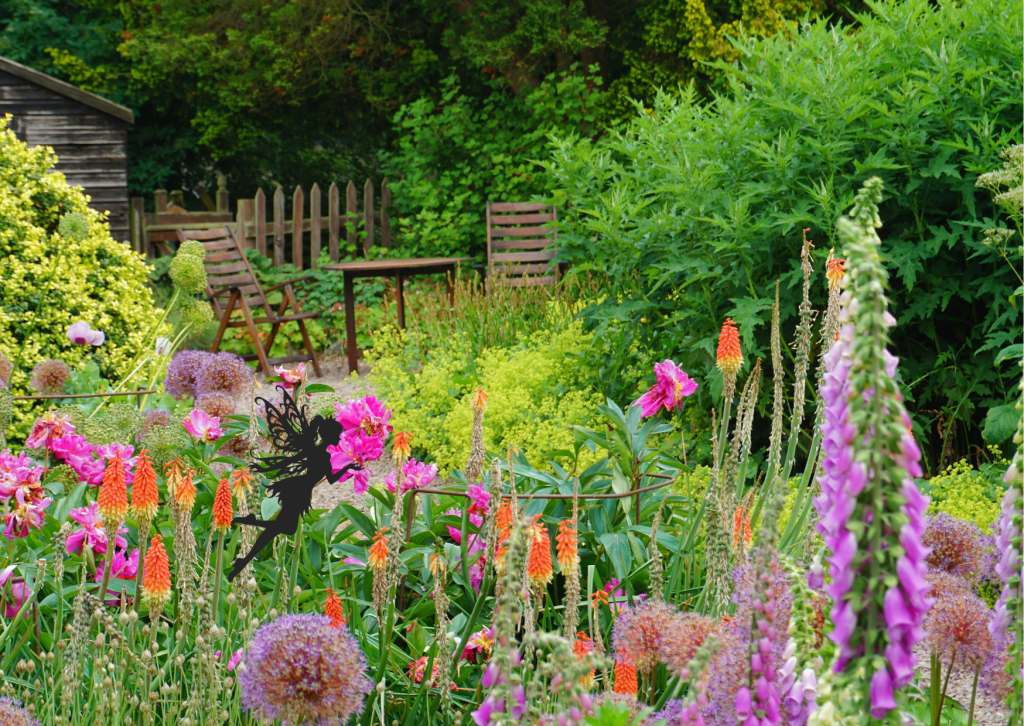
Beltane and the “thin places”
In older Celtic belief, certain times of year (Beltane and Samhain especially) were considered liminal – threshold moments when ordinary boundaries loosen. At Beltane, this “thinness” is associated with blossoming hedgerows, rising sap and the first full warmth of the sun.
Folklore describes faeries not as cartoon-like figures, but as ambiguous nature intelligences, sometimes helpful, sometimes mischievous, often deeply tied to place: a hill, a spring, a tree, a stone or a garden left undisturbed long enough to feel wild again.
Nature spirits, elementals, and gardens
In later occult and esoteric traditions, these beings are often grouped as “nature spirits” or “elementals” connected with earth, air, fire and water. In that framework:
- Earth spirits are linked with soil, roots, stones and slow-growing plants
- Water spirits with ponds, rain, dew and moist shade
- Air spirits with wind, scent, seeds and birds
- Fire spirits with sunlight, warmth, flowering and transformation
A garden becomes, symbolically, a meeting place of all four.
Whether you take this literally or as a meditative way of engaging with ecology, the underlying idea is the same: a garden becomes more “alive” when it is diverse, layered and gently tended rather than overly controlled.
Plants and flowers associated with faerie lore
Traditional folklore and later herbal magic often associate certain plants with faeries or liminal energy. Common examples include:
- Hawthorn – strongly tied to faerie folklore in Britain and Ireland; often considered a boundary tree between worlds
- Rowan – protective in folk tradition, often planted near homes
- Foxglove – associated with faerie gloves or “fairy thimbles” in some stories
- Lavender – calming, aromatic, often linked to purification and gentle attraction
- Chamomile – used in old herb lore for peaceful, sunny garden energy
- Primrose – early spring bloom associated with thresholds and hidden paths
- Bluebells – said in folklore to ring or call faeries (especially in woodland traditions)
- Thyme – historically linked with fair folk and dreamlike states
A key theme in folklore is not just the plant itself, but the feeling of the plant – fragrance, wildness and slightly untamed growth.
How people traditionally “invite” faerie presence into gardens
In folk belief systems, attraction is less about control and more about invitation. Practices often described include:
- Letting parts of the garden grow a little wild (especially corners, hedges, or under trees)
- Planting a mix of flowering herbs and native wildflowers
- Keeping a small water source like a bowl, birdbath or pond
- Avoiding harsh chemical treatments that “sterilise” the land in symbolic terms
- Creating small sheltered spaces: stone circles, log piles or leafy archways
At Beltane especially, gardens are often decorated with flowers, ribbons or fresh greenery – echoing older customs of bringing spring indoors and honouring the vitality of the season.
Hag stones and “seeing through”
A hag stone is a naturally occurring stone with a hole formed by water erosion. In British and Celtic folklore, these stones are often carried or hung for protection and, in some traditions, for “second sight” – the ability to glimpse hidden things.
In faerie folklore specifically, looking through a hag stone is said to allow a person to see beyond ordinary appearance – whether that means faeries, spirits of place or simply a heightened awareness of detail in nature. A more grounded interpretation is that it functions as a ritual object that focuses attention: you quite literally frame the world differently when you look through it.
Hag stones are often placed:
- Hanging in garden trees or gates
- Near doorways or windows
- By water features or quiet corners of a garden
A Beltane way of thinking about it
At its core, Beltane folklore is about relationship: between people and land, cultivated and wild, seen and unseen. Whether one believes in faeries as literal beings or as symbolic expressions of nature’s intelligence, the practices associated with them all point toward the same shift in attention—toward noticing life in hedges, soil, insects, wind, and bloom.
A garden shaped in that spirit isn’t “for” attracting anything in a transactional sense. It becomes more like a shared space: layered, slightly untamed and open to interpretation, especially in the bright, proliferating energy of late spring.

 Stardust Holistics