Summer Solstice at Stonehenge

Visiting Stonehenge at the Summer Solstice has been on my bucket list for as long as I can remember.

When one of my best friends and I booked a girls’ trip to Glastonbury, I realised the dates were just after the solstice. It honestly felt like the universe was giving us a little nudge to add Stonehenge onto the beginning of our adventure. How could we not?

So on the morning of the solstice, I travelled all the way from the North East of England down to Hampshire where she lives. The journey was surprisingly painless until I hit the M25… That’s one thing I definitely don’t miss about living in London – trying to get anywhere on that motorway! Thankfully once I’d escaped that particular circle of hell the rest of the journey was easy.

After dropping my bags at my friend’s house we headed over to Salisbury to catch one of the shuttle buses to Stonehenge.

There were long queues for the buses but they moved surprisingly quickly. The shuttle costs £10 each way so in hindsight it would actually have been cheaper to pre book parking at Stonehenge through English Heritage for £25. We’d avoided driving because we assumed the roads would be absolute chaos around the solstice but they were actually fine. Lesson learned for next time!

Armed with backpacks full of snacks, blankets, extra layers and of course my drum we finally arrived at the site.

The longest queue of the evening was for the security bag check where they were making sure nobody was bringing in alcohol, illegal substances, glass or weapons.

As for me? There was no chance of me trying to sneak alcohol in. I didn’t drink a thing all day, alcoholic or otherwise, not because I was trying to be sensible but because I absolutely hate portaloos. My strategy was simple. Don’t drink, don’t need the toilet. Unfortunately once I break the wee seal ,I pee for England!

I did end up using the loos twice and honestly they weren’t nearly as horrific as I’d imagined. They’re still one of the main reasons I avoid festivals though. Well, that and the crowds.

Speaking of crowds…

Yes there were thousands of people there and although I usually like to place myself out in the wilderness, surrounded by nature and minimal people, I was more than willing to brave the crowds this once for the chance to get up close to the stones.

Summer and Winter Solstice are the only times of year you’re allowed to walk right up to Stonehenge. The rest of the year the stones are roped off unless you pay for one of the exclusive Stone Circle Experiences through English Heritage and that applies even if you’re an English Heritage member.
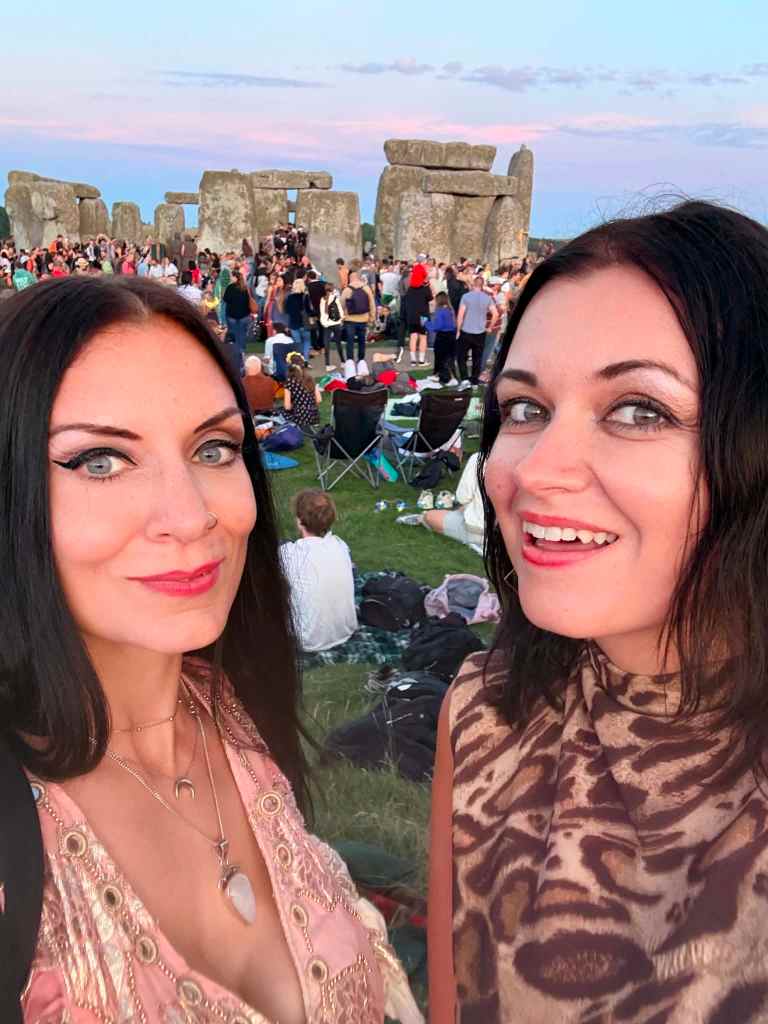
We arrived just as the sun was beginning to set and found ourselves a little spot to lay our blankets. It was close enough to enjoy the atmosphere but far enough away that we thought nobody would trip over us.

We were wrong, there was a point during the night where a woman stumbled straight across our blankets and stood directly on my drum.

Thankfully the drum survived.
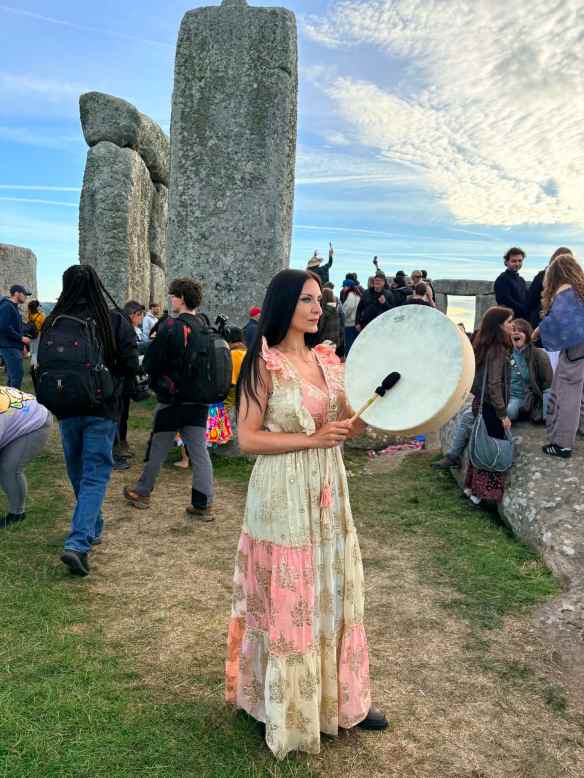
As darkness fell we wandered into the stone circle itself. Finally being able to reach out and touch the stones was incredibly special. There was drumming, chanting, people meditating and people celebrating. It felt unlike anywhere I’d ever been before.

By around midnight exhaustion or old age caught up with us, it’s been a long time since I last partied all night… So wrapped in our blankets beneath a sky full of stars we somehow managed to get a few hours’ sleep.

I’m actually a huge fan of camping, usually with a tent, but there was something pretty magical about sleeping out in the open with Stonehenge only a few metres away. Every time I opened my eyes during the night the stones somehow seemed closer than before.

My imagination? Maybe.

Magic? 100%.

Nature certainly made its presence known too.

Anyone who knows me knows I’m not exactly the biggest fan of creepy crawlies. Thankfully it was too dark to spot any spiders. What we did have however were hundreds of cockchafers buzzing around. Weirdly though, I actually think they’re quite cute. Those fluffy little antennae make them look like tiny fairy bugs… Well until one flies directly into your hair.

Ah yes. Being at one with nature.

At around 4am we both woke up naturally as the sky began to brighten and the crowd’s energy grew more electric.

People slowly started gathering around the Heel Stone waiting for sunrise.

Then it happened.
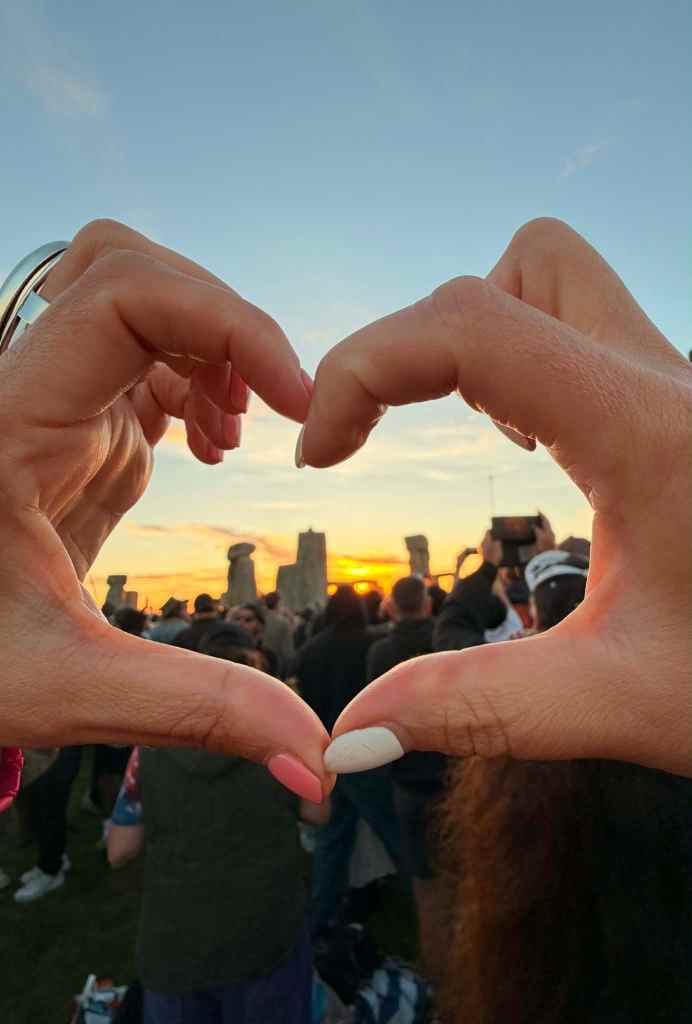
Watching the sun rise perfectly between the ancient stones is one of those moments that’s impossible to fully capture in words or photographs. There’s a reason people have gathered here for thousands of years. Whether you’re there for the history, the spirituality, the atmosphere or simply curiosity it’s an incredibly moving experience.
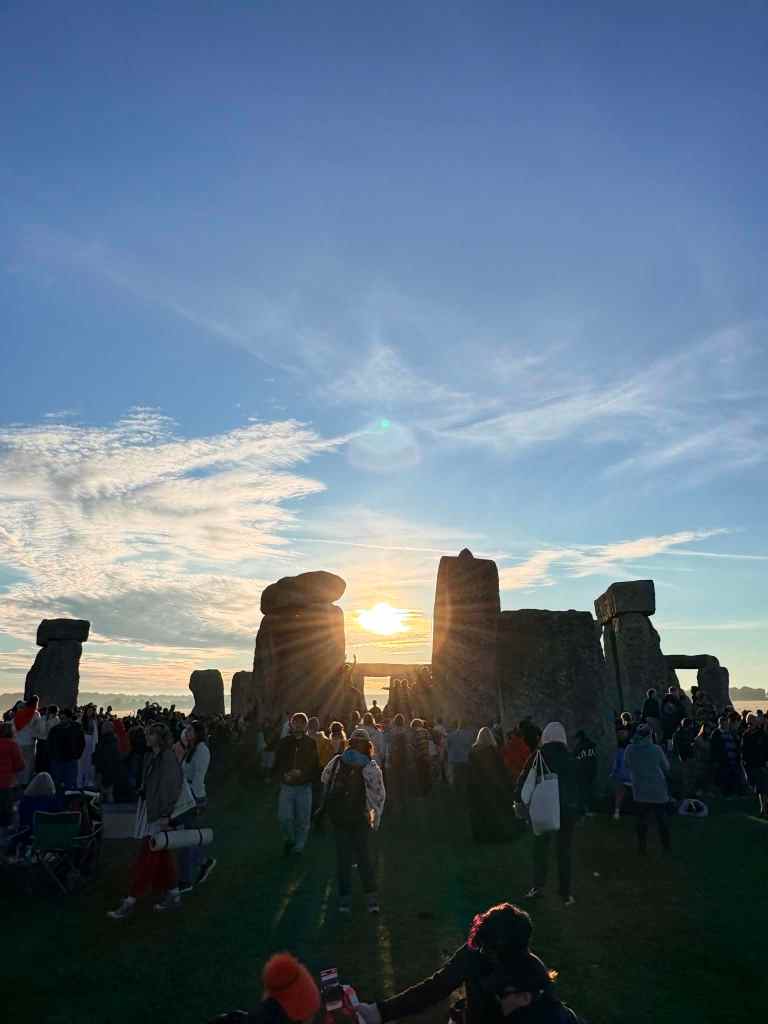
It was everything I’d hoped it would be.

Nobody knows for certain why Stonehenge was built and I think that’s part of what makes it so fascinating. Was it a place of worship? A giant calendar marking the changing seasons? A site for ceremonies or healing? All of the above or something we haven’t even thought of yet? There are plenty of theories but no definitive answers.

Standing there among the stones though, none of that really seemed to matter. There was something incredibly humbling about knowing I was walking the same ground as the people who built this incredible monument thousands of years ago.

Running my hands across the stones they had carefully placed all those centuries ago made me feel connected, if only for a moment, to the ancient wisdom and mystery of those who came before us.
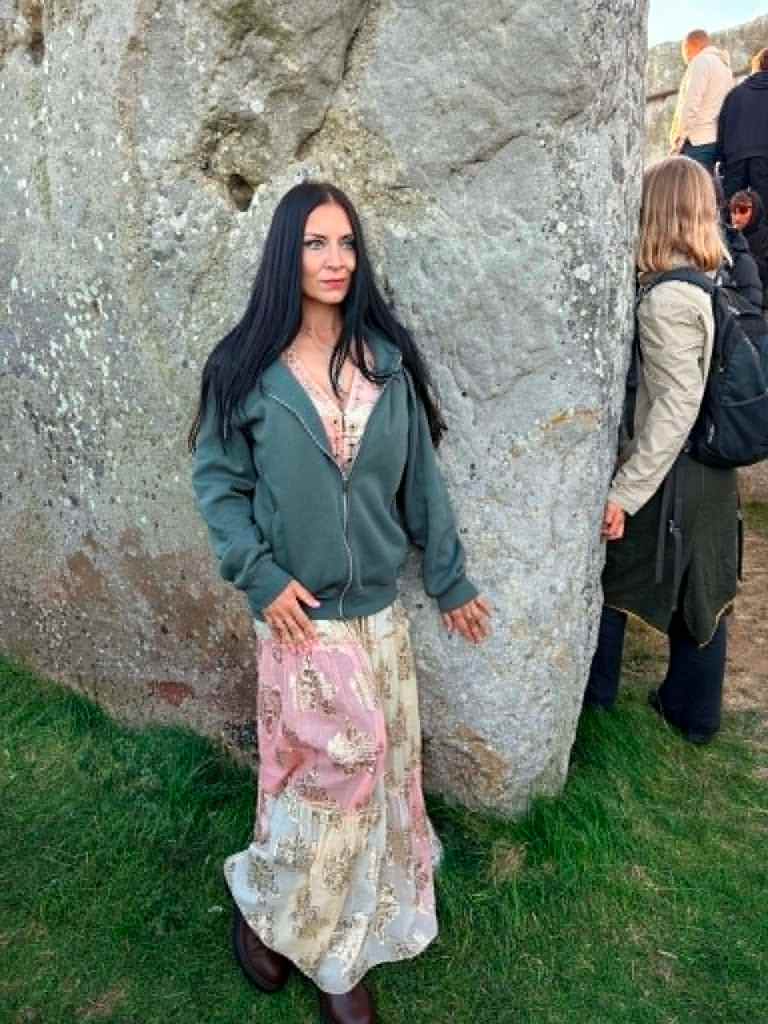
Stonehenge at Summer Solstice had been on my bucket list for years and I’m so grateful I finally got to experience it, especially alongside one of my best friends.

Would I Go Again?

Absolutely.

Despite the crowds. Despite the portaloos. Despite nearly losing my drum to a drunken stranger.

That being said, I probably wouldn’t stay overnight a second time.

If I were to do it again I’d pre book parking through English Heritage, arrive around 3 or 4am, watch the sunrise, soak up the atmosphere for a few more hours and leave when the site closes at around 10am.

But for a first visit?

Sleeping beneath the stars beside one of the world’s most famous prehistoric monuments was something I’ll never forget.
Beltane – Faeries, Nature Spirits & Elementals

Beltane, traditionally celebrated on May 1st, sits at the midpoint between spring and summer in the old Celtic seasonal cycle. It marks a time when the land is thought to be fully awakening, growth is vigorous, blossom is abundant and the boundary between the everyday world and the “otherworld” is said, in folklore, to become thinner.

In many folk traditions across Ireland, Scotland, and parts of Britain, this is the season when faeries, nature spirits, and elemental beings are most active. Whether understood literally, symbolically or as part of a poetic way of relating to nature, Beltane carries a strong sense of life-force, fertility and enchantment returning to the land.

Beltane and the “thin places”

In older Celtic belief, certain times of year (Beltane and Samhain especially) were considered liminal – threshold moments when ordinary boundaries loosen. At Beltane, this “thinness” is associated with blossoming hedgerows, rising sap and the first full warmth of the sun.

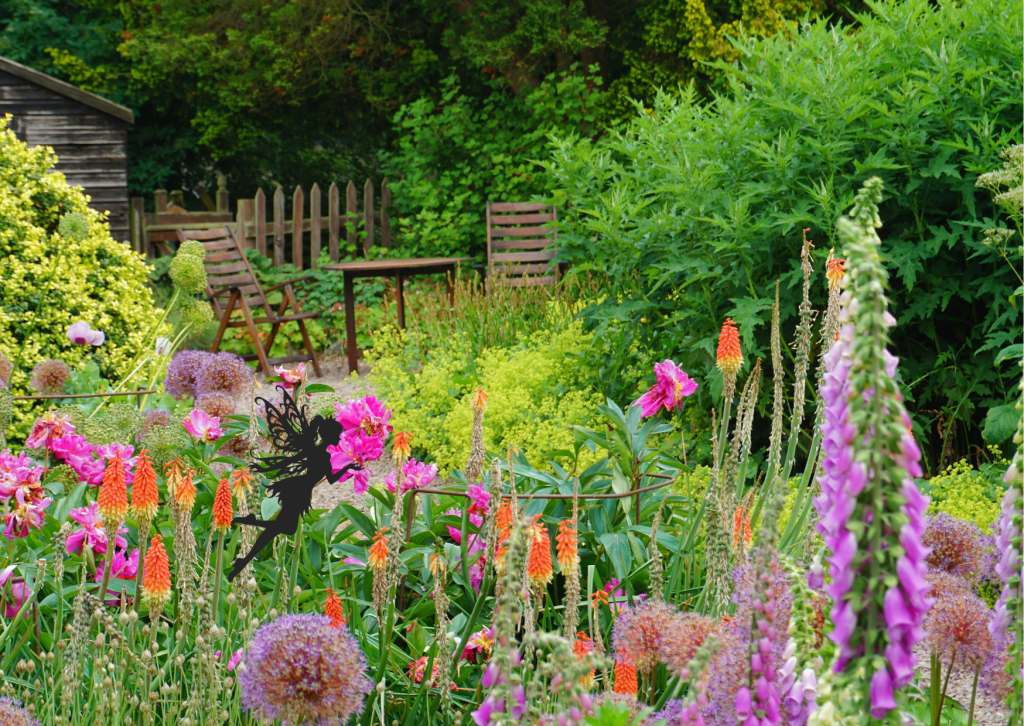
Folklore describes faeries not as cartoon-like figures, but as ambiguous nature intelligences, sometimes helpful, sometimes mischievous, often deeply tied to place: a hill, a spring, a tree, a stone or a garden left undisturbed long enough to feel wild again.

Nature spirits, elementals, and gardens

In later occult and esoteric traditions, these beings are often grouped as “nature spirits” or “elementals” connected with earth, air, fire and water. In that framework:

  • Earth spirits are linked with soil, roots, stones and slow-growing plants
  • Water spirits with ponds, rain, dew and moist shade
  • Air spirits with wind, scent, seeds and birds
  • Fire spirits with sunlight, warmth, flowering and transformation

A garden becomes, symbolically, a meeting place of all four.

Whether you take this literally or as a meditative way of engaging with ecology, the underlying idea is the same: a garden becomes more “alive” when it is diverse, layered and gently tended rather than overly controlled.

Plants and flowers associated with faerie lore

Traditional folklore and later herbal magic often associate certain plants with faeries or liminal energy. Common examples include:

  • Hawthorn – strongly tied to faerie folklore in Britain and Ireland; often considered a boundary tree between worlds
  • Rowan – protective in folk tradition, often planted near homes
  • Foxglove – associated with faerie gloves or “fairy thimbles” in some stories
  • Lavender – calming, aromatic, often linked to purification and gentle attraction
  • Chamomile – used in old herb lore for peaceful, sunny garden energy
  • Primrose – early spring bloom associated with thresholds and hidden paths
  • Bluebells – said in folklore to ring or call faeries (especially in woodland traditions)
  • Thyme – historically linked with fair folk and dreamlike states

A key theme in folklore is not just the plant itself, but the feeling of the plant – fragrance, wildness and slightly untamed growth.

How people traditionally “invite” faerie presence into gardens

In folk belief systems, attraction is less about control and more about invitation. Practices often described include:

  • Letting parts of the garden grow a little wild (especially corners, hedges, or under trees)
  • Planting a mix of flowering herbs and native wildflowers
  • Keeping a small water source like a bowl, birdbath or pond
  • Avoiding harsh chemical treatments that “sterilise” the land in symbolic terms
  • Creating small sheltered spaces: stone circles, log piles or leafy archways

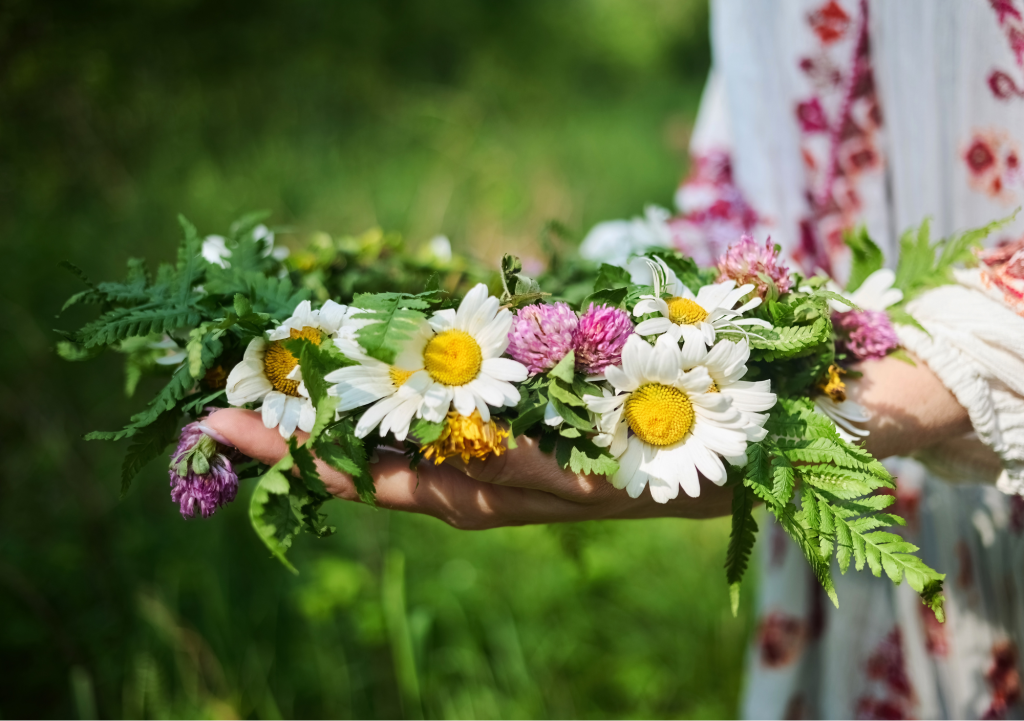
At Beltane especially, gardens are often decorated with flowers, ribbons or fresh greenery – echoing older customs of bringing spring indoors and honouring the vitality of the season.

Hag stones and “seeing through”

A hag stone is a naturally occurring stone with a hole formed by water erosion. In British and Celtic folklore, these stones are often carried or hung for protection and, in some traditions, for “second sight” – the ability to glimpse hidden things.

In faerie folklore specifically, looking through a hag stone is said to allow a person to see beyond ordinary appearance – whether that means faeries, spirits of place or simply a heightened awareness of detail in nature. A more grounded interpretation is that it functions as a ritual object that focuses attention: you quite literally frame the world differently when you look through it.

Hag stones are often placed:

  • Hanging in garden trees or gates
  • Near doorways or windows
  • By water features or quiet corners of a garden

A Beltane way of thinking about it

At its core, Beltane folklore is about relationship: between people and land, cultivated and wild, seen and unseen. Whether one believes in faeries as literal beings or as symbolic expressions of nature’s intelligence, the practices associated with them all point toward the same shift in attention—toward noticing life in hedges, soil, insects, wind, and bloom.

A garden shaped in that spirit isn’t “for” attracting anything in a transactional sense. It becomes more like a shared space: layered, slightly untamed and open to interpretation, especially in the bright, proliferating energy of late spring.

Beltane: Returning to Life, Returning to Yourself

As spring deepens and the earth leans fully into her own becoming, we arrive at Beltane — a festival of fire, fertility, and fullness. Traditionally celebrated on May 1st, Beltane sits halfway between spring and summer, when everything feels alive with possibility. The hedgerows bloom, the air softens, and the world feels just a little more enchanted.

But beyond its roots in old seasonal traditions, Beltane can also be a gentle reminder: this is your season of aliveness, too.

The Energy of Beltane

Beltane is about ignition — not in a frantic or overwhelming way, but in the quiet, steady burn of becoming.

It’s the moment where things that were once just ideas begin to take shape. Where rest turns into movement. Where intention meets embodiment.

If winter asked you to slow down and spring asked you to awaken, Beltane asks you to participate.

Not perform. Not prove. Just participate in your own life again.

A Season of Sensory Self Care

Self care at Beltane doesn’t have to be elaborate. In fact, it works best when it’s rooted in the senses – in pleasure, presence, and simplicity.

Try thinking of self care as reconnection:

  • Let your skin feel the sun without rushing back indoors
  • Eat something fresh, colourful and healthy
  • Open your windows and actually listen to the world outside
  • Move your body in a way that feels like celebration, not punishment
  • Wear something that makes you feel a little more like yourself again

This is not about “fixing” anything. It’s about remembering you are already part of something living.

Fire as a Symbol, Not a Task

Beltane is traditionally associated with fire – bonfires, flames, warmth, transformation. You don’t need a literal fire to work with this energy. Instead, you can ask:

What is being illuminated in me right now?

What feels ready to be warmed, softened, or seen?

You might light a candle in the evening and sit with yourself for a few minutes. No agenda. No productivity. Just presence. Let the flame hold what you’ve been carrying.

Pleasure as a Practice

There is a quiet rebellion in allowing yourself to experience pleasure without guilt.

At Beltane, pleasure is not excess, it is alignment.

It can be as simple as:

  • drinking tea slowly instead of rushing it
  • resting in the sun and not apologising for it

Pleasure is not indulgence. It is remembering you are alive in a body that was made to feel.

A Small Beltane Ritual for You

If you want to honour this season gently, try this:

Find a quiet moment. Light a candle or sit near a window. Place your hand over your heart and ask:

What in me wants to come alive right now?

Don’t force an answer. Just listen.

Then whisper, softly:

I am allowed to grow. I am allowed to want more. I am allowed to be here.

Let that be enough.

Moon Water: Harnessing Lunar Energy in Everyday Life

There’s something quietly magical about watching the moon rise, seeing its soft glow spill across the world. For centuries people have turned to moon water as a way to capture that energy, to hold it in a tangible form and to bring intention into their daily lives.

What is Moon Water?

Moon water is essentially water that’s been left out in moonlight to absorb the moon’s energy but it’s more than that, it’s a reflection of intention, a moment of mindfulness, a way to mark the rhythm of the lunar cycle.

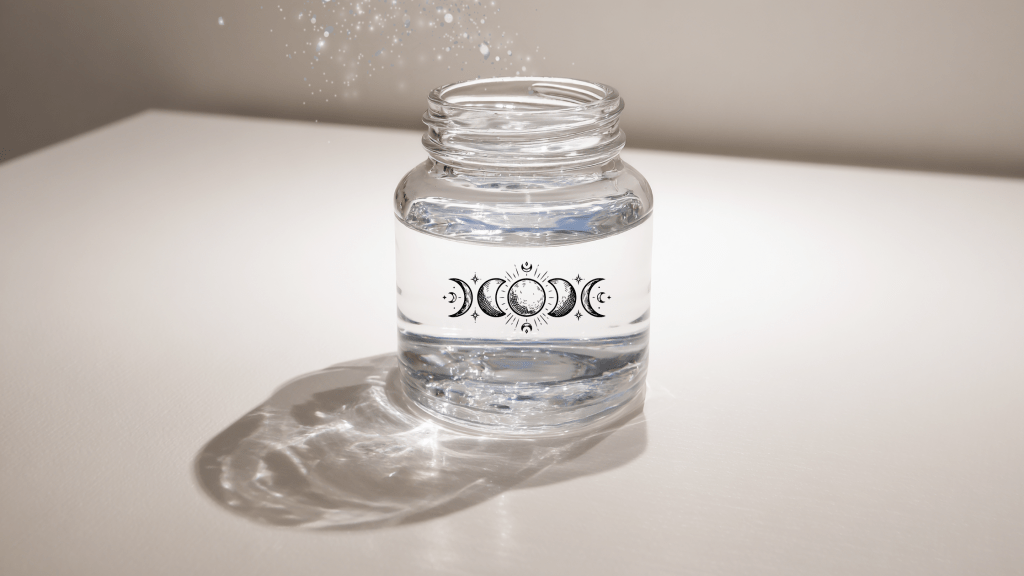
Personally I prefer glass jars because they feel clear and pure. Mason jars are fine, they don’t have to be anything fancy. Sometimes I add herbs or crystals that feel aligned with what I want to invite into my life. Lavender for calm, rose quartz for love, rosemary for clarity. If adding crystals, make sure they are non-toxic.

The Magic of the New Moon

The new moon has always felt like a breath held in silence, a beginning. When I charge water under the new moon, I focus on planting seeds. This is the time to set intentions for growth, creativity and transformation. I usually write down what I hope to nurture in the coming weeks and keep the jar nearby as a reminder. Drinking this water feels like drinking a promise to myself, a small ritual of commitment to the path I wish to follow.

The Energy of the Full Moon

Full moons are the opposite: a peak, a culmination, a bright illumination of what has grown and what needs attention. I use full moon water to release and reflect. I’ll sip it while journaling about patterns I want to let go of or spritz it around my room to cleanse the energy. There’s a clarity in full moon water that feels different from the new moon, it’s expansive, luminous and honest. Sometimes I step outside and pour a little into the earth as an offering, a way to honour the cycle of giving and receiving that feels deeply grounding.

Eclipse Water: Transformation in Motion

Eclipses bring a different rhythm altogether. There’s intensity in their energy, a feeling of acceleration and upheaval. Charging water during a solar or lunar eclipse feels like capturing a rare storm, a moment when hidden truths can surface. I often use eclipse water to meditate on transformation or to face shadows I might usually avoid. It’s potent but there is clarity in its intensity.

Storm Water: Wild and Unpredictable

Stepping away form the moon – Storm water is a newer practice I’ve embraced. infusing water during a storm feels different from moon water, it’s raw, untamed and alive with movement and energy. When I use storm water, I use it to infuse my intentions with courage and power. You could also collect rain water during a storm – but you probably don’t want to drink that…

How I Use Moon and Storm Water

Each type of charged water has its role in my practice:

  • Drinking it feels like absorbing intention, aligning body and mind.
  • Spritzing my space creates an atmosphere of focus, calm, or renewal.
  • Baths with moon water feel like a ritual of cleansing, a reminder to wash away what I no longer need.
  • Plant care becomes intentional, a small act of collaboration with nature.
  • Charging crystals or ritual tools amplifies the energy I am already working with.

For me, moon water and storm water are not about superstition but mindfulness. They are acts of reflection and devotion, ways to slow down, notice cycles and honour my connection to the natural world.

Creating moon and storm water has taught me patience, presence, and reverence. It is a small act that carries depth, a way to honour cycles in a world that rarely slows down. Whether it is the promise of the new moon, the clarity of the full moon, the intensity of an eclipse, or the wildness of a storm, each form of water teaches something different.

At the end of the day, the magic is not only in the water. it is in the pause, the intention and the awareness that accompanies its creation. Moon water is a reminder that energy flows, cycles repeat and we are part of a rhythm far larger than ourselves.

Ostara: Honouring the Spring Equinox Through Self-Care, Balance and Renewal

As winter loosens its grip and the earth begins to soften, a quiet but powerful shift takes place. The Spring Equinox, often celebrated as Ostara, marks the moment when day and night stand in perfect balance. From this point forward, the light continues to grow and the world gently awakens.

In many earth-honouring traditions, Ostara represents fertility, renewal and fresh beginnings. Buds appear on branches, birds return and seeds stir beneath the soil. For us, this seasonal turning offers an invitation: to realign with nature’s rhythms and nurture our own cycles of growth.

Within a holistic wellbeing practice, Ostara can be a meaningful moment to pause, reflect and plant the seeds of intention for the months ahead.


The Symbolism of Ostara

Ostara is deeply rooted in themes of balance and rebirth.

The equinox reminds us that light and dark coexist. Neither dominates; instead they hold each other in harmony. After the introspection of winter, spring invites movement, curiosity and creative energy.

Common symbols of this season include:

  • Eggs – representing fertility, potential and new life
  • Seeds and sprouts – reminders that small beginnings can lead to abundant growth
  • Hares and rabbits – ancient symbols of vitality and renewal
  • Flowers such as daffodils, crocuses and tulips – the earth’s first colourful expressions of awakening

These symbols aren’t just seasonal decorations — they can also serve as gentle metaphors for personal transformation.


Ostara and Our Inner Cycles

Just as the earth moves through its seasons, we also experience cycles within our energy, emotions and creativity.

Winter often brings a slower pace: reflection, rest and inward focus. With the arrival of Ostara, many people begin to feel a subtle lift in energy and motivation.

This seasonal transition can be an ideal time to ask yourself:

  • What parts of me are ready to awaken?
  • What intentions do I want to nurture this year?
  • What old patterns am I ready to release?

Think of this moment as planting seeds. The actions and intentions you set now may gradually grow through spring and summer.


Seasonal Self-Care for Ostara

Honouring the equinox doesn’t need to involve elaborate rituals. Small, mindful practices can help you reconnect with the natural rhythm of the season.

1. Create Space for Balance

Because the equinox is about equilibrium, it’s a perfect time to gently rebalance areas of life that feel out of alignment.

You might:

  • Reassess your work-life balance
  • Refresh your daily routine
  • Introduce moments of stillness or meditation

Even a few minutes of quiet reflection can help restore a sense of harmony.


2. Plant Something New

Planting seeds either literally or symbolically is one of the most beautiful Ostara practices.

You could:

  • Plant herbs, flowers or vegetables
  • Start a small indoor plant
  • Write down intentions and place them somewhere meaningful

Watching something grow can become a powerful reminder that change unfolds gradually.


3. Spring Clean Your Energy

Spring cleaning isn’t just for cupboards.

This is a wonderful time to:

  • Declutter spaces that feel heavy
  • Open windows and invite fresh air in
  • Journal to release old thoughts or emotions

Clearing space allows new energy and opportunities to enter.


4. Spend Time in Nature

Nature itself is the greatest teacher of seasonal living.

Take time to notice:

  • Early blossoms emerging
  • Birds building nests
  • The lengthening daylight

A mindful walk outdoors can help you feel more grounded and connected to the rhythms unfolding around you.


5. Nourish Your Body

As the seasons shift, our bodies often crave lighter, fresher foods.

Seasonal nourishment might include:

  • Leafy greens and spring vegetables
  • Fresh herbs
  • Lemon or herbal teas to support gentle detoxification

Eating in tune with the season can help support natural energy levels.


A Gentle Ritual for the Equinox

If you enjoy simple rituals, you might try this quiet Ostara reflection:

  1. Light a candle to represent the returning light.
  2. Write down one thing you are grateful for from the winter months.
  3. Write down three intentions you wish to grow this year.
  4. Take a few slow breaths and imagine those intentions taking root.

You could keep the paper in a journal, bury it in soil or place it somewhere meaningful.


Embracing the Season of Becoming

Ostara reminds us that growth rarely happens all at once. Seeds remain unseen for a long time before they break the surface.

In the same way, personal transformation often begins quietly with a thought, a choice or a small act of care toward ourselves.

This season invites us to trust that gentle beginnings can lead to beautiful things.

As the light returns and the earth awakens, allow yourself to grow alongside it.

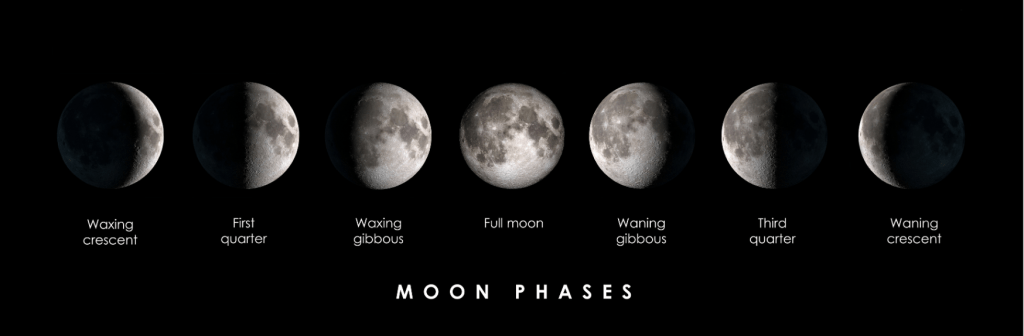
Moon Phases & Manifestation: Working With the Lunar Cycle

The moon has guided humans for thousands of years — shaping tides, crops, rituals and inner rhythms. Long before manifestation became a buzzword, people understood that the moon reflects cycles of growth, rest, release, and renewal.

Manifestation, when viewed through a lunar lens, isn’t about forcing outcomes. It’s about listening, aligning, and moving in rhythm with natural cycles — including your own.

The moon reminds us that nothing is meant to be constant. Not energy. Not motivation. Not clarity. And that’s where its real magic lies.


Manifestation as a Cycle, Not a Command

Modern manifestation culture often focuses on the end result — what you want to call in. Lunar manifestation invites something gentler: presence at every stage of becoming.

Each moon phase holds a different quality of energy. When you work with these phases, manifestation becomes less about control and more about cooperation.


🌑 New Moon — Intention & Possibility

The new moon is a time of darkness and quiet. Nothing is visible yet, and that’s the point.

This phase supports:

  • planting seeds
  • setting gentle intentions
  • listening inward

Rather than asking “What do I want?”, try asking:

  • What feels ready to grow?
  • What am I being invited into?

New Moon practice:
Light a candle, take a few deep breaths, and write 1–3 intentions that feel nourishing rather than demanding. Let them be spacious. Let them breathe.


🌒 Waxing Moon — Nurture & Momentum

As the moon begins to grow, so does energy. This is a phase of gentle action and support.

This phase supports:

  • taking small aligned steps
  • building momentum
  • trusting the process

Think of this as tending the soil, not forcing the plant.

Waxing Moon practice:
Ask yourself, What one small action supports my intention this week?
Then do only that.


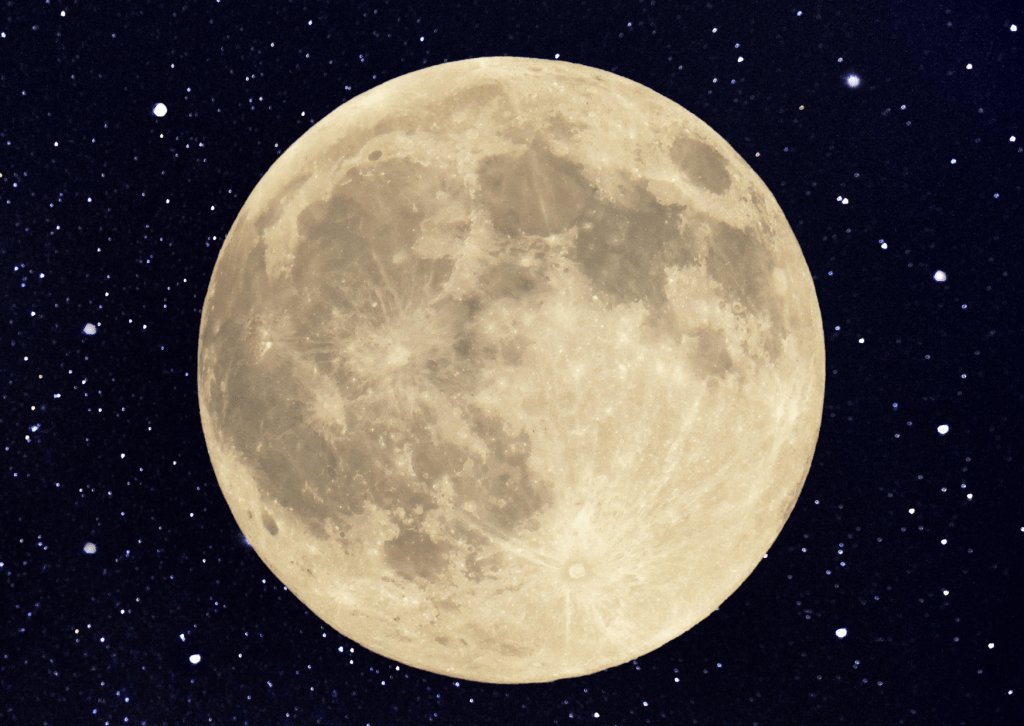
🌕 Full Moon — Illumination & Release

The full moon is often associated with heightened emotion and clarity. It illuminates what’s working — and what isn’t.

This phase supports:

  • release
  • emotional awareness
  • truth and reflection

Manifestation here isn’t about adding more — it’s about letting go.

Full Moon practice:
Journal on what feels heavy, outdated, or misaligned. You can release through writing, and if it feels right, tear it out and burn safely. There is no right way.


🌘 Waning Moon — Rest & Integration

As the moon begins to fade, energy turns inward again. This phase is often overlooked but it’s essential.

This phase supports:

  • rest and recovery
  • integration
  • reflection without judgement

Growth doesn’t happen only in motion — it happens in rest.

Waning Moon practice:
Slow your pace. Clear your space. Let yourself be quieter. Trust that nothing is being lost.


Manifestation Without Pressure

You don’t need to work with every moon.
You don’t need perfect rituals.
You don’t need to manifest constantly.

The moon teaches us that being receptive is just as powerful as being intentional.

Some months you may feel deeply connected to the lunar cycle. Other months, you may simply notice the moon in the sky and feel something soften. Both are enough.


A Gentle Reminder

Manifestation isn’t about bending the universe to your will.
It’s about remembering that you are already part of its rhythm.

When you work with the moon, you’re not asking for magic —
you’re allowing it