Hunting for Coventina’s Well: A Witchy Walk Along Hadrian’s Wall

I love a walk that has a purpose.

Don’t get me wrong, wandering around in the countryside is lovely, but if there’s a bit of history, mythology or a forgotten goddess waiting to be found, I’m all the more invested.

So, after a recent task to research the goddess Coventina, and finding out she has a well in Northumberland, a few of the ‘Coven’ members who are also in a seperate Witchy Walks WhatsApp group, decided there was only one thing for it – we had to go in search of it ourselves.

We parked in the Brocolitia car park, which was £6 for the day and is right next to the Temple of Mithras. Before we’d gone, I’d found a route on OS Maps that someone had created. It was a nice loop that promised not only Coventina’s Well but also two stone circles. It sounded perfect.

Well… almost.
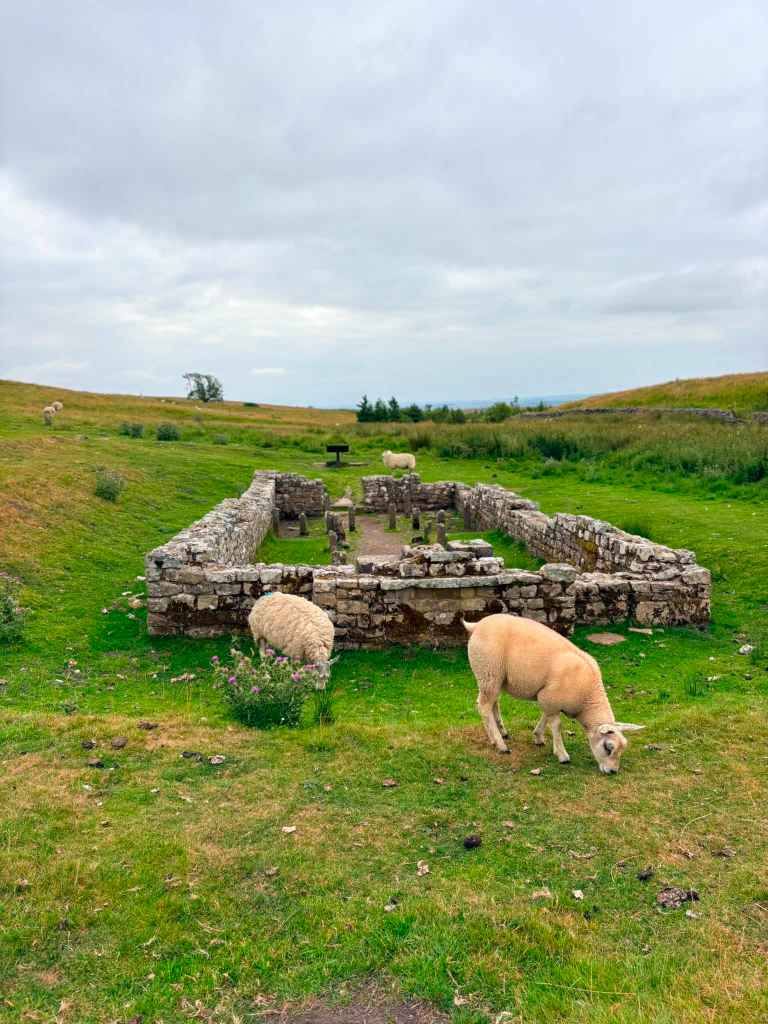
We wandered past the Temple of Mithras, following the little arrow on the map, expecting we’d come across the stone marking the well fairly quickly.

We didn’t. Not even slightly.

We slowed down, looked around, wondered if we’d somehow missed it, but the map kept telling us to carry on, so we did.

We carried on following the route, which soon took us away from the main path and into fields full of sheep. There were definitely more sheep than people out there! Then we spotted the tiniest little froglet ever. Honestly, it was so tiny, and of course we all had to stop and admire it. It’s funny how something so small can become one of the highlights of the day, but it really was adorable.
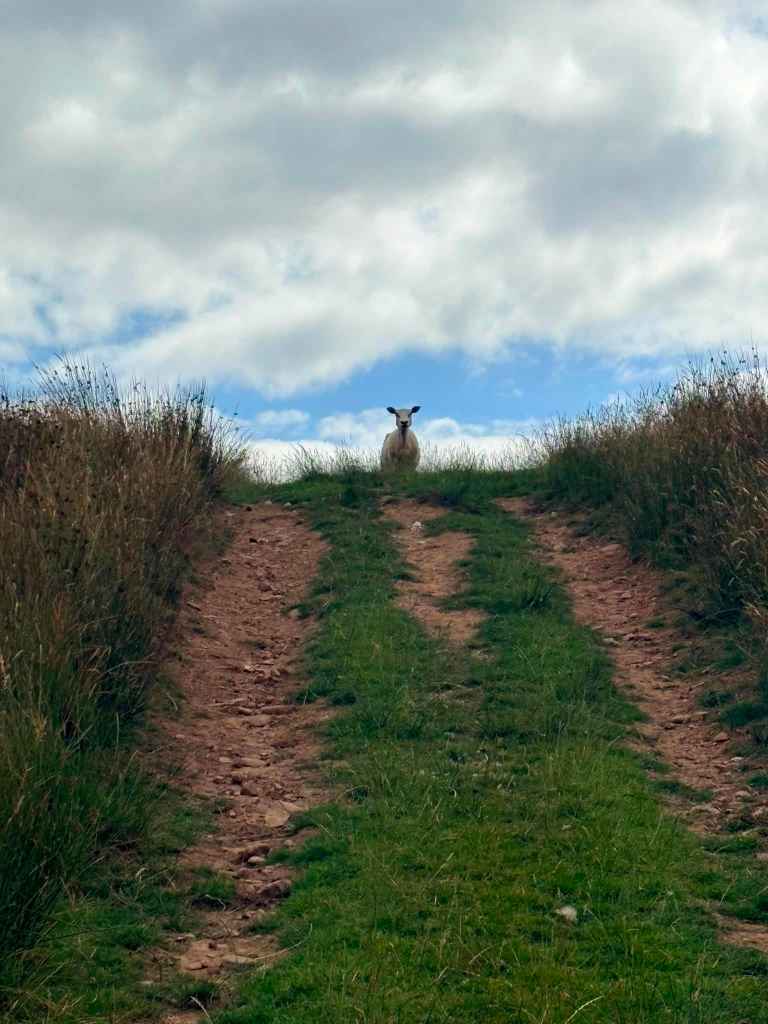
Eventually we reached the first stone circle.

Now… maybe I’m just spoiled as having visited Stonehenge and Avebury last month, perhaps my expectations were a little unrealistic, but this stone circle was… tiny. Very tiny. Blink-and-you’d-miss-it tiny.
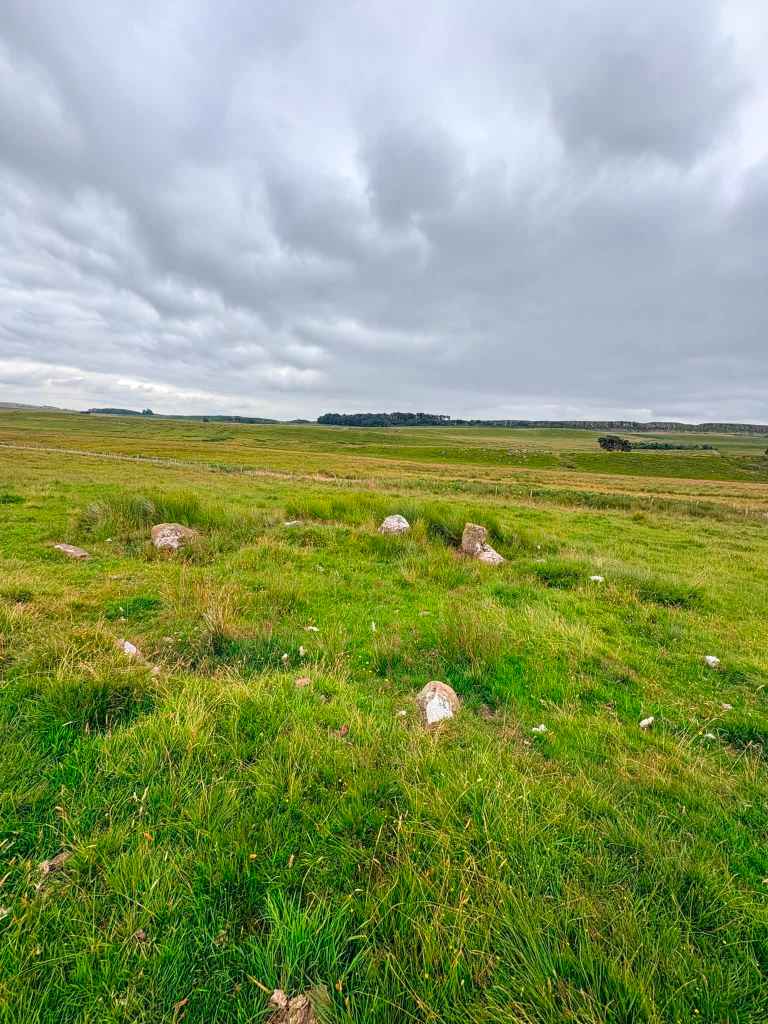
Don’t get me wrong, it’s still fascinating to think how old it is, but if you’re expecting something dramatic, you might be a little disappointed.

We carried on to the second stone circle and stopped for lunch before looping back towards where we’d started.

And finally…

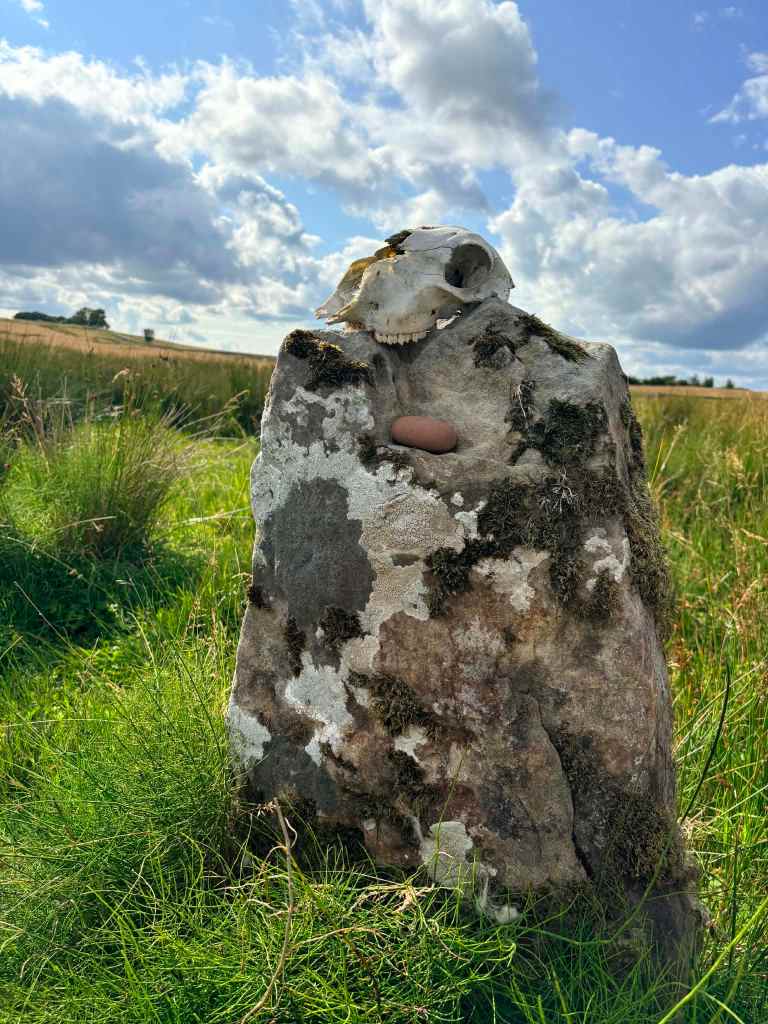
We found Coventina’s well.

Or rather, we found the stone that marks where her well once was.

Actually, that’s also not entirely true. We found the sheep’s skull that somebody had balanced on top of the stone. Without that, I’m not convinced we’d have spotted it at all.
Who Was Coventina?

Coventina wasn’t one of the big Roman gods that everyone has heard of. She was a local Celtic goddess of springs and sacred waters, worshipped here in the North East long before the Romans arrived. When they built Hadrian’s Wall and the nearby fort at Brocolitia, they didn’t replace her with one of their own deities, they adopted her instead.

Her sacred well became an important place of worship, and over the years people left thousands of offerings in the water. Archaeologists have uncovered coins, jewellery, pottery, sculptures and beautifully carved altars dedicated to her. Some people would have come hoping for healing, others for protection, and some simply to ask for a little luck from the goddess of the spring.

I love that she was so tied to this particular place. She wasn’t worshipped across the whole Roman Empire, she was native to here in the North East of England.

Knowing all of that made it a little sadder, standing there looking at… well… a stone.

No plaque. No information board. Nothing with her name on it.

If we hadn’t spent time researching the location of the well before our walk, watching various YouTube videos trying to work out exactly where the well was, being forewarned in them that it’s hard to find, we’d have probably given up.

I couldn’t help wondering if things would be different if she’d been a god instead of a goddess. Male rather than female. Perhaps there’d be a sign explaining who she was. Maybe there’d be something celebrating the fact that this is one of the most important Romano-British religious sites ever discovered. I’m pretty sure there would be a plaque marking the spot at the very least…

Instead, unless you already know her story, she’s almost invisible.

The hiker in me that loves to be out where there are no other people around, loves that Coventina’s Well, is tucked away amongst the fields, an ancient secret lost in time.

But another part of me wishes her story was a little less of a well kept secret.

For those of us who love folklore, mythology and the old gods, places like this feel special. There’s something magical about standing where people have come for nearly 2,000 years to honour a goddess, even if all that’s left to mark the spot is a weathered stone… and a sheep’s skull.

The route was supposed to be around 11 miles but somehow, by the time we’d finished, we’d clocked up over 14 due to having gone a little off-piste a few times because we were too busy chatting to pay attention to the map (I’ll take the blame for that one being as I had the map!) and partly because we’d zigzagged trying to find Coventina’s Well. The funniest part? It actually turned out to be right next to the car park where we’d started!

I did have one moment where I quietly wondered what one of the group who hadn’t been out on one of our Witchy Walks before must have been thinking. Was she starting to wonder if we actually knew where we were going, or if she’d ever see the car park again? Hopefully the extra mileage didn’t put her off, and she’ll trust us enough to join another walk soon…
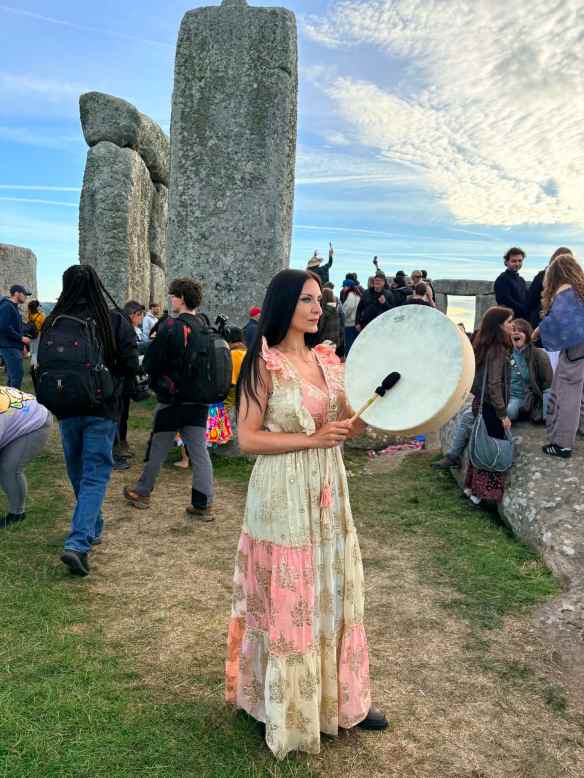
Summer Solstice at Stonehenge

Visiting Stonehenge at the Summer Solstice has been on my bucket list for as long as I can remember.

When one of my best friends and I booked a girls’ trip to Glastonbury, I realised the dates were just after the solstice. It honestly felt like the universe was giving us a little nudge to add Stonehenge onto the beginning of our adventure. How could we not?

So on the morning of the solstice, I travelled all the way from the North East of England down to Hampshire where she lives. The journey was surprisingly painless until I hit the M25… That’s one thing I definitely don’t miss about living in London – trying to get anywhere on that motorway! Thankfully once I’d escaped that particular circle of hell the rest of the journey was easy.

After dropping my bags at my friend’s house we headed over to Salisbury to catch one of the shuttle buses to Stonehenge.

There were long queues for the buses but they moved surprisingly quickly. The shuttle costs £10 each way so in hindsight it would actually have been cheaper to pre book parking at Stonehenge through English Heritage for £25. We’d avoided driving because we assumed the roads would be absolute chaos around the solstice but they were actually fine. Lesson learned for next time!

Armed with backpacks full of snacks, blankets, extra layers and of course my drum we finally arrived at the site.

The longest queue of the evening was for the security bag check where they were making sure nobody was bringing in alcohol, illegal substances, glass or weapons.

As for me? There was no chance of me trying to sneak alcohol in. I didn’t drink a thing all day, alcoholic or otherwise, not because I was trying to be sensible but because I absolutely hate portaloos. My strategy was simple. Don’t drink, don’t need the toilet. Unfortunately once I break the wee seal ,I pee for England!

I did end up using the loos twice and honestly they weren’t nearly as horrific as I’d imagined. They’re still one of the main reasons I avoid festivals though. Well, that and the crowds.

Speaking of crowds…

Yes there were thousands of people there and although I usually like to place myself out in the wilderness, surrounded by nature and minimal people, I was more than willing to brave the crowds this once for the chance to get up close to the stones.

Summer and Winter Solstice are the only times of year you’re allowed to walk right up to Stonehenge. The rest of the year the stones are roped off unless you pay for one of the exclusive Stone Circle Experiences through English Heritage and that applies even if you’re an English Heritage member.

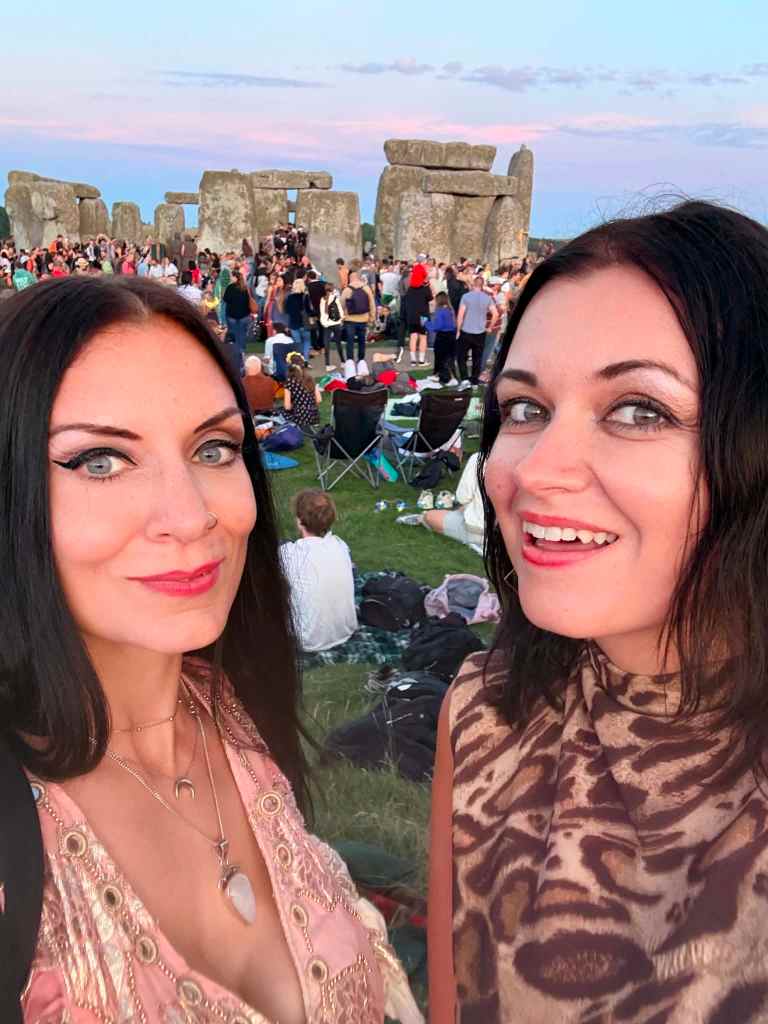
We arrived just as the sun was beginning to set and found ourselves a little spot to lay our blankets. It was close enough to enjoy the atmosphere but far enough away that we thought nobody would trip over us.

We were wrong, there was a point during the night where a woman stumbled straight across our blankets and stood directly on my drum.

Thankfully the drum survived.

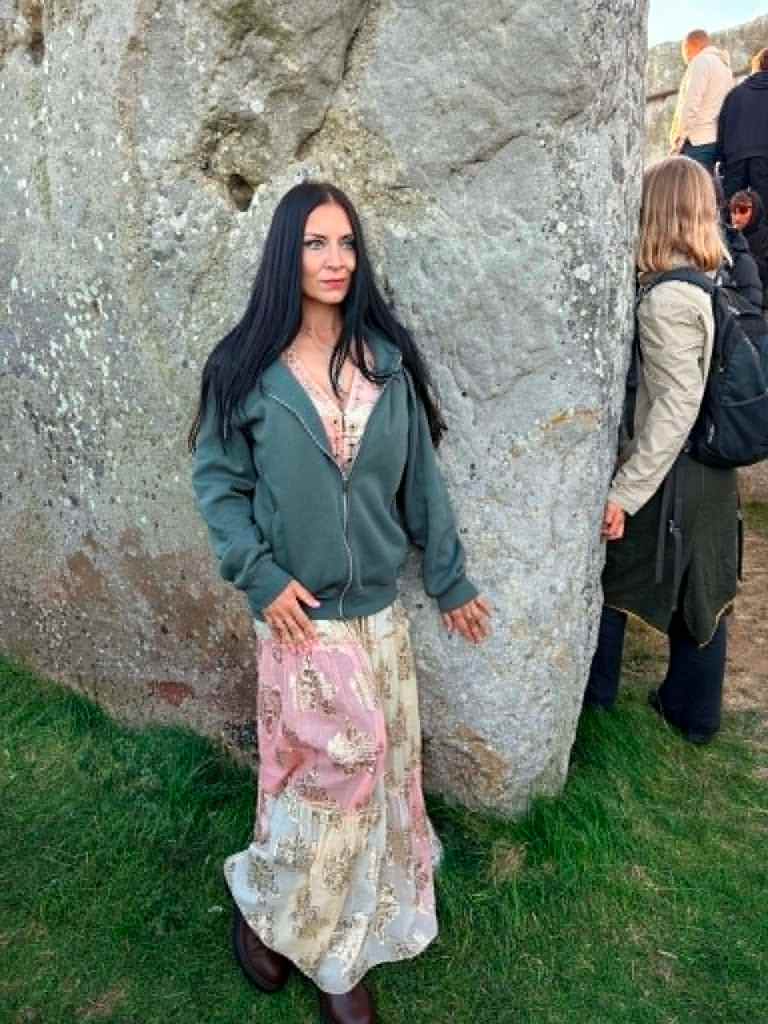
As darkness fell we wandered into the stone circle itself. Finally being able to reach out and touch the stones was incredibly special. There was drumming, chanting, people meditating and people celebrating. It felt unlike anywhere I’d ever been before.

By around midnight exhaustion or old age caught up with us, it’s been a long time since I last partied all night… So wrapped in our blankets beneath a sky full of stars we somehow managed to get a few hours’ sleep.

I’m actually a huge fan of camping, usually with a tent, but there was something pretty magical about sleeping out in the open with Stonehenge only a few metres away. Every time I opened my eyes during the night the stones somehow seemed closer than before.

My imagination? Maybe.

Magic? 100%.

Nature certainly made its presence known too.

Anyone who knows me knows I’m not exactly the biggest fan of creepy crawlies. Thankfully it was too dark to spot any spiders. What we did have however were hundreds of cockchafers buzzing around. Weirdly though, I actually think they’re quite cute. Those fluffy little antennae make them look like tiny fairy bugs… Well until one flies directly into your hair.

Ah yes. Being at one with nature.

At around 4am we both woke up naturally as the sky began to brighten and the crowd’s energy grew more electric.

People slowly started gathering around the Heel Stone waiting for sunrise.

Then it happened.

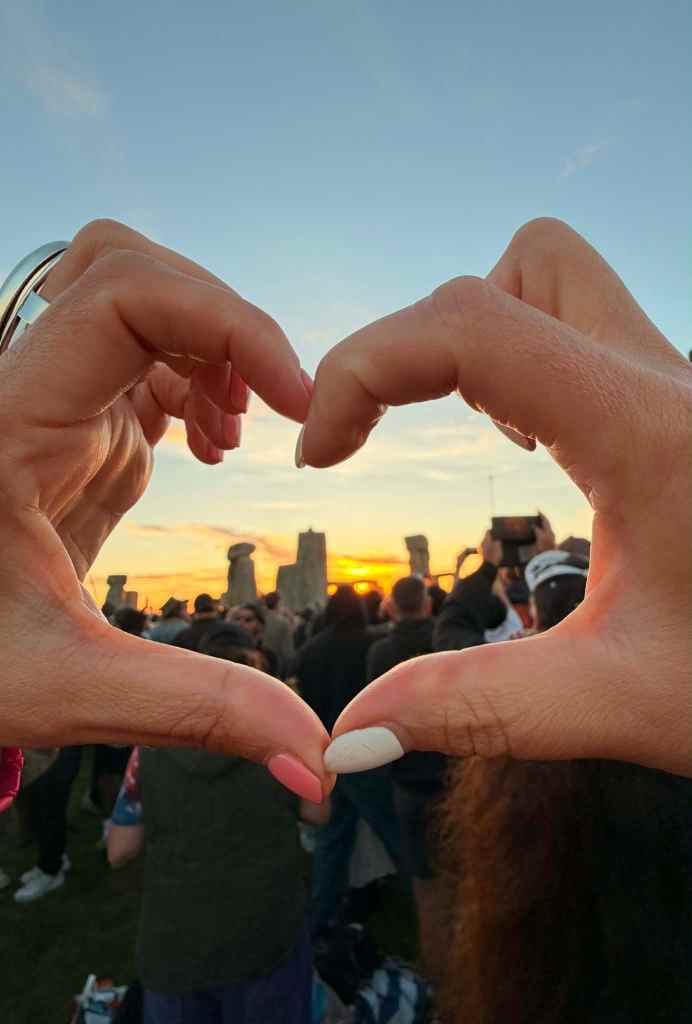
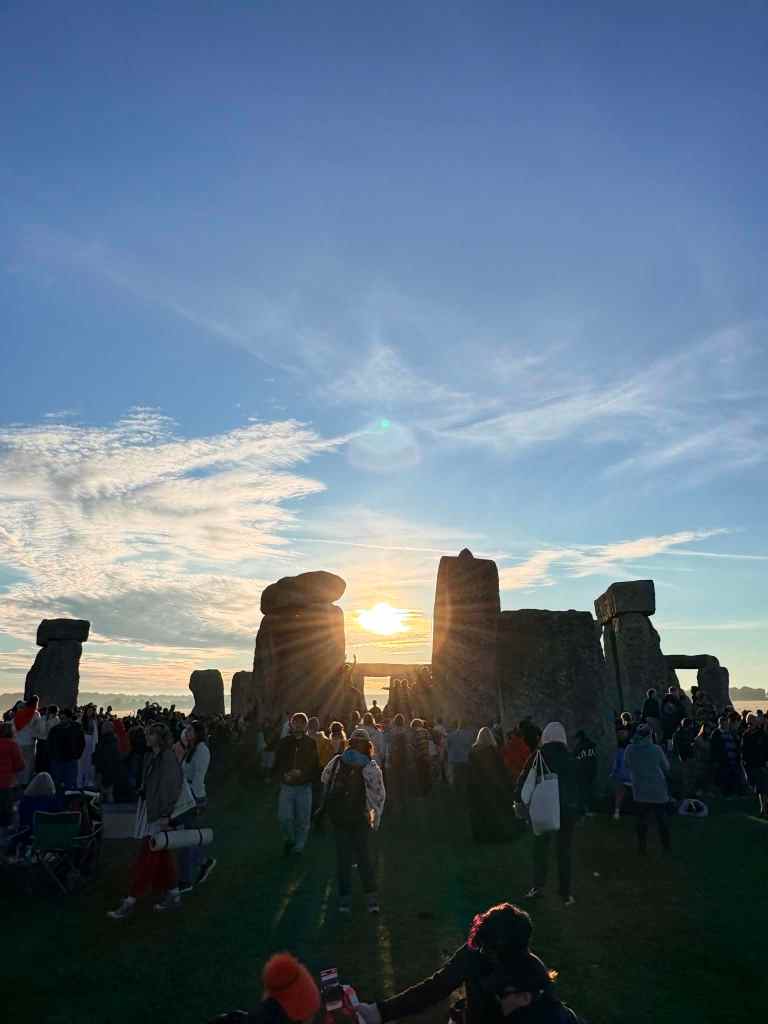
Watching the sun rise perfectly between the ancient stones is one of those moments that’s impossible to fully capture in words or photographs. There’s a reason people have gathered here for thousands of years. Whether you’re there for the history, the spirituality, the atmosphere or simply curiosity it’s an incredibly moving experience.

It was everything I’d hoped it would be.

Nobody knows for certain why Stonehenge was built and I think that’s part of what makes it so fascinating. Was it a place of worship? A giant calendar marking the changing seasons? A site for ceremonies or healing? All of the above or something we haven’t even thought of yet? There are plenty of theories but no definitive answers.

Standing there among the stones though, none of that really seemed to matter. There was something incredibly humbling about knowing I was walking the same ground as the people who built this incredible monument thousands of years ago.

Running my hands across the stones they had carefully placed all those centuries ago made me feel connected, if only for a moment, to the ancient wisdom and mystery of those who came before us.

Stonehenge at Summer Solstice had been on my bucket list for years and I’m so grateful I finally got to experience it, especially alongside one of my best friends.

Would I Go Again?

Absolutely.

Despite the crowds. Despite the portaloos. Despite nearly losing my drum to a drunken stranger.

That being said, I probably wouldn’t stay overnight a second time.

If I were to do it again I’d pre book parking through English Heritage, arrive around 3 or 4am, watch the sunrise, soak up the atmosphere for a few more hours and leave when the site closes at around 10am.

But for a first visit?

Sleeping beneath the stars beside one of the world’s most famous prehistoric monuments was something I’ll never forget.