
Authors: Lynne Boddy and Ali Ashby
Publisher: Collins Reference, supported by National Trust
Illustrator: Ella Sienna
Release Date: 8th October 2026
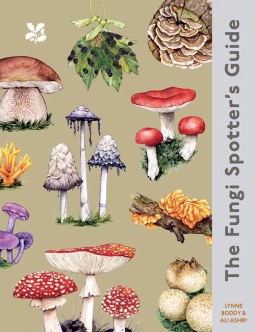
There’s something rather magical about discovering fungi on an autumn walk. You can set off along a familiar woodland path and suddenly notice something hiding beneath the leaves or nestled against an old tree that you had never spotted before.
Anyone who knows me knows how much I love fungus hunting. Not to pick or eat them, because you really do need to be an expert for that and I don’t have a death wish. I just love finding them, seeing them and taking pictures of them – you should see the incredible specimens I have stored on my phone. For me, it makes an autumn hike all the more exciting.
The Fungi Spotter’s Guide by Lynne Boddy and Ali Ashby is the perfect companion for anyone who wants to start discovering the wonderful world of fungi for themselves.
Focusing on 40 easily identifiable species, this beautifully accessible guide is designed to encourage beginners to look a little closer at what is growing around them. I particularly love this approach because fungi can sometimes feel like an intimidating subject. There are so many species and so many subtle differences that it can be difficult to know where to begin. This book gives you a lovely starting point without making you feel as though you need a degree in mycology before you can venture into the woods.
And what a collection of fungi it is.
There are some of my absolute favourites in these pages, from the wonderfully familiar Common Puffball to the instantly recognisable Fly Agaric. The Amethyst Deceiver is a particular delight with its beautiful jewel like colouring, while the Green Elf Cup looks as though it has wandered straight out of an enchanted forest. Then there is the Shaggy Ink Cap, which is always such a fascinating find.
The illustrations by Ella Sienna are beautiful and make the guide especially inviting. Fungi are such wonderfully varied subjects, with their unusual shapes, textures and colours, and the illustrations really capture that sense of discovery.
I also love that this is a guide that encourages you to simply look. There is so much pleasure to be found in slowing down and noticing the small things around us. A fallen log suddenly becomes a miniature habitat. A patch of moss might be hiding something spectacular. Even a familiar woodland can feel completely different when you start searching for fungi.
For me, that is what makes this book so appealing. It doesn’t just tell you about fungi. It encourages you to get outside and discover them.
The Fungi Spotter’s Guide would make a wonderful companion for autumn walks, woodland adventures and anyone who has ever stopped mid hike because they spotted something strange and beautiful growing beneath the trees.
If you’re a budding fungus hunter, a nature lover or simply someone who enjoys photographing the curious little treasures found on woodland floors, this is a lovely place to begin.
Just remember, you don’t have to pick a mushroom to appreciate it. Sometimes finding it, photographing it and leaving it exactly where you discovered it is the most magical part.
 Stardust Holistics